
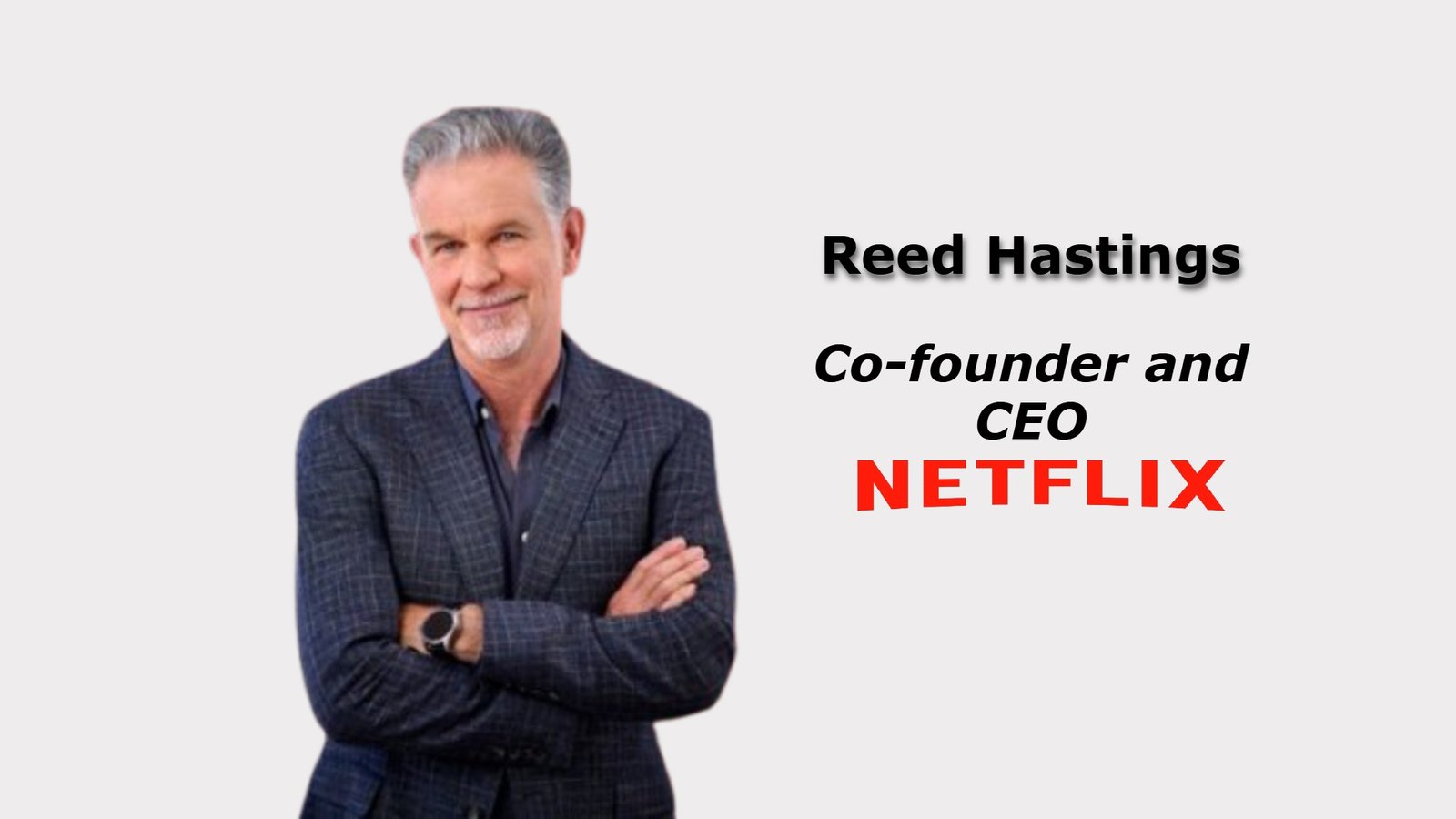
Reed Hastings age has been a topic of interest among Netflix enthusiasts and tech industry followers worldwide. Born on October 8, 1960, the visionary co-founder and chairman of Netflix is currently 65 years old as of 2026.
The American billionaire businessman has revolutionized the entertainment industry through his innovative streaming platform, transforming how millions consume media globally.
From his humble beginnings selling vacuum cleaners door-to-door to building a multi-billion dollar streaming empire, Hastings’ journey exemplifies entrepreneurial excellence and strategic vision.
His leadership has shaped modern entertainment consumption patterns and established Netflix as a household name across continents.
Table of Contents
Quick Facts About Reed Hastings
| Category | Details |
|---|---|
| Full Name | Wilmot Reed Hastings Jr. |
| Age | 65 years old (as of 2026) |
| Date of Birth | October 8, 1960 |
| Birthplace | Boston, Massachusetts, USA |
| Zodiac Sign | Libra |
| Net Worth | $5.3-6.6 billion (2026 estimates) |
| Profession | Businessman, Entrepreneur, Philanthropist |
| Position | Co-founder and Chairman of Netflix |
| Wife | Patricia Ann Quillin |
| Children | Two (son and daughter) |
| Education | BA in Mathematics (Bowdoin College), MS in Computer Science (Stanford University) |
| Residence | Santa Cruz, California, USA |
| Nationality | American |
Reed Hastings Age and Early Life

Reed Hastings age reflects six decades of remarkable achievements and transformative contributions to technology and entertainment. Born in 1960, Hastings grew up in Boston, Massachusetts, in a family that valued education and intellectual curiosity.
His father, Wilmot Reed Hastings Sr., worked as an attorney for the Department of Health, Education, and Welfare during the Nixon administration. His mother, Joan Amory Loomis, came from a prominent Boston Brahmin family and instilled values of humility in her children.
During his formative years, Hastings attended the prestigious Buckingham Browne & Nichols School in Cambridge, Massachusetts. His academic excellence was evident early on, setting the foundation for future success.
Between high school and college, young Hastings took a gap year selling Rainbow vacuum cleaners door-to-door. This experience taught him valuable lessons about persistence, rejection, and salesmanship that would later prove invaluable in his entrepreneurial journey.
At 23 years old, Hastings graduated from Bowdoin College in 1983 with a Bachelor of Arts degree in Mathematics. He won the math department’s Smyth Prize in 1981 and the Hammond Prize in 1983, demonstrating exceptional academic prowess.
Rather than immediately pursuing corporate careers, Hastings joined the Peace Corps. He spent two years teaching high school mathematics in Swaziland (now Eswatini) from 1983 to 1985, an experience that shaped his worldview and commitment to education.
Educational Background and Qualifications
Hastings’ educational journey laid the groundwork for his technological innovations. After returning from the Peace Corps, he enrolled at Stanford University, one of the world’s premier institutions for computer science.
In 1988, at age 28, Hastings earned his Master of Science degree in Computer Science from Stanford, focusing on artificial intelligence and machine learning. His thesis explored computational algorithms and network systems, foreshadowing his future in tech.
The Stanford experience exposed him to cutting-edge research and a vibrant community of innovators. This environment fostered his entrepreneurial spirit and provided connections that would prove invaluable throughout his career.
His combination of mathematical rigor and computer science expertise created a unique skill set. This interdisciplinary approach enabled him to tackle complex business problems with analytical precision.
Career Journey: From Software Developer to Netflix Chairman
Early Career at Adaptive Technology
After completing his Stanford degree, Hastings joined Adaptive Technology as a software developer. He created debugging tools for software engineers, working under CEO Audrey MacLean.
MacLean became an important mentor, teaching Hastings the value of focus. He later credited her with teaching him that doing one product well beats doing multiple products mediocrely.
This early professional experience provided hands-on exposure to software development challenges. It also revealed the importance of strong leadership and clear vision in building successful technology companies.
Founding Pure Software (1991-1997)
In 1991, at age 31, Hastings co-founded his first company, Pure Software, with Raymond Peck and Mark Box. The company produced troubleshooting tools for software developers, with its flagship product being Purify, a debugging tool for Unix/C engineers.
Pure Software experienced rapid growth, going public in 1995. However, this success presented unexpected challenges for the engineering-focused founder.
Hastings struggled with the demands of managing a rapidly expanding organization. He lacked managerial experience and found the CEO responsibilities overwhelming, even requesting his board to replace him at one point.
In 1996, Pure Software merged with Atria to form Pure Atria Corporation. The following year, Rational Software acquired Pure Atria for $750 million, marking the largest Silicon Valley acquisition at that time.
The deal announcement triggered a 42% stock drop for both companies. Hastings was appointed Chief Technical Officer but left shortly after the acquisition, taking with him valuable lessons about leadership and management.
The Netflix Revolution (1997-Present)
In 1997, the same year as the Rational Software sale, Hastings co-founded Netflix with former Pure Software employee Marc Randolph. He was 37 years old when he launched what would become his legacy-defining venture.
The famous origin story involves Hastings incurring a $40 late fee for returning Apollo 13 six weeks late to Blockbuster. Though co-founder Randolph later suggested this anecdote was created to explain the business model, it captured the frustration with traditional video rental.
The real innovation was combining emerging technologies: DVDs, which were easier to mail than VHS cassettes, and websites for ordering rather than paper catalogs. Netflix initially offered flat-rate movie rental by mail to US customers.
Hastings became CEO in 1998, guiding Netflix through multiple transformations. The company introduced its revolutionary subscription model in 1999, allowing unlimited DVD rentals for a monthly fee.
In February 2007, Netflix shipped its billionth DVD. But Hastings was already planning the next revolution: streaming video content directly to computers and eventually all devices.
The transition to streaming positioned Netflix ahead of competitors. Hastings credits YouTube for inspiring the strategic shift, recognizing internet television as the future of entertainment.
In 2011, Netflix made a rare misstep by raising prices and attempting to spin off its DVD service as “Qwikster.” Customer backlash forced a reversal, but Hastings learned and adapted quickly.
Under his leadership, Netflix pioneered original content production, beginning with House of Cards in 2013. This strategy transformed Netflix from a distributor to a content creator, competing directly with traditional studios.
In 2020, Ted Sarandos joined Hastings as co-CEO, implementing a dual leadership structure. Three years later, in 2023, Hastings transitioned from co-CEO to Executive Chairman, maintaining strategic oversight while allowing new leadership to drive operations.
Reed Hastings Net Worth 2026
Reed Hastings net worth has fluctuated with Netflix’s stock performance and his philanthropic activities. As of 2026, estimates place his wealth between $5.3 billion and $6.6 billion, according to various financial tracking sources.
At his peak, when Netflix stock was soaring, Hastings’ net worth reached approximately $7 billion. However, he has consistently reduced his wealth through strategic philanthropy and stock donations.
His fortune primarily derives from his approximately 2% ownership stake in Netflix, which went public in 2002. He owns around 21-22 million shares of Netflix stock, though this number fluctuates with regular sales and donations.
Hastings’ base salary at Netflix is relatively modest at $650,000 annually. He voluntarily reduced this from higher amounts in previous years, demonstrating his commitment to ownership-based compensation over salary.
In January 2024, Hastings made one of his largest charitable moves, donating approximately $1.1 billion worth of Netflix stock to the Silicon Valley Community Foundation. This gift significantly impacted his reported net worth.
He also owns significant assets outside Netflix, including majority ownership of Powder Mountain ski resort in Utah following a $100 million investment in 2023. This diversification demonstrates strategic wealth management.
Despite his billionaire status, Hastings maintains a relatively modest lifestyle compared to other tech titans. He resides in Santa Cruz, California, rather than in Silicon Valley’s wealthier enclaves.
His wealth management philosophy emphasizes giving back rather than accumulation. He signed the Giving Pledge in 2018, committing to donate at least half his family fortune to charitable causes.
Wife and Family Life
Marriage to Patricia Ann Quillin
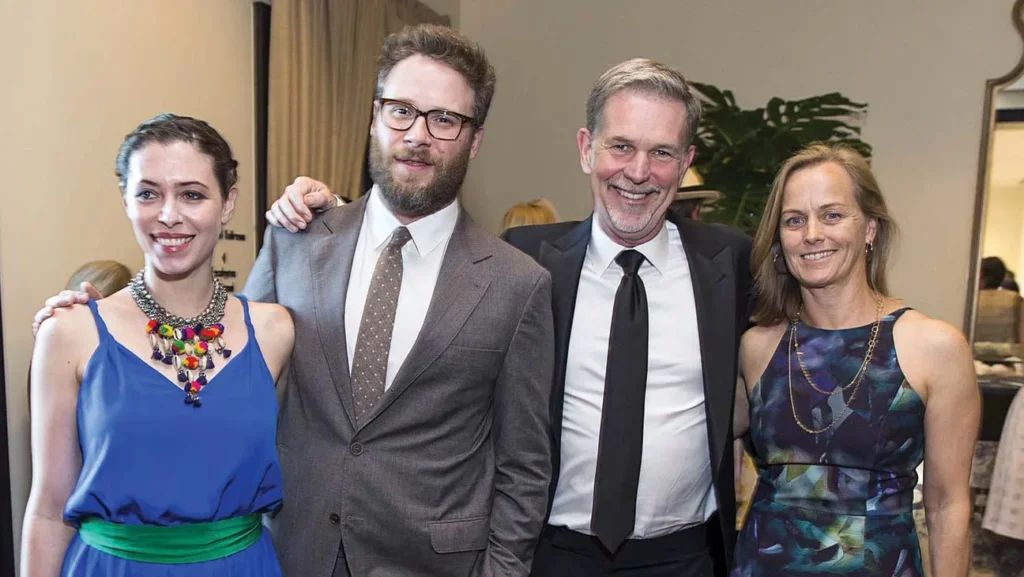
Reed Hastings married Patricia Ann Quillin in 1991, the same year he founded Pure Software. Patricia, often called “Patty,” has been a constant partner throughout his entrepreneurial journey.
Patricia graduated from Cornell University and previously worked in executive roles at MTV Networks’ Santa Cruz division. She later served as president of the Santa Cruz Natural History Museum before joining its board.
The couple met during Hastings’ early professional years, and their relationship blossomed through shared values around education and social justice. Patricia stood as a stalwart supporter while Reed laid Netflix’s groundwork.
Their partnership extends beyond personal life into philanthropic endeavors. Patricia has been instrumental in directing the couple’s charitable initiatives, particularly in education reform and racial justice.
Hastings has credited Patricia and their early marriage counseling for teaching him about emotional honesty. This emotional intelligence became a cornerstone of his leadership philosophy at Netflix.
Children and Family Values
Reed and Patricia have two children together: a son and a daughter. The family has deliberately kept their children’s identities private, rarely sharing details publicly.
Their daughter’s name is Molly Hastings, though beyond this, little is known about either child. This privacy is intentional, reflecting the family’s desire to shield their children from media attention.
The Hastings family resides in Santa Cruz, California, where they’ve built a life focused on education, community service, and quality time together. Santa Cruz’s relaxed atmosphere contrasts with Silicon Valley’s high-intensity culture.
Despite his demanding professional responsibilities, Hastings has emphasized the importance of family life. He’s known for taking substantial vacation time to recharge and spend time with loved ones.
The family has instilled values of education, philanthropy, and social responsibility in their children. These principles reflect both Reed’s Peace Corps experience and Patricia’s commitment to social causes.
Family Philanthropy
As a family unit, the Hastings have become major philanthropic figures in California and beyond. Their giving focuses primarily on education equity, with particular emphasis on historically underserved communities.
In 2016, they established the Hastings Fund with a $100 million contribution, dedicated to educational reform. Patricia has played a central role in directing these initiatives toward impactful, long-term improvements.
In June 2020, the couple made history by donating $120 million to support historically Black colleges and universities. The donation was split equally among Morehouse College, Spelman College, and the United Negro College Fund.
This HBCU donation represented the largest individual contribution ever to support scholarships at these institutions. It demonstrated the family’s commitment to racial justice and educational access.
During the COVID-19 pandemic, the Hastings donated $30 million to GAVI to support the COVAX vaccine initiative. This global health contribution extended their philanthropic reach beyond education.
In March 2025, Reed donated $50 million to Bowdoin College, his alma mater, to create the Hastings Initiative for AI and Humanity. This gift represents the largest donation in the school’s history.
Professional Philosophy and Management Style
Hastings revolutionized corporate culture through Netflix’s famous “Freedom and Responsibility” philosophy. This approach prioritizes employee autonomy over strict policies and micromanagement.
The Netflix Culture Deck, which Hastings helped create, has been viewed millions of times and influenced countless organizations. It emphasizes hiring exceptional talent and giving them freedom to excel.
His compensation philosophy involves paying top-of-market salaries to attract elite performers. He believes one exceptional employee is worth many average ones, so paying premium salaries makes economic sense.
Hastings implements a “keeper test” where managers ask themselves which employees they would fight hard to retain. Only those who pass this test represent the talent standard Netflix seeks.
The company offers generous severance packages to employees who don’t meet high performance standards. This “adequate performance gets a generous severance” approach maintains excellence while treating people respectfully.
Hastings personally models work-life balance by taking substantial vacations. He believes setting this example encourages employees to recharge, ultimately improving their performance and creativity.
His leadership transition to co-CEO with Ted Sarandos in 2020 demonstrated innovative thinking about succession planning. Rather than picking one successor, he chose two leaders who complement each other.
This dual leadership model reflects Hastings’ willingness to experiment with organizational structures. He describes it as a “high-performance technique” that works when leaders trust and complement each other.
Educational Advocacy and Board Service

Beyond Netflix, Hastings has devoted significant energy to educational reform. In 2000, California Governor Gray Davis appointed him to the State Board of Education, where he served until 2004.
He became president of the California State Board of Education in 2001, using this platform to advocate for charter schools. His tenure sparked controversy but demonstrated his commitment to educational innovation.
Hastings views charter schools as laboratories for educational innovation. He believes they can test new approaches more quickly than traditional public schools, potentially improving education system-wide.
He personally spent $1 million, combined with $6 million from venture capitalist John Doerr, to promote Proposition 39 in 2000. This measure lowered voter approval thresholds for school construction bonds from 66% to 55%.
Hastings serves on boards for educational organizations including KIPP (Knowledge Is Power Program) and Pahara Institute. These roles allow him to influence education policy and practice directly.
He’s been a vocal advocate for educational choice and accountability measures. While controversial, his positions reflect genuine belief that competition and innovation can improve educational outcomes.
His educational philosophy emerged partly from his Peace Corps experience teaching mathematics in Swaziland. That immersion in educational challenges in a developing nation shaped his commitment to educational access.
Board Memberships and Business Influence
Hastings has served on several prominent corporate boards, leveraging his expertise beyond Netflix. From 2007 to 2012, he was a director at Microsoft Corporation, offering insights during a critical transition period.
He joined Facebook’s board of directors in 2011 and served until 2020. Ironically, Hastings has never been a Facebook user, describing social media as his “idea of hell.”
In 2023, Hastings was appointed to the board of Bloomberg L.P., bringing his strategic vision to the financial information giant. This appointment reflects his continued influence across industries.
More recently, in 2025, he joined the board of Anthropic, the AI safety company. This move signals his interest in emerging technologies and their societal implications.
These board positions have provided Hastings with diverse perspectives on technology, media, and business strategy. They’ve also amplified his influence across multiple sectors of the global economy.
His board service philosophy emphasizes asking tough questions and challenging assumptions. He believes boards should actively debate strategy rather than rubber-stamping management decisions.
Political Involvement and Donations
Hastings has been politically active, particularly in California politics and issues related to education. His political donations reflect his priorities around educational reform and progressive causes.
In August 2007, he donated $1 million to support California State Superintendent Jack O’Connell’s potential gubernatorial candidacy. This early political involvement demonstrated his willingness to back education-focused candidates.
He supported Hillary Clinton in the 2016 presidential election, contributing significant funds to her campaign. In 2021, he donated $3 million to defeat efforts to recall California Governor Gavin Newsom.
In July 2024, Hastings publicly called for President Joe Biden to withdraw from the 2024 presidential race. This bold stance attracted significant media attention and political commentary.
During the 2025 New York City mayoral elections, Hastings donated $250,000 in an unsuccessful attempt to prevent Zohran Mamdani’s election. This intervention in local politics outside California raised questions about billionaire influence.
He donated $2 million in March 2025 to support Ukraine in its conflict with Russia. This international contribution reflects his global perspective and commitment to democratic values.
His wife Patricia has also been politically active, notably donating $1 million to George Gascón’s campaign during the 2020 Los Angeles District Attorney election. The couple contributed $1 million to support Proposition 16, though it ultimately failed.
Netflix’s Evolution and Current Status
Netflix has grown from a DVD-by-mail service to a global streaming powerhouse with over 230 million subscribers worldwide. The company operates in virtually every country except a handful where legal or practical barriers exist.
Under Hastings’ leadership, Netflix pioneered the binge-watching model by releasing entire seasons at once. This distribution strategy fundamentally changed how audiences consume serialized content.
The company’s investment in original content has created cultural phenomena including Stranger Things, The Crown, Squid Game, and Wednesday. These productions compete with traditional Hollywood studios for talent and awards.
Netflix’s recommendation algorithm, developed under Hastings’ tenure, became a competitive advantage. The system analyzes viewing patterns to suggest content, improving user engagement and satisfaction.
The company has faced increasing competition from Disney+, HBO Max, Amazon Prime Video, and other platforms. Despite this pressure, Netflix has maintained its position as streaming leader through innovation and content investment.
In December 2025, Netflix announced plans to acquire Warner Bros. and HBO in an $82.7 billion deal. This historic acquisition would combine Warner’s legendary film and TV library with Netflix’s global streaming infrastructure.
The Warner Bros. acquisition represents perhaps the biggest deal in entertainment history. It would give Netflix ownership of franchises including Harry Potter, DC Universe, and HBO’s prestigious programming.
Hastings, now as Executive Chairman, continues to provide strategic guidance during this transformative period. His vision of internet television as the future of entertainment is being realized on an unprecedented scale.
Awards, Recognition, and Achievements
Forbes named Hastings its Businessperson of the Year in 2010, recognizing his transformative impact on entertainment. The following year, Forbes included Netflix on its list of most admired companies.
He received the Henry Crown Leadership Award for his philanthropic contributions and entrepreneurial leadership. This prestigious recognition highlighted his dual commitment to business success and social impact.
Hastings has been repeatedly featured on Forbes’ 400 list of richest Americans. His first appearance came in 2017 with a net worth of $2.2 billion, climbing to higher rankings in subsequent years.
Time Magazine has included him in various lists of most influential people. His impact on how billions consume media globally justifies this recognition across multiple years.
Under his leadership, Netflix has won numerous Emmy Awards and other entertainment honors. The company’s original content has achieved both critical acclaim and commercial success.
Hastings received an honorary doctorate from Bowdoin College, his undergraduate institution. This recognition celebrated both his business achievements and his continued commitment to education through philanthropy.
Personality, Hobbies, and Personal Interests
Despite his billionaire status, Hastings maintains relatively modest personal habits. He’s known for reading voraciously, including dense academic texts on education policy and technology trends.
Hastings practices regular meditation, crediting this habit with improving his decision-making and emotional intelligence. This mindfulness practice aligns with his leadership philosophy emphasizing self-awareness.
He’s an avid skier, which explains his $100 million investment in Powder Mountain ski resort. This Utah property reflects both his love of outdoor recreation and strategic real estate investment.
Hastings values work-life balance despite leading a global corporation. He takes extended vacations and encourages Netflix employees to do likewise, believing rest enhances creativity and performance.
His communication style is direct and analytical, reflecting his mathematical and engineering background. He prefers data-driven discussions over emotional arguments when making business decisions.
Hastings has described himself as uncomfortable with social media, never creating personal Facebook or Twitter accounts. This contrasts with many tech leaders who actively engage on social platforms.
He maintains a relatively low public profile compared to other tech billionaires. While not reclusive, he prefers focusing on Netflix’s strategy and his philanthropic work rather than seeking media attention.
Legacy and Impact on Entertainment Industry
Hastings fundamentally transformed how billions of people worldwide consume entertainment. The shift from appointment viewing to on-demand streaming represents one of the most significant media changes in history.
His willingness to disrupt Netflix’s own business model—from DVD-by-mail to streaming—demonstrates rare strategic courage. Many companies fail because they protect legacy businesses rather than embracing necessary change.
The Netflix culture of freedom and responsibility has influenced countless organizations beyond entertainment. His management philosophy has been studied in business schools and implemented across industries.
Hastings proved that tech companies could successfully produce high-quality original content. This demonstration encouraged other tech giants like Amazon and Apple to invest billions in entertainment production.
His advocacy for education reform, particularly charter schools, has sparked ongoing debates about improving American education. Whether one agrees with his positions, he’s elevated important conversations about educational innovation.
The philanthropic model he and Patricia have established—focused giving in education and racial justice—provides a template for other wealthy individuals. Their strategic approach emphasizes long-term systemic change over feel-good gestures.
Controversies and Challenges
The 2011 Qwikster debacle, when Netflix attempted to split DVD and streaming services with a price increase, remains Hastings’ most public failure. The company lost nearly 800,000 subscribers and its stock plummeted.
Hastings’ advocacy for charter schools has drawn criticism from teachers’ unions and public education advocates. Critics argue his approach undermines traditional public schools rather than improving education overall.
Some employees and observers have criticized Netflix’s “adequate performance gets a generous severance” policy as creating a culture of fear. The company’s high-pressure environment isn’t suitable for everyone.
His political donations, particularly in local races outside his home area, have raised questions about billionaire influence in democratic processes. The 2025 New York mayoral election contribution drew particular scrutiny.
Netflix’s content decisions, including controversial programming and international market adaptations, have occasionally generated backlash. As chairman, Hastings remains associated with these creative choices.
His wealth and privilege, despite his philanthropic efforts, place him among the ultra-wealthy elite that many view as exacerbating inequality. This tension affects how his charitable work is perceived.
Future Plans and Vision
At 65 years old, Hastings shows no signs of retiring completely from business or philanthropy. His transition to Executive Chairman allows him to provide strategic vision while reducing operational demands.
The Warner Bros. acquisition, if completed, would define the next phase of his Netflix legacy. Integrating two massive entertainment operations presents challenges but also unprecedented opportunities.
His recent board appointment at Anthropic suggests interest in artificial intelligence’s implications for society. This role may increasingly occupy his attention as AI transforms entertainment and other industries.
Hastings has indicated plans to increase his philanthropic giving as he ages. The Giving Pledge commitment means billions more will flow to charitable causes over coming decades.
Education reform will likely remain a central focus of his post-Netflix career. His passion for improving educational access and quality has only intensified with time.
He may write a comprehensive memoir or business book sharing lessons from building Netflix. Such a work would likely become required reading for entrepreneurs and business leaders.
Frequently Asked Questions
What is Reed Hastings’ current age in 2026?
Reed Hastings is currently 65 years old in 2026. He was born on October 8, 1960, in Boston, Massachusetts, making him a Libra according to astrological signs.
How much is Reed Hastings worth in 2026?
Reed Hastings’ net worth is estimated between $5.3 billion and $6.6 billion in 2026. His wealth fluctuates based on Netflix stock performance and his substantial charitable donations, including a $1.1 billion gift to charity in 2024.
Who is Reed Hastings married to?
Reed Hastings is married to Patricia Ann Quillin, whom he wed in 1991. Patricia is a philanthropist and former president of the Santa Cruz Natural History Museum, actively involved in education reform and social justice causes.
How many children does Reed Hastings have?
Reed Hastings has two children with his wife Patricia Ann Quillin—a son and a daughter. The family maintains strict privacy about their children’s personal lives, with their daughter identified only as Molly Hastings.
What is Reed Hastings’ role at Netflix now?
Reed Hastings currently serves as Executive Chairman of Netflix, having stepped down from his co-CEO position in 2023. He provides strategic guidance while Ted Sarandos and Greg Peters serve as co-CEOs handling day-to-day operations.
Where did Reed Hastings go to college?
Reed Hastings earned his Bachelor of Arts degree in Mathematics from Bowdoin College in 1983. He later obtained his Master of Science in Computer Science from Stanford University in 1988, specializing in artificial intelligence.
What inspired Reed Hastings to create Netflix?
Reed Hastings famously claims a $40 late fee for returning Apollo 13 six weeks late inspired Netflix’s creation. However, co-founder Marc Randolph later suggested this story was crafted to explain the subscription business model, with the real inspiration being emerging DVD and internet technologies.
How did Reed Hastings make his first fortune?
Reed Hastings made his initial fortune by co-founding Pure Software in 1991, which created debugging tools for software developers. The company went public in 1995 and was acquired by Rational Software in 1997 for $750 million.
What is Reed Hastings’ management philosophy?
Reed Hastings’ management philosophy centers on “Freedom and Responsibility,” giving employees autonomy while holding them accountable for results. He advocates paying top-of-market salaries to attract exceptional talent and providing generous severance to adequate performers who don’t meet Netflix’s high standards.
What causes does Reed Hastings support philanthropically?
Reed Hastings focuses his philanthropy primarily on education reform, particularly supporting charter schools and historically Black colleges and universities. He and his wife have donated over $120 million to HBCUs and established a $100 million education fund, while also supporting healthcare and social justice initiatives.
Conclusion
Reed Hastings age of 65 years represents more than six decades of transformative impact on entertainment, technology, and education.
From his humble beginnings teaching mathematics in Swaziland to revolutionizing global media consumption through Netflix, his journey exemplifies visionary entrepreneurship and strategic adaptability.
His net worth, estimated between $5.3 and $6.6 billion, reflects both extraordinary business success and generous philanthropy, particularly his groundbreaking support for historically Black colleges and educational reform initiatives.
Together with his wife Patricia Ann Quillin and their two children, Hastings has built a legacy extending far beyond business achievements into meaningful social impact.
As Executive Chairman of Netflix, Hastings continues guiding one of the world’s most influential entertainment companies through its historic acquisition of Warner Bros. and HBO.