
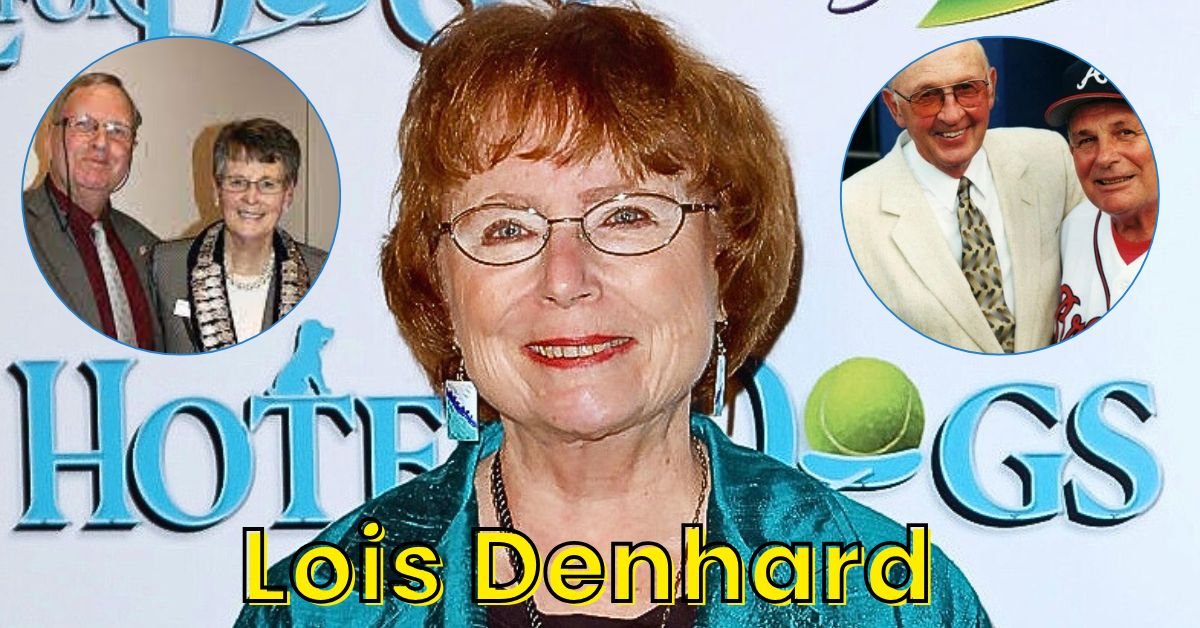
Lois Denhard captured hearts across generations—first as the devoted wife of legendary Atlanta Braves broadcaster Ernie Johnson Sr., and decades later as an unexpected viral meme sensation that swept across TikTok, Twitter, and Instagram in 2024-2025.
Born in the bustling streets of Chicago during the 1920s, Lois lived a life defined by quiet strength, unwavering faith, and selfless dedication to her family and community. While she never sought the spotlight during her 94-96 years of life, her story of humble service, enduring love, and rock-solid values resonated so deeply that the internet rediscovered her long after her passing in January 2023, transforming her into a symbol of wholesome nostalgia and authentic living.
What makes Lois Denhard Johnson’s story particularly compelling is the striking contrast between her intentionally private life and her posthumous internet fame.
Throughout her marriage of over 60 years to one of baseball’s most recognizable voices, Lois deliberately stayed behind the scenes, managing the household, raising three accomplished children, and serving her Roswell, Georgia community with grace and humility.
She embodied the values of her generation—faith, family, and service over ambition—creating a legacy that would profoundly influence her children, including Emmy Award-winning TNT broadcaster Ernie Johnson Jr., who credits his mother’s unwavering support as the foundation of his own success.
The viral meme phenomenon that brought Lois Denhard’s name to millions of people who never knew her during her lifetime speaks to something deeper than internet humor.
In an age of carefully curated social media personas and celebrity culture, the genuine curiosity about a woman who lived authentically, loved unconditionally, and served selflessly struck a chord with audiences hungry for real stories of real people.
This comprehensive biography explores both the remarkable woman behind the name and the cultural moment that made her story relevant to a new generation, offering insights into a life well-lived and a legacy that continues to inspire long after her final days.
Table of Contents
Quick Facts About Lois Denhard
| Category | Details |
|---|---|
| Full Name | Lois Denhard Johnson |
| Date of Birth | Early 1920s (exact date undisclosed) |
| Birthplace | Chicago, Illinois, USA |
| Date of Death | January 17, 2023 |
| Place of Death | Roswell, Georgia, USA |
| Age at Death | Approximately 94-96 years old |
| Nationality | American |
| Ethnicity | Caucasian (European descent – German surname origin) |
| Religion | Christian (Lutheran background) |
| Famous For | Wife of Ernie Johnson Sr., mother of Ernie Johnson Jr., viral meme figure |
| Spouse | Frederick Ernest “Ernie” Johnson Sr. (m. 1947 – d. 2011) |
| Marriage Duration | 60+ years (1947-2011) |
| Children | Three – Dawn Johnson, Chris Johnson, Ernie Johnson Jr. |
| Occupation | Homemaker, community volunteer, devoted mother |
| Residence | Roswell, Georgia (later years) |
| Net Worth | Estimated $1-2 million (family assets) |
| Husband’s Career | MLB pitcher, Atlanta Braves broadcaster (37+ years) |
| Notable Family | Son Ernie Jr. (TNT sportscaster, “Inside the NBA”) |
| Community Role | Church volunteer, mentor, service leader |
| Legacy | Faith-driven family matriarch, viral internet figure (2024-2025) |
| Viral Status | TikTok/Twitter meme trend (posthumous, 2024-2025) |
Who is Lois Denhard?
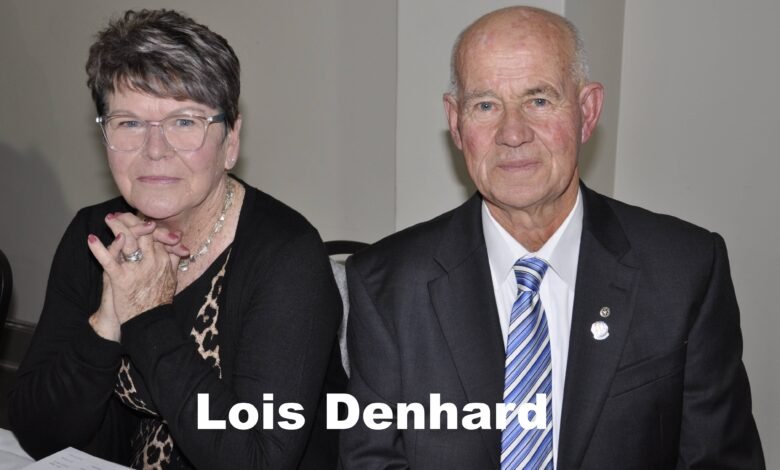
Lois Denhard Johnson was the cornerstone of a remarkable American family whose influence extends from baseball diamonds to broadcasting booths to millions of social media screens.
Though she lived most of her 94-96 years deliberately out of the public eye, her impact as a devoted wife, dedicated mother, and community servant created ripples that continue to expand long after her passing in January 2023.
To understand who Lois Denhard truly was requires looking beyond the recent viral meme phenomenon to the substance of a life built on faith, family values, and selfless service to others.
Born into the challenging era of the 1920s Great Depression in Chicago, Illinois, Lois developed the resilience, humility, and compassion that would define her character throughout her long life.
She witnessed America’s transformation through the 20th century—from economic hardship through World War II, the post-war boom, the civil rights movement, and into the modern digital age—yet her core values remained remarkably consistent.
Those who knew her describe a woman of gentle demeanor but fierce determination, whose quiet strength provided the foundation upon which her husband’s public career and her children’s achievements were built.
Early Recognition
During her lifetime, Lois Denhard’s recognition came primarily through her association with her husband, Ernie Johnson Sr., one of the most beloved voices in Atlanta Braves baseball history.
For over three decades, Ernie’s play-by-play commentary brought Braves games into homes across the Southeast, and while he was the voice fans heard, Lois was the unseen support system that made his demanding career possible.
She managed household responsibilities, raised their three children largely on her own during baseball season, and created the stable home environment that allowed Ernie to thrive professionally.
Among Atlanta’s sports community and the Roswell, Georgia area where the family settled, Lois earned respect as a woman of substance and grace. She wasn’t seeking recognition for herself but naturally garnered admiration through her consistent character, her active church involvement, and her genuine care for others.
Friends and neighbors remember her warmth, her open hospitality, and her ability to make everyone feel valued and heard. This reputation—built quietly over decades—represented the kind of recognition Lois valued: not fame but respect, not celebrity but genuine connection.
The posthumous recognition through viral internet fame in 2024-2025 caught even her family by surprise. Suddenly, “Who is Lois Denhard?” became one of the internet’s burning questions, with millions of people searching for information about this woman they’d never heard of before.
The meme trend, while humorous in nature, sparked genuine curiosity about the real person behind the name, leading many to discover a story of authentic American values and quiet heroism that resonated across generational and cultural divides.
Family Connection
Lois Denhard’s most profound legacy lives through her family connections, particularly her son Ernie Johnson Jr., one of sports broadcasting’s most respected and beloved figures.
As the longtime host of TNT’s “Inside the NBA” and a prominent voice across Turner Sports coverage, Ernie Jr. has won multiple Emmy Awards and universal acclaim for his professionalism, humor, and humanity.
In interviews, he consistently credits his mother and father with instilling the values, work ethic, and character that enabled his success.
The family connection extends beyond just Ernie Jr.’s public prominence to include daughters Dawn and Chris Johnson, who while maintaining more private lives, carry forward their mother’s legacy of faith, service, and family commitment.
The three Johnson children experienced firsthand their mother’s unconditional love, her patient guidance, and her living example of how to navigate life with integrity and grace. These lessons shaped not just their personal lives but their approach to parenting the next generation, ensuring Lois’s influence continues through her grandchildren.
Lois’s marriage to Ernie Johnson Sr. represented a partnership that spanned six decades and demonstrated what genuine commitment looks like through all life’s seasons.
They met during the World War II era, married in 1947 when Lois was just 19 years old, and built a life together that weathered the challenges of a demanding baseball career, the pressures of public life, and the normal struggles that test any long-term relationship.
Their enduring love story—highlighted by mutual respect, shared faith, and complementary roles—became a model for their children and grandchildren of what marriage could be at its best.
Early Life and Childhood
Lois Denhard’s early years unfolded against the backdrop of 1920s and 1930s Chicago, a vibrant but challenging time and place that would shape the character of a generation.
Born into an era defined by economic hardship and social transformation, young Lois learned lessons about resilience, resourcefulness, and the importance of community support that would guide her throughout her life.
While specific details about her parents, siblings, and childhood home remain largely private—consistent with her lifelong preference for privacy—the general context of her upbringing provides crucial insights into the woman she would become.
Chicago Upbringing (1920s)
Chicago in the 1920s was a city of contrasts—booming industry and crushing poverty, cultural vibrancy and social tension, opportunity and limitation existing side by side.
The city’s neighborhoods were largely defined by ethnicity and class, with immigrant communities creating tight-knit enclaves where shared language, culture, and mutual support helped families survive and occasionally thrive.
Lois’s surname “Denhard” suggests German ancestry, likely placing her family within one of Chicago’s substantial German-American communities that maintained strong cultural traditions while adapting to American life.
Growing up in this environment meant experiencing both the excitement of city life—with its cultural institutions, diverse populations, and economic opportunities—and the challenges of urban poverty, overcrowding, and social stratification. Young Lois would have attended public schools where children from various backgrounds came together, learning to navigate differences while absorbing the common American values that schools of that era emphasized: patriotism, hard work, civic responsibility, and moral character.
The neighborhood environment where Lois spent her formative years likely emphasized community bonds, with extended family, neighbors, and church communities providing mutual support that was essential for survival during difficult times.
Children played in streets and alleys, families gathered for meals and celebrations, and everyone knew everyone else’s business—for better and worse. This close-knit communal living taught Lois the value of relationships, the importance of reputation built through consistent character, and the reality that individual and community wellbeing were inseparably connected.
Great Depression Era
The Stock Market Crash of 1929 and the subsequent Great Depression that dominated the 1930s profoundly impacted every American family, including Lois’s.
As a child and young teenager during this darkest economic period in American history, Lois witnessed firsthand what genuine hardship looked like—fathers unable to find work, families losing homes, neighbors going hungry, and the psychological toll of prolonged uncertainty and want.
These experiences created what we might call Depression Era values: frugality, resourcefulness, gratitude for simple things, distrust of waste and ostentation, and deep empathy for those struggling.
The Great Depression taught Lois and her generation lessons that affluent generations struggle to comprehend. They learned to make do with what they had, to repair rather than replace, to share scarce resources, and to find joy and meaning despite material limitations.
They learned that character and relationships mattered more than possessions, that dignity could be maintained even in poverty, and that helping others even when you had little yourself was not just morally right but practically necessary for community survival.
For young Lois, these Depression years likely meant wearing hand-me-down clothes, eating simple meals, doing without many things peers in better times would consider necessities, and contributing to household survival through work inside and outside the home.
Rather than damaging her psychologically, these challenges appear to have strengthened her character, teaching patience, resilience, gratitude, and humility that would serve her throughout life.
The Depression generation often displayed remarkable optimism despite their hardships—they didn’t expect life to be easy or feel entitled to comfort, but they believed in the possibility of a better future through hard work, faith, and perseverance.
Formative Values
The values Lois Denhard carried throughout her life—faith, family, service, humility, gratitude, perseverance—were forged during these formative childhood and adolescent years in Depression-era Chicago.
Her family likely emphasized education despite economic hardships, understanding that knowledge and skills offered the best path to future security.
They probably practiced strong religious faith, finding comfort, community, and moral guidance through church involvement during times when material comforts were scarce.
Hard work wasn’t just valued in Lois’s upbringing—it was required for survival. Everyone in the family contributed what they could, with children taking on responsibilities that modern affluent children never experience.
This early introduction to productive work, rather than being exploitative or harmful, apparently instilled in Lois a lifelong appreciation for industriousness, responsibility, and the satisfaction of contributing meaningfully to family and community welfare.
Perhaps most importantly, Lois learned the difference between what matters and what doesn’t. Growing up with material scarcity but relational richness taught her that possessions fade but character endures, that success measured by integrity and relationships trumps success measured by wealth and status, and that the quietest lives—lived with consistency and compassion—often create the most lasting positive impact.
These foundational values would guide every major decision Lois made throughout her 94-96 years, from her choice of husband to her approach to parenting to her decades of community service.
Marriage to Ernie Johnson Sr.

The love story between Lois Denhard and Frederick Ernest “Ernie” Johnson Sr. represents the kind of enduring partnership that sustained generations past—built not on fleeting passion but on mutual respect, shared values, complementary strengths, and unwavering commitment through every season of life.
Their marriage, which lasted from 1947 until Ernie’s death in 2011, spanned more than six decades and produced three children whose lives bear witness to the solid foundation their parents created.
How They Met (WWII)
Lois and Ernie’s paths crossed during the World War II era, a time when the entire nation was mobilized for the war effort and normal life rhythms were disrupted by military service, rationing, and uncertainty.
The exact circumstances of their meeting remain part of the family’s private history, but the timing suggests they were part of that greatest generation whose young adulthood was defined by global conflict and the tremendous social changes war brings.
The wartime era created unique conditions for relationships. Young people faced the real possibility of separation, injury, or death, making questions of love and commitment more urgent. Many couples married quickly before military deployments, while others waited anxiously for loved ones to return.
The shared experience of contributing to the war effort—whether through military service, factory work, rationing, or volunteer activities—created powerful bonds between people who endured those challenging years together.
For Lois and Ernie, their wartime-era meeting laid the foundation for a relationship rooted in something deeper than convenience or casual attraction.
They both came from working-class backgrounds, understood the value of hard work and sacrifice, and shared the common values of their generation: faith, duty, family, and patriotism. Ernie’s athletic abilities had already drawn attention—he would eventually pitch in Major League Baseball—but he was still finding his path when he and Lois began their relationship.
She saw in him not just athletic talent but character, potential, and shared values that would matter far more than any temporary success or setback.
Wedding (1947)
On November 15, 1947, Lois Denhard and Ernie Johnson Sr. exchanged vows and began their lifelong partnership. Lois was approximately 19 years old at the time—very young by contemporary standards but typical for that era when women often married in their late teens or early twenties.
The post-war period saw a surge in marriages and births as servicemen returned home, creating the famous Baby Boom generation and establishing the family-focused suburban culture that would define mid-century America.
The 1947 wedding likely reflected the simpler celebrations of that era rather than the elaborate productions modern weddings have become. Post-war scarcity meant that resources were still limited, and couples focused on beginning their lives together rather than staging expensive ceremonies.
What mattered wasn’t the size of the diamond or the lavishness of the reception but the sincerity of the commitment being made before God, family, and community.
As Lois took the surname Johnson and embraced her new role as Ernie’s wife, she was entering a partnership that would require tremendous flexibility and strength. Ernie was pursuing a baseball career—a path that meant seasonal separations, financial uncertainty, frequent moves, and the pressure of performing in the public eye.
Lois understood that being a baseball wife meant being the family’s anchor, maintaining stability at home while Ernie traveled, and subordinating her own ambitions to support his career. This was not unusual or resented in that era; it was the expected and accepted division of labor that most couples embraced.
60+ Years Together
Six decades of marriage represents an extraordinary achievement that relatively few couples today will experience. Lois and Ernie’s relationship lasted from their 1947 wedding until Ernie’s death on August 12, 2011, at age 84—a span of nearly 64 years that weathered every challenge long-term marriage encounters.
Their six decades together encompassed multiple distinct life phases. The early years (late 1940s-1950s) focused on establishing their family as Ernie pursued baseball and their children were born. The middle years (1960s-1980s) saw Ernie’s transition from playing to broadcasting while Lois managed the household and raised their maturing children.
The later years (1990s-2000s) brought grandchildren, retirement transitions, and the slower pace of aging. Through all these phases, their partnership adapted while maintaining its core foundation of mutual respect, shared faith, and complementary roles.
Long marriages aren’t automatically happy marriages, but all evidence suggests Lois and Ernie’s relationship was characterized by genuine love and respect. Ernie Jr. has spoken in interviews about his parents’ relationship as a model of commitment, describing his mother as a “fighter” with vivacity that persisted even into her nineties.
The fact that they navigated Ernie Sr.’s demanding career without the divorce that claimed many sports marriages testifies to their dedication and the strength Lois provided as the family’s foundation.
When Ernie Sr. passed away in 2011, Lois lost not just a husband but a partner of more than six decades—someone who had been part of her adult life longer than he hadn’t been. She lived another 12 years as a widow, maintaining her faith, her connections to family and community, and the values she and Ernie had shared.
Those who knew her during these final years report that while she naturally grieved her husband’s loss, her own faith and the solid foundation of her life sustained her through this final chapter.
Age and Personal Information
Lois Denhard was born in the early 1920s in Chicago, Illinois, making her approximately 94-96 years old at the time of her death on January 17, 2023.
The exact birth date remains part of her family’s private information—consistent with Lois’s lifelong preference for privacy—but the general timeframe places her firmly within what’s often called America’s Greatest Generation, those born roughly between 1901 and 1927 who came of age during the Great Depression and World War II.
This generational context is crucial for understanding Lois’s character and values. Her generation experienced unparalleled hardship and sacrifice during their formative years, followed by the post-war prosperity and social transformation of mid-century America.
They built the suburbs, staffed the factories that made America an economic powerhouse, raised the Baby Boom generation, and established the social stability that following generations often take for granted. The Greatest Generation earned their title not through seeking recognition but through consistent character, duty fulfillment, and sacrifice for causes larger than themselves.
Lois lived through extraordinary historical changes during her nine-plus decades. Born when horses still competed with automobiles for street space, she lived to see the internet age, smartphones, and social media.
She experienced the Roaring Twenties (as a baby), the Great Depression, World War II, the Cold War, the Space Race, the Civil Rights Movement, Vietnam, Watergate, the fall of the Berlin Wall, 9/11, and the digital revolution.
Through all these changes, she maintained consistent values and character—not out of rigidity or inability to adapt, but from deep conviction about what truly matters.
Her American nationality and Chicago upbringing connected Lois to the great American immigrant story. The surname Denhard suggests German ancestry, placing her within one of America’s largest ethnic immigrant communities.
German-Americans, who often faced discrimination during both World Wars despite their deep American patriotism and contributions, exemplified the complicated reality of hyphenated American identity—maintaining cultural traditions while fully embracing American values and citizenship.
Lois practiced Christian faith throughout her life, with Lutheran background specifically mentioned in some sources. This Protestant tradition, with its emphasis on faith, grace, scripture, and service, provided the spiritual foundation for her worldview and daily living.
Her faith wasn’t merely cultural identity or occasional religious participation but an active, living commitment that guided decisions, sustained her through hardships, and expressed itself in practical service to others.
At 94-96 years old when she passed in early 2023, Lois had lived what by any measure was a long and full life. She experienced the joy of seeing her children become successful adults, her grandchildren grow up, and possibly even great-grandchildren born.
She maintained her vivacity and spirit even into very old age, described by her son Ernie Jr. as a “fighter” who remained engaged with life and family. The length of her life itself testifies to good fortune, good genetics, and likely the stress-reducing effects of strong faith, loving relationships, and a life well-lived without the corrosive effects of bitterness, resentment, or regret.
Family Life and Children
Lois Denhard Johnson’s greatest legacy lives through her three children—Dawn Johnson, Chris Johnson, and Ernie Johnson Jr.—whose lives bear witness to the values, love, and guidance their mother provided.
While Ernie Sr.’s career often took him away from home, Lois was the consistent presence, the daily influence, and the tireless worker who created the stable, loving environment in which her children flourished.
Understanding Lois’s impact requires examining how each of her children benefited from her devotion and carries forward her legacy.
Dawn Johnson
Dawn Johnson, the eldest child and first daughter, experienced her mother’s parenting from infancy through the challenging middle years of establishing the family. As the firstborn, Dawn held a special place in the family dynamic, serving as the oldest child on whom parents often practice their evolving parenting philosophies.
While Dawn has maintained a largely private life—following her mother’s example of staying out of public spotlights—those who know the family report that she inherited Lois’s faith, her commitment to family, and her preference for substance over showmanship.
Being the oldest daughter of a sports family in the 1950s-60s meant navigating unique challenges. Dawn grew up during her father’s baseball playing career, experiencing the moves, separations, and uncertainties that baseball families faced.
Lois’s steady presence provided the continuity that children need, ensuring that despite their father’s absences and the family’s periodic relocations, Dawn and her siblings experienced stability, routine, and the security of knowing they were loved and prioritized.
Chris Johnson
Chris Johnson, the middle child and second daughter, occupied what birth order theorists consider a particularly interesting position. Middle children often develop distinct characteristics—flexibility, diplomatic skills, independence—from navigating between older and younger siblings’ different needs and developmental stages.
Chris, like her sister Dawn, has chosen to live largely outside public view, suggesting that both daughters learned from their mother’s example that meaningful lives don’t require public recognition or celebrity status.
Growing up as the middle child meant Chris had older Dawn as a role model while also helping care for younger brother Ernie Jr. This position in the family likely taught valuable lessons about relationships, responsibility, and the importance of contributing to family wellbeing.
Lois’s parenting of Chris during the 1960s-70s occurred during America’s social revolution, when traditional gender roles and values were being questioned and often rejected. Yet Lois apparently succeeded in passing to Chris a sense of identity, purpose, and values that didn’t depend on conforming to any particular cultural moment but rather on timeless principles of character, faith, and service.
Ernie Johnson Jr.
Ernie Johnson Jr., born in 1956, is the youngest child and only son—and by virtue of his public career, the family member through whom most people learn about Lois Denhard.
As host of TNT’s Emmy Award-winning “Inside the NBA” and a prominent voice across Turner Sports’ coverage of major sporting events, Ernie Jr. has achieved professional success that rivals and in some ways exceeds his father’s accomplishments.
Yet he consistently credits his parents—and especially his mother—with providing the foundation for everything he’s achieved.
Ernie Jr. has spoken publicly about his mother’s influence in ways that illuminate her character and parenting approach. He describes her as a “fighter” who remained “vivacious” even at age 90, suggesting a woman who maintained her spirit and engagement with life despite aging’s challenges.
His own values—faith, family, humility, service, empathy—clearly reflect Lois’s teaching and example. His adoption of multiple children, his authentic and vulnerable approach to broadcasting, his willingness to discuss faith publicly in a secular industry, and his reputation for kindness and integrity all testify to the foundation Lois and Ernie Sr. built.
Being the youngest child and only son in a sports family created both advantages and pressures for Ernie Jr. He benefited from parents who had refined their parenting through experience with two older daughters, but he also faced expectations—explicit or implicit—about following his father into sports.
Lois’s role in helping young Ernie Jr. navigate these pressures while developing his own identity and path cannot be overstated. Her consistent presence, unconditional love, and grounding in values larger than career success gave Ernie Jr. the security to pursue his path without fear of disappointing his parents if that path differed from expectations.
All three Johnson children, whether publicly visible like Ernie Jr. or privately living like Dawn and Chris, carry forward their mother’s legacy of faith, family commitment, and service to others.
They represent Lois’s most important and lasting work—not accomplishments measured by money, fame, or recognition, but human beings of character, compassion, and integrity who in turn are passing these values to the next generation.
Faith and Spirituality
Lois Denhard Johnson’s Christian faith was not a compartmentalized aspect of her life reserved for Sunday mornings but rather the foundation upon which everything else was built.
Her Lutheran background provided specific theological frameworks and worship practices, while her broader Christian commitment shaped her worldview, guided her decisions, sustained her through hardships, and expressed itself in practical service to others.
Understanding Lois requires understanding that her faith was authentic, active, and central to her identity.
Christian Values
The Christian values that shaped Lois’s life flowed from biblical teachings she took seriously and personally. Faith in God’s sovereignty provided assurance that circumstances beyond her control were ultimately in loving hands.
Grace—the Christian concept of unmerited divine favor—created humility and prevented the judgmentalism that corrodes some religious people’s relationships.
Love—defined not as mere emotion but as active commitment to others’ wellbeing—motivated her service and sacrifice.
Lois’s Christianity emphasized patience, forgiveness, gratitude, stewardship, and servant leadership. These weren’t abstract theological concepts but practical guides for daily living. Patience helped her endure Ernie Sr.’s long absences and the inevitable frustrations of parenting and homemaking.
Forgiveness prevented bitterness from taking root when relationships experienced inevitable hurts and disappointments. Gratitude kept her focused on blessings rather than dwelling on limitations.
Stewardship reminded her that time, resources, and abilities were gifts to be used wisely for good purposes. Servant leadership taught that influence comes through humble service rather than domination or coercion.
Her faith provided moral anchors in a rapidly changing culture. As American society experienced the sexual revolution, changing gender roles, increasing secularization, and evolving family structures, Lois maintained convictions about marriage, family, morality, and purpose that didn’t shift with cultural fashions.
This wasn’t rigid fundamentalism or judgmental rejection of those who chose differently, but rather a quiet confidence in timeless truths that had proven reliable through her own experience and observation.
Community Church Involvement
Lois’s faith expressed itself practically through active church involvement throughout her adult life.
Her participation wasn’t limited to Sunday attendance but included volunteer work, committee service, mentorship of younger women, participation in women’s groups, and the countless small acts of service that make faith communities function.
Churches rely on people like Lois—faithful members whose consistent, unglamorous work creates the environment in which spiritual life flourishes.
Her church involvement provided multiple benefits beyond spiritual growth. It created community connections and support networks crucial especially during years when Ernie’s career kept him traveling. It offered opportunities to serve and contribute meaningfully beyond homemaking roles.
It exposed her children to faith community, teaching by example rather than mere instruction about the importance of spiritual life. It connected the family to people from diverse backgrounds united by shared faith, creating relationships that transcended the socioeconomic stratifications that often divide communities.
Lois likely participated in women’s Bible studies, prayer groups, service projects, and mentorship relationships where more experienced women guided younger ones in navigating marriage, parenting, and spiritual growth.
These relationships—both those where she received guidance and later those where she provided it—created the intergenerational connections that strengthen communities and transmit wisdom that can’t be taught through formal education.
Her church service was characterized by the same quiet consistency that marked everything Lois did. She wasn’t seeking recognition or leadership positions for ego gratification but rather genuinely committed to contributing to her faith community’s mission of worship, fellowship, and service.
This humble service, multiplied across hundreds of people like Lois in thousands of congregations nationwide, represents the unglamorous but essential foundation of American religious life that more visible religious leaders depend upon but often fail to acknowledge.
Personal Life and Character

Lois Denhard Johnson’s personal life was characterized by choices that seem countercultural in our contemporary celebrity-obsessed age—the choice of privacy over publicity, substance over showmanship, service over self-promotion, and lasting impact over temporary recognition.
Her character—forged in Depression-era Chicago, refined through decades of marriage and motherhood, and demonstrated through consistent actions rather than words—represented qualities increasingly rare in modern life: patience, humility, quiet strength, unconditional love, and unwavering integrity.
Homemaker Role
Lois embraced the homemaker role that was standard for women of her generation, but calling her “just a homemaker” profoundly misunderstands both the importance and complexity of the work she performed.
As household manager for a family with a traveling father, Lois handled responsibilities that today might be divided among multiple professionals: financial management, child development specialist, educator, chef, healthcare coordinator, household maintenance supervisor, social coordinator, and emotional support counselor.
The homemaker role in mid-20th century America carried dignity and recognition that contemporary culture often fails to appreciate. Managing a household was understood as valuable, skilled work requiring intelligence, organization, patience, and endless energy.
Women like Lois took pride in creating efficient, welcoming homes where children thrived and husbands could rest and recharge. This wasn’t subordination but rather division of labor that allowed families to function effectively with one parent focusing on external income generation while the other specialized in home and family management.
Lois’s approach to homemaking reflected both practical necessity and personal values. With Ernie frequently traveling for baseball and later broadcasting, she couldn’t wait for his help with daily decisions and crises.
She had to be self-sufficient, capable, and confident in managing everything from children’s illnesses to household repairs to financial decisions.
This responsibility developed remarkable competence and independence that enriches rather than diminishes our understanding of her traditional role.
Her homemaking extended beyond mere maintenance tasks to creating the emotional atmosphere that makes a house a true home.
She cultivated warmth, welcome, stability, and joy that made their house a place where children wanted to bring friends, where Ernie could find peace after stressful work, and where visitors felt valued and comfortable.
This emotional labor—often invisible but crucial for family wellbeing—represented perhaps Lois’s most important contribution to her family’s success.
Behind-the-Scenes Support
While Ernie Johnson Sr. enjoyed public recognition for his baseball career and broadcasting work, Lois provided the behind-the-scenes support that made his public success possible.
This pattern—where one partner receives public acclaim while the other provides unseen support—characterized many marriages of that era and raises important questions about how we define success, value different forms of contribution, and recognize various paths to meaningful life.
Lois’s behind-the-scenes support included numerous dimensions. Practically, she managed all household responsibilities so Ernie could focus on his demanding career. Emotionally, she provided encouragement during setbacks, celebrated successes without jealousy, and maintained faith in him when others doubted.
Socially, she handled the obligations that came with Ernie’s public role, hosting events, maintaining relationships, and representing the family graciously. Spiritually, she prayed for him, reminded him of values larger than career success, and kept the family grounded in faith.
This support wasn’t passive or subordinate but rather active partnership where both parties contributed essential elements. Ernie provided financial security and public representation; Lois provided stability and private foundation.
Neither could have succeeded at their respective roles without the other’s complementary contribution. Understanding their partnership this way—as true partnership rather than inequality—helps appreciate both of their contributions without needing to minimize either.
The fact that Lois’s contributions were largely invisible during her lifetime but are now recognized through the viral meme phenomenon that brought her story to millions creates interesting commentary about how we value different forms of work and impact.
The internet’s fascination with discovering this “lost figure from the past” suggests hunger for authentic stories of genuine contribution beyond celebrity culture’s hollow metrics of success.
Community Involvement and Service
Beyond her roles as wife and mother, Lois Denhard Johnson distinguished herself through decades of community involvement and service that embodied her faith’s teaching that genuine religion expresses itself through care for others.
Her volunteer work, mentorship, church leadership, and countless small acts of neighborliness created ripples of positive impact that extended far beyond her immediate family, touching lives throughout the Roswell, Georgia community where the family settled.
Lois’s community service reflected the Greatest Generation’s ethos of civic responsibility—the belief that citizenship involves more than paying taxes and voting, extending to active contribution to community wellbeing.
She volunteered with church programs that served families in need, participated in charitable organizations addressing various community challenges, and likely engaged in numerous informal helping relationships that never appeared in any official records but mattered immensely to those she helped.
Her service emphasized meeting practical needs rather than merely administrative participation. She might help with food pantries that fed hungry families, participate in programs supporting struggling mothers, visit elderly or homebound community members, or assist with childcare for families in crisis.
These hands-on service roles reflected genuine compassion and willingness to do unglamorous work that bureaucrats might coordinate but rarely perform themselves.
Mentorship represented another dimension of Lois’s community contribution.
Younger women—whether church members, neighbors, or daughters’ friends—found in Lois someone who had successfully navigated the challenges they faced: building strong marriages, raising good children, managing households effectively, and maintaining faith through hardships.
Her mentorship wasn’t formal teaching but rather the informal guidance that flows from relationships, the wisdom shared over coffee, the encouragement offered during difficulties.
Net Worth and Financial Background
Estimated Wealth ($1-2M)
At the time of her passing in January 2023, Lois Denhard’s net worth was estimated between $1 million and $2 million.
Unlike modern influencers or celebrities, her wealth wasn’t built through personal fame or public career pursuits. Instead, it reflected decades of family partnership, shared assets, and financial wisdom accumulated over more than 60 years of marriage.
Sources of Income
Lois’s financial foundation came from multiple streams that reflected her era and values. Her wealth primarily accumulated through her husband’s successful baseball career and later his three-decade broadcasting career with the Atlanta Braves.
The family also benefited from real estate investments, retirement savings, and the subsequent success of their son Ernie Jr.’s broadcasting career. However, money was never Lois’s primary focus—family, faith, and community always took precedence over material wealth.
Real Estate and Assets
The Johnson family built their primary residence in the Atlanta area after the Braves relocated from Milwaukee in the 1960s. She spent her final years in Roswell, Georgia, where she maintained her independence and remained active in her community well into her 90s.
Their real estate holdings, combined with conservative investment strategies typical of their generation, provided financial security that allowed Lois to live comfortably while maintaining the humble lifestyle she always preferred.
The Viral Meme Phenomenon
How It Started (2024-2025)
In early 2025, a simple social media post asked: “Who is Lois Denhard?” The question struck a chord—an older name, seldom discussed, suddenly circulating on platforms like TikTok, X (formerly Twitter) and Instagram.
What began as random internet curiosity quickly snowballed into a full-blown viral trend. Unlike many viral moments rooted in controversy or negativity, the Lois Denhard meme emerged from genuine intrigue and wholesome appreciation.
Thousands of users began sharing posts featuring her name in humorous, affectionate, and often exaggerated contexts.
The meme’s mysterious origin added to its appeal—nobody could pinpoint exactly how or why it started, which only fueled more curiosity. Young social media users who had never heard of her began researching her story, discovering a woman whose values of faith, family, and service stood in stark contrast to today’s fame-obsessed culture.
Why It Went Viral
The meme went viral for several compelling reasons that reveal something deeper about modern internet culture. First, her distinctive name intrigued younger audiences unfamiliar with mid-20th century naming conventions.
Second, unlike many viral moments that thrive on controversy, the “Lois Denhard meme” became a symbol of wholesome curiosity. The trend celebrated traditional values in an era increasingly skeptical of them.
Her connection to Ernie Johnson Jr., a beloved figure in sports broadcasting known for his emotional storytelling and Christian faith, added credibility and interest. Fans of “Inside the NBA” began connecting the dots, realizing they were learning about the matriarch who shaped one of sports media’s most respected families.
The algorithm amplified content featuring her name as engagement skyrocketed, creating a self-sustaining cycle of discovery and sharing.
Perhaps most importantly, the meme represented a bridge between generations—older sports fans who remembered the Johnson family’s story and younger users discovering it for the first time.
In an internet landscape often dominated by divisiveness, the Lois Denhard trend offered something refreshingly positive: appreciation for a life well-lived.
Meme Examples and Impact
The meme took various forms across different platforms. On TikTok, users created short videos asking “Who is Lois Denhard?” with reactions ranging from humorous confusion to genuine emotional responses after learning her story.
Twitter threads compiled facts about her life, often going viral with tens of thousands of likes and retweets. Instagram featured throwback photos of Lois with Ernie Sr., captioned with tributes to “the matriarch behind the mic.”
The impact extended beyond simple entertainment. The meme trend introduced Lois Denhard to millions of new viewers, transforming her legacy from family history into a modern cultural moment.
Many young people commented that learning about her made them appreciate their own grandmothers more. Others expressed admiration for a generation that valued commitment, service, and humility over social media fame.
The trend also sparked broader conversations about unsung heroes—the supportive spouses, parents, and community members whose contributions shape public figures but rarely receive recognition. In this way, Lois’s viral fame became a tribute not just to her, but to countless others who lived similar lives of quiet influence.
Death and Final Years
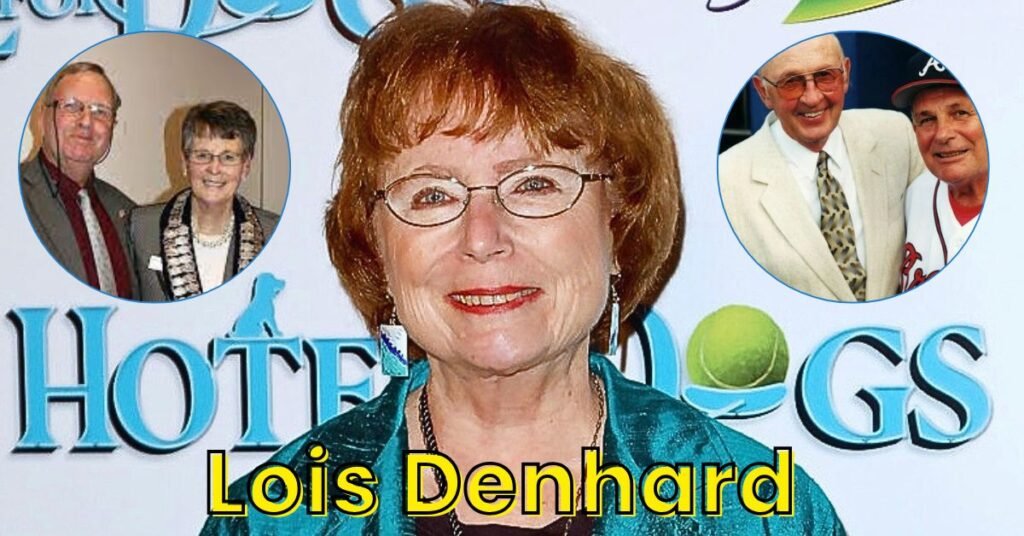
Passing (January 2023)
Lois Marjorie “Lolo” Denhard Johnson passed away on January 17, 2023, at approximately 94-96 years old. She spent her final years surrounded by family in the Atlanta area, maintaining remarkable vitality and independence despite her advanced age.
Ernie Jr. described her as “Betty White on steroids” for her lively personality, reflecting the sharp wit and sense of humor she maintained until the very end.
During her final years, Lois remained an engaged grandmother and great-grandmother, watching her son host “Inside the NBA” and never missing an episode.
She continued enjoying dinners out with friends and family, demonstrating the social engagement that defined her entire life.
Those who knew her during this period remember a woman who remained curious, kind, and fully present—refusing to let age diminish her spirit.
Her death came peacefully, twelve years after her husband Ernie Sr. passed in 2011. Family members celebrated her life as one marked by devotion, faith, and love—values she embodied every single day.
Her funeral drew family, friends, and community members whose lives she had touched over nine decades of gracious living.
Legacy Left Behind
Lois left behind a legacy that extends far beyond her immediate family. Her three children—Ernie Jr., Dawn, and Chris—all credit her with instilling the values that guide their lives.
Ernie Jr., in particular, often references his mother’s influence in interviews and his memoir, describing how her faith and character shaped his approach to broadcasting, fatherhood, and life’s challenges.
Her legacy includes the countless people she mentored, the families she supported during difficult times, and the church communities where she served faithfully for decades.
Friends remember her compassion, neighbors recall her generosity, and family members treasure the memories of a woman who made everyone feel valued and heard.
Perhaps most significantly, her unexpected viral fame in 2024-2025 introduced her story to millions who never knew her, creating a new chapter in her legacy.
This digital remembrance ensures that future generations will know about Lois Denhard—not as a meme, but as an example of how ordinary acts of faithfulness create extraordinary impact.
Husband Ernie Johnson Sr.
Baseball Career
Ernest Thorwald Johnson Sr. was born in Brattleboro, Vermont, on June 16, 1924, to Swedish immigrants. A talented right-handed pitcher, Ernie made his major league debut with the Boston Braves in 1950.
He pitched throughout the 1950s, including the 1957 season when the Milwaukee Braves won the World Series—a moment Lois celebrated from the stands at County Stadium.
Though not a star player, Ernie earned respect for his reliability and character. He finished his playing career with a 40-23 record and a 3.77 ERA across 273 games.
His teammate and Hall of Famer Eddie Mathews once said of him: “Maybe not the stuff of Cooperstown, but the man could pitch.” Throughout his baseball career, Lois provided unwavering support, managing family responsibilities during long seasons while Ernie traveled with the team.
Broadcasting Career
After retiring from playing, Ernie transitioned seamlessly into broadcasting—a career that would define his legacy. He came to Atlanta in 1965, one year before the Braves moved from Milwaukee, to set up a radio network and do advance public relations work. For the next three decades, his warm, gentle voice became synonymous with Braves baseball.
Ernie called more than 4,000 Braves games, becoming beloved for his genuine love of baseball and good humor. Even during losing seasons, his enthusiasm never waned.
His authenticity resonated with fans, making him one of Atlanta’s most treasured sports figures. When the Braves held “Ernie Johnson Appreciation Night” in 1989, the team drew 42,000 fans—their largest crowd in two years.
His broadcasting career included a special chapter: calling games alongside his son Ernie Jr. for several years in the 1990s.
This father-son partnership represented the culmination of a career built on character, with Lois supporting both men throughout. Ernie Sr. retired after the 1999 season at age 75, surrounded by his wife and children for his emotional final broadcast.
His Death (2011)
Ernie Johnson Sr. died on August 12, 2011, at age 87. Lois was with him when he passed, saying “I was with him last night right until the end. It was so sad.”
Their marriage had lasted over 63 years—from their wedding on November 15, 1947, through decades of baseball seasons, broadcasting careers, and raising three children together.
The outpouring of love following his death reflected the impact both Ernie and Lois had on their community.
As a member of the Braves Hall of Fame, Georgia Sports Hall of Fame, and Atlanta Sports Hall of Fame, Ernie left an indelible mark on Atlanta sports.
Yet those who knew him best understood that much of his success stemmed from Lois’s steady support and the strong family foundation she created.
Legacy and Lasting Impact
Lois Denhard’s legacy challenges our culture’s obsession with fame and public recognition. While her husband and son achieved broadcasting fame, Lois’s influence operated through different channels—quieter, perhaps, but no less powerful.
She proved that lasting impact comes not from headlines or social media followers, but from character, consistency, and authentic love lived out daily.
Her life demonstrates that supporting others’ dreams while maintaining one’s own integrity represents its own form of achievement.
She raised children who credit her with their values, supported a husband through a demanding public career, and served her community with humility and grace. These contributions created ripples extending far beyond what any public career could achieve.
The viral meme phenomenon surrounding her name offers a peculiar but fitting coda to her story. In death, she reached audiences she never could have imagined during life—not through seeking attention, but through living in a way that commanded respect and admiration once her story was told.
Young people discovering her through social media often comment that she represents values they wish were more common today.
Her influence lives on through her descendants, the families she mentored, the church communities she served, and now through millions who learned her story via the internet.
This multi-generational impact proves that true legacy isn’t measured in years, but in the lives touched and the values passed forward.
Frequently Asked Questions (FAQs)
Q: How old was Lois Denhard when she died?
Lois Denhard passed away in January 2023 at approximately 94 to 96 years old. She lived a long, fulfilling life surrounded by family.
Q: How much was Lois Denhard’s net worth?
Her estimated net worth at the time of her death was between $1-2 million, primarily from family assets, real estate holdings, and her husband’s successful baseball and broadcasting careers.
Q: Who was Lois Denhard married to?
Lois married Ernie Johnson Sr. on November 15, 1947. Their marriage lasted over 63 years until his death in 2011.
Q: How many children did Lois Denhard have?
Lois and Ernie had three children: daughters Dawn and Chris, and son Ernie Johnson Jr., who became a famous TNT sportscaster hosting “Inside the NBA.”
Q: Why did Lois Denhard go viral?
Lois Denhard went viral through organic social media sharing in 2024 and 2025 when users began posting wholesome memes about her name, sparking curiosity about her inspiring life story.
Q: Where did Lois Denhard live?
Born in Chicago, she later moved to Milwaukee during Ernie’s playing career, then settled permanently in Atlanta when the Braves relocated. She spent her final years in Roswell, Georgia.
Q: What was Lois Denhard known for?
She was known as the devoted wife of Ernie Johnson Sr. and mother of Ernie Johnson Jr., recognized for her faith, family dedication, community service, and quiet strength behind a broadcasting dynasty.
Q: How did Lois and Ernie Johnson meet?
They met in Brattleboro, Vermont, after World War II when Ernie attended a high school basketball game where Lois was cheerleading. They married the following year in 1947.
Q: Did Lois Denhard have a career?
While not pursuing a traditional public career, Lois’s life’s work centered on supporting her family, raising three children, active church involvement, volunteer work, and community service throughout her life.
Q: What was the meme about Lois Denhard?
The meme began as social media posts asking “Who is Lois Denhard?” in humorous contexts. It spread organically across TikTok, Twitter, and Instagram, introducing her inspiring family story to younger generations in a wholesome, positive way.
Conclusion
Lois Marjorie Denhard Johnson lived 94 years that mattered. Born into the uncertainty of the late 1920s, shaped by Depression and war, she built a life defined not by what she accumulated but by whom she loved and how she served.
Her marriage to Ernie Johnson Sr. spanned more than six decades, weathering the demands of professional baseball and broadcasting while raising three children who would carry forward her values.
Her story reminds us that influence doesn’t require a platform or public recognition. The quiet strength Lois demonstrated daily—supporting her husband’s dreams, raising compassionate children, serving her community with humility—created ripples that continue expanding decades later.
Her son Ernie Jr.’s emotional intelligence and faith-centered approach to broadcasting directly reflects the foundation she built.
The viral meme phenomenon that brought her name to millions in 2024-2025 represents an unusual but fitting tribute.
In an age obsessed with self-promotion, social media followers, and manufactured celebrity, the internet discovered and celebrated someone who never sought attention but lived extraordinarily nonetheless. Her unexpected fame proves that authenticity and character ultimately resonate across generations.
For those seeking to make a lasting impact, Lois Denhard’s life offers a clear blueprint: prioritize relationships over recognition, serve others without seeking credit, maintain faith through challenges, and trust that quiet faithfulness creates legacies that outlast any spotlight.
Her story isn’t just about one remarkable woman—it’s about the countless others like her whose contributions shape our world in ways rarely acknowledged but profoundly felt.
As we remember Lois, we’re challenged to ask ourselves: Are we building legacies that matter? Are we investing in people and values that endure?
Her life answers these questions with clarity—showing us that the most meaningful impacts often happen away from cameras, crowds, and applause, in the daily choices to love well, serve faithfully, and live with integrity.