
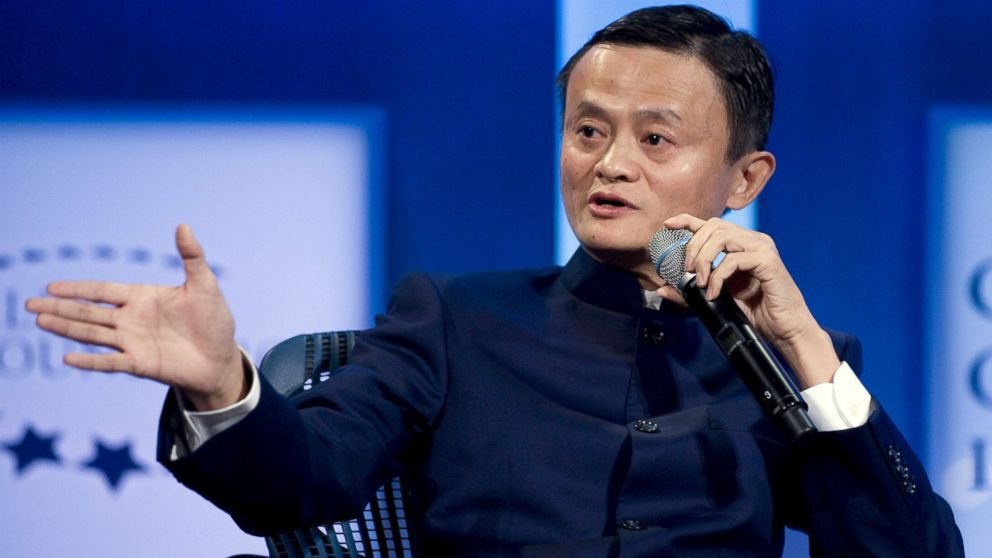
Jack Ma age has been a topic of global interest as the Alibaba founder continues to influence the business world even after stepping back from active leadership.
Born on September 10, 1964, Jack Ma is currently 61 years old in 2026, and his journey from an English teacher to becoming one of China’s most successful entrepreneurs remains inspirational.
The Chinese billionaire’s story encompasses decades of perseverance, innovation, and strategic vision that transformed e-commerce in Asia.
Despite facing regulatory challenges and choosing a quieter public profile in recent years, Jack Ma’s legacy in technology and philanthropy continues to impact millions worldwide.
Table of Contents
Quick Facts About Jack Ma
| Category | Details |
|---|---|
| Full Name | Ma Yun (马云) |
| Known As | Jack Ma |
| Date of Birth | September 10, 1964 |
| Age (2026) | 61 years old |
| Birthplace | Hangzhou, Zhejiang, China |
| Nationality | Chinese |
| Education | Hangzhou Normal University (Bachelor’s in English) |
| Occupation | Entrepreneur, Philanthropist, Former Executive Chairman of Alibaba Group |
| Net Worth (2026) | Approximately $25-30 billion USD (fluctuates) |
| Spouse | Zhang Ying (married 1988) |
| Children | 2 (son and daughter) |
Jack Ma Age, Early Life and Education Background
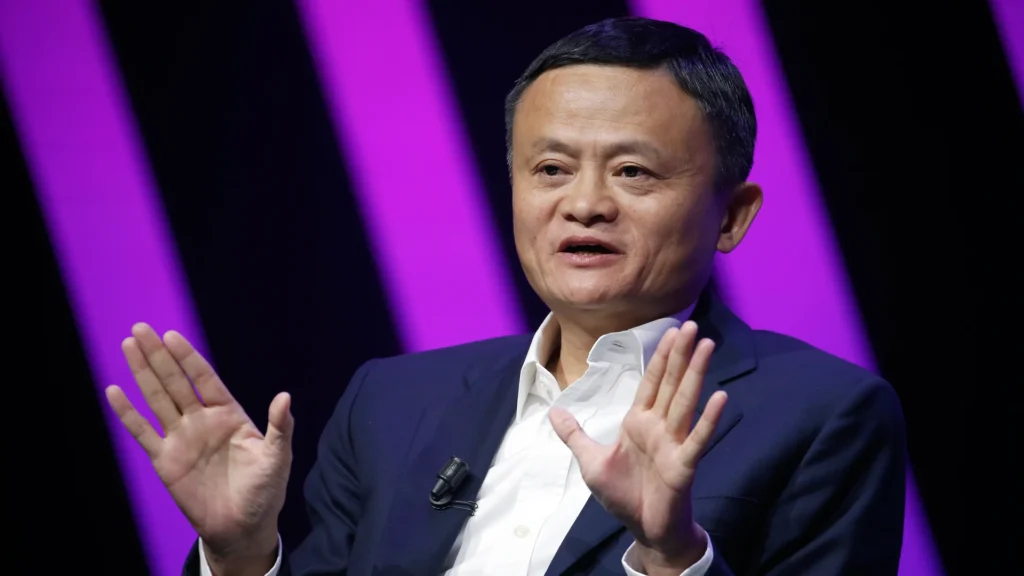
Jack Ma was born in Hangzhou, Zhejiang Province, during a time when China was still largely isolated from the Western world. His birth name, Ma Yun, would later be adapted to “Jack” when he began teaching English and wanted a name his students could easily pronounce.
Growing up in a modest family, Ma faced numerous academic challenges during his childhood. He failed his primary school examinations twice and his middle school exams three times. His struggles continued into higher education, where he failed the university entrance exam twice before finally gaining admission to Hangzhou Normal University.
Despite these setbacks, Jack Ma developed a passion for the English language at an early age. As a teenager, he would ride his bicycle to a nearby hotel to practice English with foreign tourists, offering free tours of his city in exchange for language lessons. This early determination to learn English would prove instrumental in his future success.
At Hangzhou Normal University, Ma finally found his footing, graduating in 1988 with a bachelor’s degree in English. His original plan was never to become a business magnate—he simply wanted to be a teacher. After graduation, he worked as an English teacher at Hangzhou Dianzi University, earning approximately $12 per month.
The Birth of an Entrepreneurial Vision
Jack Ma’s first encounter with the internet came in 1995 during a trip to the United States as a translator for a trade delegation. At the age of 30, he discovered the World Wide Web and was shocked to find almost no Chinese content online. When he searched for “beer,” he found results from multiple countries but nothing from China.
This discovery sparked an idea that would change his life forever. Upon returning to China, Ma gathered $20,000 from friends and founded China Pages, one of China’s first internet companies. The venture created websites for Chinese businesses, though it ultimately struggled due to limited internet infrastructure in China at the time.
Between 1998 and 1999, Jack Ma worked for the Chinese government, heading an information technology company. However, his entrepreneurial spirit couldn’t be contained. In 1999, at the age of 35, he gathered 17 friends in his apartment in Hangzhou and convinced them to invest in his new vision: Alibaba.
The name “Alibaba” was chosen because it was easy to spell, widely known across cultures due to the Arabian Nights story, and represented “Open Sesame”—opening doors to small businesses. Ma’s vision was to create a platform that would help small and medium-sized Chinese manufacturers connect with buyers worldwide.
Building the Alibaba Empire
The early days of Alibaba were challenging. The company launched just as the dot-com bubble was about to burst. Jack Ma and his team worked from his apartment with minimal resources, surviving on passion and determination rather than substantial capital.
In 1999 and 2000, Alibaba secured crucial funding from international investors, including a $25 million investment led by Goldman Sachs and SoftBank. This capital injection allowed the company to expand its operations and weather the dot-com crash that destroyed many internet startups.
Jack Ma’s leadership style was unconventional. He focused on building a customer-first culture and emphasized that Alibaba’s mission was to make it “easy to do business anywhere.” Unlike many tech founders who focused purely on technology, Ma understood the human element of business and built systems that served real merchant needs.
In 2003, Alibaba launched Taobao, a consumer-to-consumer marketplace designed to compete with eBay’s Chinese operations. Many analysts predicted Taobao would fail against the established eBay, but Jack Ma’s deep understanding of the Chinese market proved superior. Taobao offered free listings while eBay charged fees, and it integrated features Chinese consumers wanted, such as instant messaging for buyer-seller communication.
By 2007, Taobao had driven eBay out of the Chinese market. The platform’s success demonstrated Jack Ma’s ability to adapt global business models to local contexts. In subsequent years, Alibaba expanded into digital payments with Alipay (later Ant Group), cloud computing with Alibaba Cloud, and various other sectors.
The crowning achievement came in September 2014, when Alibaba Group went public on the New York Stock Exchange in the largest IPO in history at the time, raising $25 billion. Jack Ma, then 50 years old, saw his vision validated on a global stage as Alibaba’s market value soared past $230 billion.
Jack Ma’s Net Worth and Wealth Journey
Jack Ma’s net worth has experienced dramatic fluctuations throughout his career, reflecting both his business success and the complex regulatory environment in China. At his peak in 2020, his wealth reached approximately $50 billion, making him one of China’s richest individuals.
As of 2026, estimates place Jack Ma’s net worth between $25-30 billion, though exact figures remain difficult to verify. The significant decrease from his peak reflects several factors, including regulatory actions against Alibaba and Ant Group, voluntary philanthropic commitments, and market corrections in Chinese tech stocks.
The most dramatic impact on his wealth came in late 2020 and 2021, when Chinese regulators halted the planned IPO of Ant Group, which would have been the world’s largest public offering. Ant Group, the fintech company that operates Alipay and was partially owned by Ma, faced intense regulatory scrutiny over its lending practices and market dominance.
Following this regulatory intervention, Alibaba’s stock price declined substantially, directly affecting Jack Ma’s personal wealth. The Chinese government imposed a record $2.8 billion fine on Alibaba for antitrust violations, and the company underwent significant restructuring to comply with new regulations.
Despite these setbacks, Jack Ma remains among the wealthiest individuals globally. His assets include substantial holdings in Alibaba Group, investments through his private office, real estate holdings in Hong Kong and other locations, and stakes in various technology and media companies.
Jack Ma has also committed significant resources to philanthropy. In 2014, he established the Jack Ma Foundation, focused on education, entrepreneurship, and environmental causes. He has pledged billions to various charitable initiatives, including a commitment to donate shares worth over $2 billion to his foundation.
Career Achievements and Business Philosophy
Beyond building Alibaba into a trillion-dollar ecosystem, Jack Ma’s career encompasses numerous achievements that have shaped modern commerce. He pioneered the concept of “New Retail,” which integrates online, offline, logistics, and data to create seamless shopping experiences.
Under his leadership, Alibaba created Singles’ Day (November 11), which became the world’s largest shopping event, surpassing Black Friday and Cyber Monday combined. In 2020, Singles’ Day generated over $74 billion in gross merchandise volume, demonstrating the platform’s massive scale.
Jack Ma’s business philosophy centers on several core principles. He consistently emphasized that customers come first, employees second, and shareholders third—an approach that contrasted with Western corporate priorities. This philosophy built intense loyalty among Alibaba’s workforce and created a customer-centric culture.
He also championed small businesses and entrepreneurs, maintaining that technology should empower the powerless rather than make the powerful more powerful. This vision materialized in platforms that allowed millions of small merchants to access global markets without requiring massive capital investment.
Jack Ma served as Executive Chairman of Alibaba until September 2019, when he stepped down on his 55th birthday. His retirement from the chairman role was planned years in advance, demonstrating his commitment to building institutional structures rather than personality-dependent organizations. He remained on Alibaba’s board until 2020.
Personal Life: Family and Wife
Jack Ma married Zhang Ying in 1988, the same year he graduated from university. Zhang Ying, also known as Cathy Zhang, was his classmate at Hangzhou Normal University, where they both studied to become teachers. Their relationship began during their college years, and they have remained together for over 38 years as of 2026.
Zhang Ying has maintained an extremely low public profile throughout Jack Ma’s rise to prominence. Unlike many spouses of billionaire entrepreneurs, she rarely appears in media or at public events. This privacy has been deliberate, with the couple choosing to keep their family life separate from Jack Ma’s business persona.
The couple has two children together—a son and a daughter. Following the family’s pattern of privacy, very little public information exists about their children. Jack Ma has been protective of his family’s privacy, rarely discussing them in interviews or public appearances.
Those close to the family describe Zhang Ying as Jack Ma’s anchor and support system throughout the tumultuous journey of building Alibaba. She reportedly provided stability during the many challenges and near-failures that marked Alibaba’s early years. Her teaching background and grounded perspective helped balance Jack Ma’s ambitious vision with practical reality.
Jack Ma has occasionally spoken about the importance of family in his life, noting that his wife and children provide meaning beyond business success. In interviews, he has emphasized that despite his wealth, his family lives relatively modestly and that he wants his children to understand the value of hard work and contribution to society.
The family owns properties in several locations, including Hong Kong, though they maintain Hangzhou as their primary base. Jack Ma’s personal interests include martial arts—he is a devoted student of tai chi and even appeared in a kung fu film alongside Jet Li—music, meditation, and environmental conservation.
Challenges, Controversies and the Regulatory Scrutiny
Jack Ma’s career trajectory shifted dramatically in October 2020 following a speech at a financial summit in Shanghai. In that address, he criticized Chinese financial regulators and state-owned banks, arguing they had a “pawn shop mentality” and that China needed innovation in financial services.
The speech, made when Jack Ma was 56 years old, proved to be a turning point. Within days, Chinese regulators suspended the highly anticipated Ant Group IPO, which would have valued the company at over $300 billion. This intervention wiped out billions in potential wealth for Ma and Ant Group investors.
Subsequently, Ma disappeared from public view for several months, sparking international speculation about his whereabouts and safety. He reemerged in January 2021 via a video conference, but his public appearances became extremely rare compared to his previous high-profile presence.
Chinese authorities then launched comprehensive regulatory actions against Alibaba and other tech companies. Alibaba faced antitrust investigations resulting in a record $2.8 billion fine. Ant Group underwent forced restructuring, transforming from a tech company into a financial holding company subject to banking regulations.
These events reflected broader Chinese government concerns about the power of tech giants and their founders. Jack Ma’s outspoken style and immense influence had made him both celebrated and controversial. The regulatory crackdown signaled that no individual, regardless of wealth or influence, stood above government authority.
Since these controversies, Jack Ma has adopted a much lower profile. He stepped back from business operations and has spent considerable time traveling abroad, including extended stays in Japan, Europe, and other locations. Reports suggest he has focused on philanthropy and personal interests rather than active business management.
The situation highlighted the unique challenges of operating as a billionaire entrepreneur in China’s political system. While Jack Ma built an empire through innovation and risk-taking, the regulatory environment ultimately constrained his autonomy and reshaped his company’s trajectory.
Philanthropy and Current Activities (2026)
As Jack Ma enters his early sixties, his focus has shifted significantly toward philanthropy and education. The Jack Ma Foundation, established in 2014, has become one of China’s most active philanthropic organizations, with initiatives spanning education reform, environmental protection, and public health.
One of his signature programs is the Jack Ma Rural Teacher Initiative, which provides recognition, training, and support for teachers in rural China. Having been a teacher himself, Ma understands education’s transformative power and has committed substantial resources to improving educational opportunities in underserved areas.
During the COVID-19 pandemic, the Jack Ma Foundation donated medical supplies to over 150 countries, including millions of masks, testing kits, and protective equipment. This global humanitarian effort demonstrated Ma’s commitment to using his wealth for public benefit, even as he faced challenges in China.
In 2026, Jack Ma reportedly spends much of his time traveling, studying, and pursuing personal interests. He has been spotted in Tokyo studying sustainable agriculture, in Europe meeting with educational institutions, and in Thailand exploring environmental conservation projects. These activities suggest a genuine retirement from day-to-day business operations.
The Jack Ma Foundation continues to expand its scope. Recent initiatives include scholarships for African entrepreneurs, funding for breakthrough medical research, and programs supporting young innovators in technology. Ma has stated his goal is to use his experience and resources to help the next generation of entrepreneurs.
Despite his lower profile, Jack Ma occasionally participates in educational events and meetings with young entrepreneurs. He maintains that his greatest legacy will not be Alibaba’s business success but rather the impact of his philanthropic work on education and opportunity access.
Legacy and Impact on Global Business
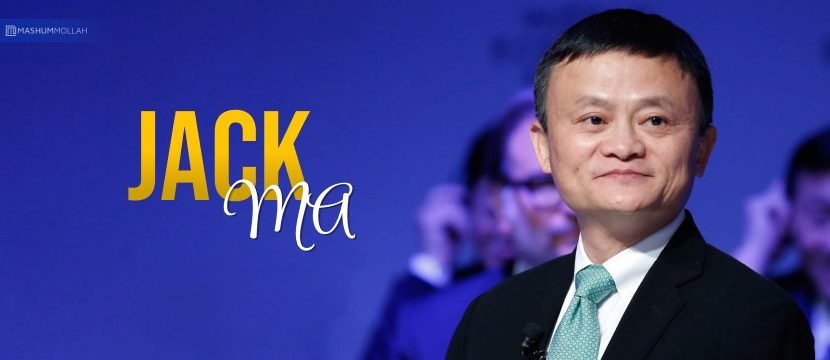
Jack Ma’s influence extends far beyond Alibaba’s business metrics. He fundamentally changed how the world perceives Chinese entrepreneurship and demonstrated that Chinese companies could compete globally on innovation rather than just cost.
Before Alibaba, few Chinese entrepreneurs had international recognition. Jack Ma became the face of China’s tech revolution, appearing on global stages alongside figures like Bill Gates and Steve Jobs. His English fluency and charismatic communication style made him uniquely able to bridge Chinese and Western business cultures.
His success inspired a generation of Chinese entrepreneurs. The “Alibaba mafia”—former employees who left to start their own companies—has created numerous successful startups. This ecosystem effect multiplied his impact on Chinese entrepreneurship and innovation.
Jack Ma also pioneered new business models that other companies worldwide have adapted. The integration of e-commerce, payments, logistics, and finance that Alibaba developed influenced companies from Amazon to Flipkart. His concept of “platform ecosystem” rather than vertically integrated company became a blueprint for digital-age businesses.
At age 61 in 2026, Jack Ma’s story remains relevant as both inspiration and cautionary tale. His rise shows what’s possible through vision, persistence, and customer focus. His recent challenges demonstrate the complex relationship between business, government, and society in modern China.
Frequently Asked Questions
How old is Jack Ma currently?
Jack Ma is 61 years old as of 2026. He was born on September 10, 1964, in Hangzhou, China. Despite stepping back from active business leadership, he remains influential in technology and philanthropy circles globally.
What is Jack Ma’s real name?
Jack Ma’s birth name is Ma Yun (马云). He adopted the English name “Jack” when he began teaching English, choosing it because his students found it easy to pronounce and remember compared to his Chinese name.
How much is Jack Ma worth in 2026?
Jack Ma’s net worth in 2026 is estimated between $25-30 billion USD. His wealth decreased from a peak of approximately $50 billion due to regulatory actions against Alibaba, Ant Group’s restructuring, and his philanthropic commitments.
Is Jack Ma still involved with Alibaba?
Jack Ma stepped down as Executive Chairman in 2019 and left the board in 2020. He maintains a small equity stake but has no active management role. His current focus centers on philanthropy and education through his foundation.
Who is Jack Ma’s wife?
Jack Ma’s wife is Zhang Ying, also known as Cathy Zhang. They married in 1988 after meeting at Hangzhou Normal University where both studied education. She maintains an extremely private profile despite her husband’s fame.
How did Jack Ma start Alibaba?
Jack Ma founded Alibaba in 1999 with 17 friends, raising initial funding of approximately $60,000. The idea emerged after he discovered the internet during a 1995 trip to the United States and recognized opportunities for Chinese businesses online.
Why did Jack Ma disappear from public view?
Jack Ma largely disappeared from public view after October 2020, following a speech criticizing Chinese regulators. This preceded regulatory actions against his companies. He has since maintained a low profile, focusing on travel and philanthropy.
How many children does Jack Ma have?
Jack Ma has two children with his wife Zhang Ying—a son and a daughter. The family maintains strict privacy about their children, with very little public information available about them.
What is Jack Ma doing now in 2026?
In 2026, Jack Ma focuses primarily on philanthropy through his foundation, travels internationally pursuing interests in education and agriculture, and maintains distance from active business management. He occasionally meets with entrepreneurs and students.
Did Jack Ma really fail his exams multiple times?
Yes, Jack Ma failed his primary school exams twice, middle school exams three times, and university entrance exams twice before finally gaining admission. His early academic struggles make his eventual success even more remarkable and inspirational.
Conclusion
Jack Ma age may be 61 years in 2026, but his impact on global commerce and Chinese entrepreneurship will endure for generations.
From his humble beginnings as an English teacher earning $12 per month to building one of the world’s largest e-commerce empires, his journey exemplifies the transformative power of vision, persistence, and strategic thinking.
Despite facing unprecedented regulatory challenges that reduced his public role and wealth, Jack Ma’s legacy extends beyond business metrics to include his pioneering of new retail models, championing of small businesses, and commitment to education and philanthropy.
The Alibaba founder’s story offers valuable lessons about innovation, customer focus, and resilience in the face of repeated failures.