
The statement Griffin was rather a lawless person comment perfectly describes the reckless and unethical behavior of the scientist in Footprints Without Feet.
Despite his brilliance, Griffin misused his power of invisibility for selfish and criminal acts, proving how genius without morality can lead to destruction. This brief analysis explains why Griffin is called lawless and how his actions reflect his moral downfall.
Griffin was rather a lawless person. This statement from H.G. Wells’ classic novel Footprints Without Feet perfectly captures the essence of one of literature’s most complex antagonists
. But what makes Griffin lawless? How did his scientific brilliance transform into criminal behavior? And what can we learn from his moral downfall?
Table of Contents
What Does It Mean to Be “Lawless”? (Defining Griffin’s Nature)
Before we dive into Griffin’s specific crimes, let’s understand what “lawless” means in the context of his character.
A lawless person is someone who:
- Deliberately breaks laws and regulations
- Ignores society’s rules and norms
- Acts without regard for others’ safety or property
- Prioritizes personal desires over legal consequences
- Shows no respect for authority or institutions
Griffin is the perfect example of all these characteristics. He didn’t accidentally break laws—he deliberately chose to do so, knowing fully well that his actions were criminal and harmful to innocent people.
Griffin’s Major Crimes: A Complete Timeline
Let’s examine the specific lawless acts Griffin committed throughout the story:
| Crime | Details | Victim | Location | Motive |
|---|---|---|---|---|
| Arson (Property Destruction) | Set fire to landlord’s house | Property Owner/Landlord | Landlord’s residence | Revenge for eviction notice |
| Grand Theft | Robbed shopkeeper of all money | Shopkeeper | Drury Lane shop | Self-survival |
| Assault & Battery | Hit shopkeeper from behind | Shopkeeper | Shop premises | Escape without being caught |
| Burglary | Stole housekeeping money | Clergyman’s family | Clergyman’s desk/study | Financial gain |
| Breaking & Entering | Invaded clergyman’s home | Clergyman’s household | Clergyman’s house | Theft |
| Assault | Attacked Mrs. Hall with cap & furniture | Mrs. Hall (Innkeeper) | Inn room | Violent reaction to intrusion |
| Aggravated Assault | Hit husband with chair | Innkeeper’s husband | Inn premises | Extending violence |
| Intimidation | Created fear through invisible presence | Entire village | Iping village | Control through terror |
This timeline shows Griffin wasn’t a casual lawbreaker. His crimes were premeditated, violent, and escalating in nature.
Why Was Griffin a Lawless Person? Root Causes Explained
1. Invisibility Corrupted His Morality
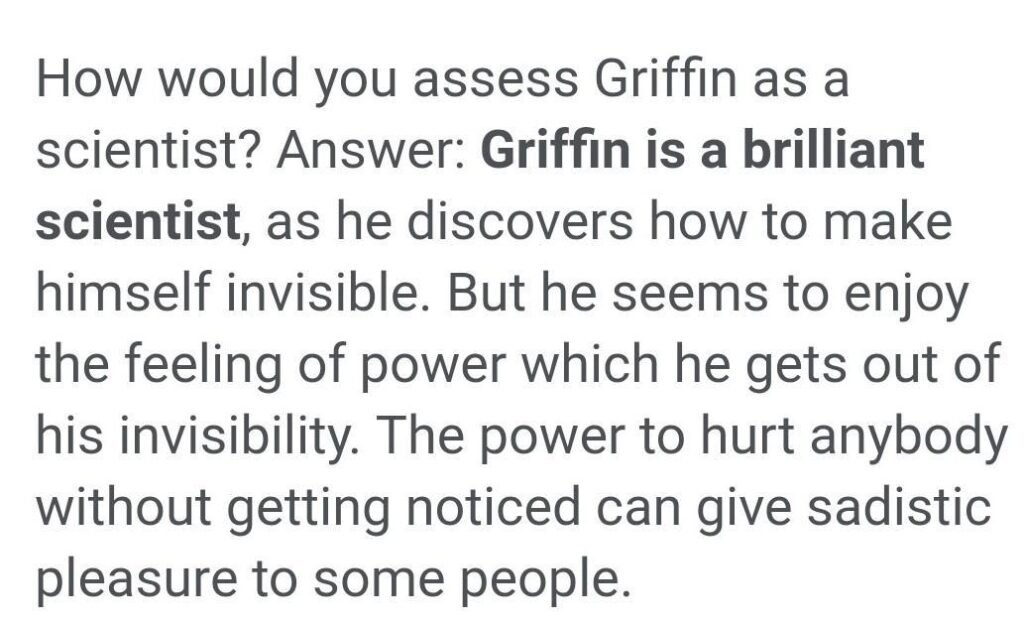
The most significant factor in Griffin becoming lawless was his invisibility. Once he became invisible, he realized he could commit crimes without being seen or caught. This created a dangerous situation where:
- No accountability existed for his actions
- He could harm people without immediate consequences
- Fear of punishment disappeared completely
- His natural criminal tendencies emerged unchecked
2. Self-Interest Over Empathy
Griffin was fundamentally a self-centered person. From the beginning, his scientific ambition was purely selfish. He didn’t think about:
- How invisibility could benefit society
- The ethical implications of his experiment
- The impact of his actions on innocent people
- His responsibility as a scientist to use knowledge wisely
Instead, he only thought about what he could gain from his discovery.
3. Rejection Led to Bitterness
Griffin’s landlord tried to evict him. This rejection triggered his first major crime—setting fire to the house. This reveals a volatile personality that responds to frustration with violence rather than reason. His inability to handle rejection led him to destroy property and hurt people.
4. Survival Instinct Turned Predatory
While hiding and homeless, Griffin needed money and shelter. However, instead of seeking legitimate help, he turned to theft and violence. His survival instincts became criminally predatory—he took what he wanted from others regardless of their suffering.
5. Lack of Moral Framework
Perhaps most importantly, Griffin had no strong moral compass. A truly ethical scientist—even one with the power of invisibility—would:
- Recognize the harm they’re causing
- Feel remorse for their actions
- Seek to make amends
- Ultimately reveal themselves to face consequences
Griffin did none of these things. He showed no guilt, no hesitation, and no moral awakening throughout his crimes.
Griffin’s Crimes Analyzed: From Arson to Assault
Crime #1: Setting Fire to Landlord’s House (Arson)
This was Griffin’s first major crime and it’s crucial to understanding his character.
What Happened: The landlord wanted to evict Griffin from his room. Instead of leaving peacefully or fighting through legal means, Griffin took off all his clothes (using his invisibility as cover) and set the house on fire. He then fled the burning building undetected.
Why This Matters:
- Shows capability for violence: Setting fire is an extreme act of violence with potential for killing innocent people
- Demonstrates premeditation: He planned this carefully
- Reveals vindictiveness: This was pure revenge for being rejected
- Creates homelessness: His first crime made him a homeless wanderer, which he then used to justify future crimes
The Lawless Element: He completely disregarded the landlord’s property rights, the safety of people in the building, and legal consequences. He used invisibility as a shield to escape accountability.
Crime #2: Robbing the Shopkeeper (Theft & Assault)
What Happened: Griffin entered a shop, took all the money he could find, and when the shopkeeper tried to stop him, Griffin hit the shopkeeper hard from behind. He then disappeared into the streets.
Why This Matters:
- Shows escalating violence: He didn’t just steal; he injured the person trying to stop him
- Demonstrates predatory behavior: He targeted someone he could overpower
- Reveals financial desperation: But also his willingness to hurt for material gain
- Indicates pattern: This wasn’t accidental; it was calculated theft with planned violence
The Lawless Element: He violated property rights, assaulted a person, and used invisibility to ensure escape and avoid identification. The shopkeeper had no way to defend himself against an unseen attacker.
Crime #3: Burglary at the Clergyman’s House (Theft)
What Happened: Griffin broke into the clergyman’s home while the family slept and stole housekeeping money from the desk in the study. When the clergyman came downstairs after hearing noises, he found money missing but couldn’t identify the thief.
Why This Matters:
- Shows calculated planning: He waited for the family to sleep, then stole specifically from the study
- Demonstrates continued financial crimes: Despite previous robberies, he continued stealing
- Reveals lack of conscience: Even a man of God’s household wasn’t sacred to him
- Uses invisibility systematically: He understood how to use invisibility for criminal purposes
The Lawless Element: Breaking and entering, theft, and home invasion are serious crimes. The clergyman’s family felt violated and unsafe in their own home.
Crime #4: Attacking Mrs. Hall (Assault & Battery)
What Happened: Mrs. Hall, the innkeeper, went to Griffin’s room and discovered something strange. When she intruded on his privacy, Griffin became violent. He threw objects at her, including his cap directly at her face, and then an invisible chair flew at her. Her husband tried to help but also faced Griffin’s anger. They both fled in terror.
Why This Matters:
- Shows extreme violence: Using furniture as weapons is serious assault
- Demonstrates psychological abuse: Creating fear through invisible threats
- Reveals unstable temperament: He reacted disproportionately to a simple intrusion
- Endangers innocent people: Mr. and Mrs. Hall had done nothing wrong
The Lawless Element: Assault, battery, property damage, and intimidation. The Halls had every right to check on a guest in their inn, but Griffin responded with violence.
Griffin as a Scientist: Brilliant But Unethical
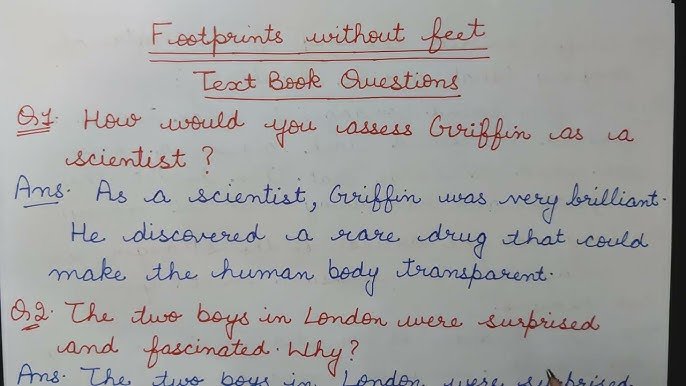
Here’s a critical question: How would you assess Griffin as a scientist?
His Scientific Achievements:
Griffin was undeniably intelligent. His achievements include:
- Successfully discovering how to make the human body invisible
- Creating a complex chemical formula requiring rare drugs
- Testing his theory on himself
- Understanding the scientific principles well enough to execute the experiment
These are extraordinary accomplishments that demonstrate genuine scientific genius.
His Scientific Failures:
However, his scientific achievement is overshadowed by his ethical collapse:
| Scientific Aspect | Achievement | Failure |
|---|---|---|
| Knowledge | Discovered invisibility formula | Didn’t understand consequences |
| Experimentation | Successfully made himself invisible | Conducted unsafe self-experimentation |
| Application | Created working invisibility | Used discovery for criminal purposes |
| Responsibility | Became invisible | Showed no responsibility for impacts |
| Ethics | Solved impossible problem | Completely ignored ethical implications |
| Social Contribution | Revolutionary discovery | Used discovery to harm society |
The Core Problem:
Scientists are responsible for considering not just whether they can do something, but whether they should do it. Griffin failed this fundamental principle.
A truly great scientist would have:
- Recognized the potential for abuse
- Considered safeguards against misuse
- Thought about impact on humanity
- Created ethical guidelines for the discovery
- Possibly chosen not to publish or continue the research
Instead, Griffin used his brilliant mind for purely selfish gains. This makes him not just a lawless person, but an unethical scientist—perhaps worse because he knew better.
The Invisible Man’s Crimes: Psychological Analysis
Why Did Griffin’s Invisibility Make Him Lawless?
Psychological research suggests that invisibility (or anonymity) affects human behavior dramatically. This is called the “deindividuation effect”—when people feel unseen, they’re more likely to:
- Break rules they’d normally follow
- Act aggressively without hesitation
- Ignore their moral compass
- Feel disconnected from consequences
- Dehumanize their victims
Griffin demonstrates all these psychological patterns. Some might argue that invisibility changed him, but a more honest assessment is that invisibility revealed who he really was: a selfish, violent, morally bankrupt person willing to harm innocent people for personal gain.
Griffin’s Behavior at Iping Village: Escalating Lawlessness
The situation worsened when Griffin came to Iping village. Here, his lawless behavior reached new heights:
In Iping, Griffin:
- Terrorized the entire community with invisible violence
- Created widespread fear and panic
- Attacked multiple people
- Damaged property systematically
- Made the village essentially uninhabitable through intimidation
The fact that an entire village had to band together to escape his presence shows how dangerous his lawless nature had become. He wasn’t just breaking laws; he was destabilizing entire communities.
Comparing Griffin to Other Literary Villains
To understand Griffin’s lawlessness in context, let’s compare him to other antagonists:
| Character | Source | Type of Villain | Motivation |
|---|---|---|---|
| Griffin | Footprints Without Feet | Criminal/Predatory | Self-interest |
| Macbeth | Macbeth | Ambitious/Desperate | Prophecy-driven ambition |
| Iago | Othello | Manipulative | Jealousy and spite |
| Voldemort | Harry Potter | Power-seeking | Immortality pursuit |
| Scar | The Lion King | Jealous | Throne succession |
Griffin is unique because his crimes aren’t motivated by grand ambitions or mystical corruption. They’re simply motivated by greed and selfishness made possible by anonymity. This makes him relatable and frightening—ordinary human evil amplified by extraordinary power.
The Turning Point: Mrs. Hall’s Discovery and Its Consequences
A pivotal moment comes when Mrs. Hall discovers that Griffin is invisible. Instead of showing remorse or trying to explain, Griffin becomes more violent. This reveals crucial aspects of his character:
What This Moment Reveals:
- No Desire for Understanding: He doesn’t try to communicate or explain himself
- Escalating Violence: His response to discovery is increased aggression
- No Redemption Arc: He shows no interest in reform or reconciliation
- Continued Lawlessness: Even when discovered, he doubles down on criminal behavior
This is different from many literary villains who might seek dialogue or explanation. Griffin simply continues his lawless rampage.
How Invisibility Enabled Lawlessness: The Power-Corruption Connection
The Classic Power Corruption Model:
Psychologists often cite Lord Acton’s famous quote: “Power tends to corrupt, and absolute power corrupts absolutely.”
Griffin’s situation is the perfect example:
- Normal Person + Limited Power = Limited Corruption
- Selfish Person + Invisibility = Absolute Corruption
His invisibility gave him absolute power over others because:
- They couldn’t see him
- They couldn’t identify him
- They couldn’t catch him
- They couldn’t stop him
- He faced no consequences
What Can We Learn from Griffin’s Lawlessness?
Lessons for Students:
- Intelligence Isn’t Morality: Smart people can do terrible things
- Power Without Responsibility Is Dangerous: Great ability requires great responsibility
- Empathy Matters: Without compassion for others, genius becomes destructive
- Consequences Shape Behavior: When people expect no consequences, they behave worse
- Selfishness Has Limits: Pure self-interest eventually isolates and destroys
Lessons About Society:
- Systems Need Accountability: Society depends on people seeing consequences for actions
- Anonymity Enables Crime: Hidden identities make people more willing to break laws
- Communities Must Unite: Iping villagers could only protect themselves by banding together
- Prevention Is Better Than Cure: Stopping crime early is better than handling escalation
Griffin’s Ultimate Fate: The Inevitable End
Without spoiling the complete story, Griffin’s lawless behavior eventually catches up with him. The point is that lawlessness, however powerful it seems, cannot continue forever. Society has mechanisms to respond to threats, and the invisible man was ultimately not invisible enough to escape consequence.
His fate serves as a final commentary: Lawlessness may feel powerful in the moment, but it ultimately leads to destruction.
Table: Griffin’s Lawless Acts vs. Civilized Behavior
| Situation | Lawless Choice (Griffin) | Civilized Choice | Outcome |
|---|---|---|---|
| Eviction notice | Burn the house | Seek legal counsel | Peace vs. fire and homelessness |
| Need money | Rob and assault shopkeeper | Find employment | Victim unharmed vs. injured |
| Home intrusion | Attack with violence | Ask for privacy respectfully | Safe relationship vs. fear |
| Discovery of crime | Escalate violence | Explain and face justice | Community safety vs. terror |
This table shows that at every point, Griffin chose lawlessness when civilized alternatives existed.
Quick Reference: Griffin Was Rather a Lawless Person (FAQ Answers)
Was Griffin’s lawlessness justified by his circumstances?
No. Homelessness and invisibility explain his behavior but don’t justify it. Many people face hardship without turning to crime and violence.
Could Griffin have used his invisibility for good?
Absolutely. He could have been a hero—preventing crimes, helping people, making scientific discoveries for humanity’s benefit.
Is Griffin responsible for his actions?
Yes, completely. He was an intelligent adult who understood right from wrong and chose wrongly.
What makes Griffin different from other criminals?
His invisibility gave him unusual power, but his fundamental nature—selfishness and violence—is what made him a criminal.
Could Griffin have been reformed?
Unlikely. He showed no remorse, no desire to change, and no moral awakening throughout the story.
The Deeper Question: Nature vs. Nurture in Griffin’s Crimes
Were Griffin’s crimes the result of:
Nature (Inherent personality)?
- Selfish tendencies from birth
- Natural inclination toward violence
- Lack of empathy
- Genius that made him feel superior to others
Nurture (Environmental factors)?
- Rejection from his landlord
- Social isolation
- Homelessness leading to desperation
- No support system
Most Likely: It’s a combination. Griffin probably had natural tendencies toward selfishness and violence, but his circumstances triggered and enabled these behaviors. Invisibility removed the final barrier—the fear of consequences.
Griffin’s Legacy in Literature and Culture
Why does Griffin remain a compelling character decades after the novel’s publication?
- Timeless Moral Questions: What would YOU do if invisible?
- Relevant Themes: Power, responsibility, ethics in science
- Realistic Evil: He’s not fantastically evil; he’s mundanely selfish
- Warning About Technology: Science without ethics is dangerous
- Human Nature Exploration: He reveals what regular people might do given power and anonymity
Conclusion
Griffin was not merely someone who broke laws—he was fundamentally lawless in his attitude and character. He:
- Deliberately broke laws multiple times
- Showed no respect for others’ property or safety
- Prioritized personal gain over human welfare
- Demonstrated no remorse or moral awakening
- Used his intelligence and power for destruction
- Created fear and suffering throughout communities
His brilliance as a scientist makes his moral failure even more tragic. He had the potential to be remembered as one of history’s great benefactors, but instead, he’ll be remembered as a criminal who misused his genius for selfish purposes.
For students preparing for exams: Remember that Griffin is presented as a cautionary tale. The story isn’t just about science fiction; it’s about the importance of ethics, empathy, and moral responsibility—especially for those with power and knowledge.