
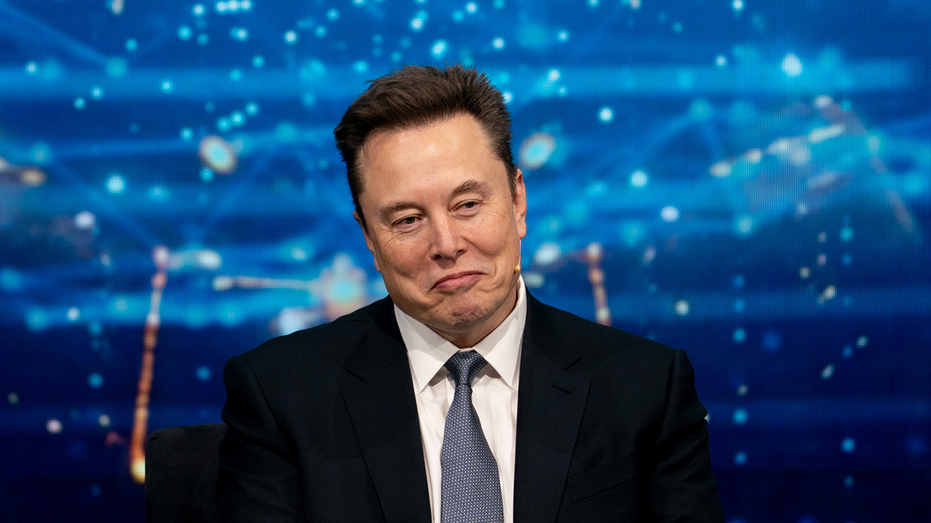
Elon Musk age continues to fascinate millions worldwide as this visionary entrepreneur revolutionizes multiple industries simultaneously at 54 years old.
Born on June 28, 1971, Musk has transformed from a South African immigrant into the world’s wealthiest person with an estimated net worth exceeding $700 billion in 2026, leading groundbreaking companies like Tesla, SpaceX, and X (formerly Twitter).
Table of Contents
Quick Facts About Elon Musk
| Category | Details |
|---|---|
| Full Name | Elon Reeve Musk |
| Date of Birth | June 28, 1971 |
| Age | 54 years old (as of 2026) |
| Birthplace | Pretoria, South Africa |
| Nationality | South African, Canadian, American |
| Height | 6’2″ (187 cm) |
| Net Worth | $700+ billion (2026) |
| Companies | Tesla, SpaceX, X (Twitter), xAI, Neuralink, The Boring Company |
| Children | 14 children with 4 women |
| Relationship Status | Single (as of 2026) |
| Education | University of Pennsylvania (Physics & Economics) |
| Zodiac Sign | Cancer |
Elon Musk Age and Early Life
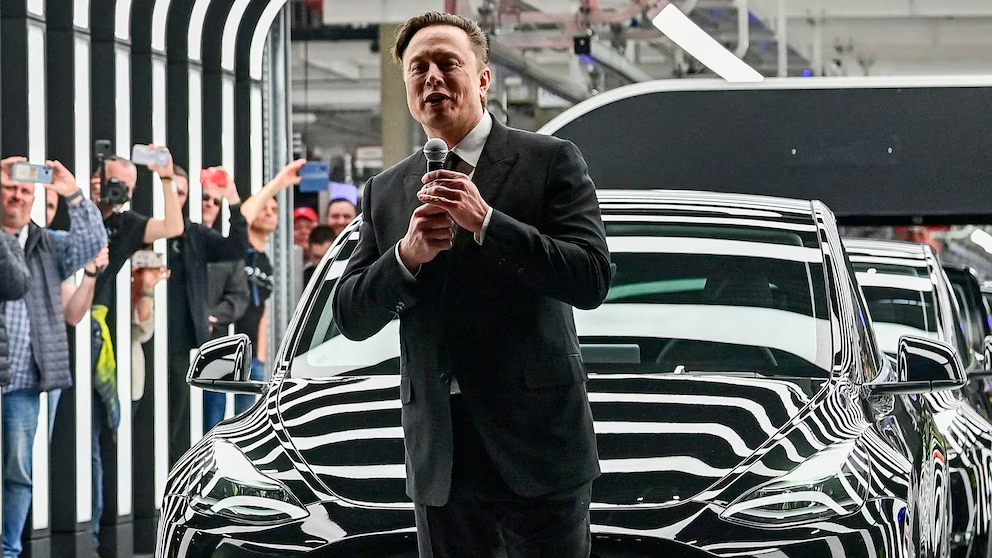
Elon Musk age of 54 years represents over five decades of remarkable achievements and transformations. Born on June 28, 1971, in Pretoria, South Africa, Elon Reeve Musk came into the world during the apartheid era. His birth in South Africa’s administrative capital would be just the beginning of a global journey that would eventually make him the most influential entrepreneur of the 21st century.
Growing up in Pretoria, young Elon displayed exceptional intelligence and curiosity from an early age. His mother, Maye Musk, is a Canadian-born model and dietitian who holds two master’s degrees.
His father, Errol Musk, worked as an electromechanical engineer, pilot, sailor, consultant, and property developer, providing Elon with exposure to technology and business early in life.
Elon’s childhood wasn’t always easy despite his family’s wealth. After his parents divorced in 1979, the 9-year-old Elon chose to live with his father, primarily because Errol owned an Encyclopædia Britannica and a computer.
However, Elon later regretted this decision and became estranged from his father, describing their relationship as complex and difficult.
How Old is Elon Musk in 2026?
At 54 years old in 2026, Elon Musk age reflects a lifetime of extraordinary accomplishments packed into just over five decades. Born under the Cancer zodiac sign, Musk exhibits many traits associated with this sign including determination, ambition, and emotional depth. His birthday on June 28th places him among successful Cancers known for their tenacity and innovative thinking.
Despite being in his mid-50s, Musk maintains an incredibly active schedule, often working 80-100 hours per week across his multiple companies.
His age hasn’t slowed his ambitions, as he continues to push boundaries in electric vehicles, space exploration, artificial intelligence, and social media. Many observers note that Musk seems to operate with the energy of someone decades younger.
The Cancer zodiac influence appears in Musk’s protective nature toward his companies and his mission-driven approach to business. Like many Cancers, he’s deeply invested in legacy and creating something that outlasts him, which explains his focus on making humanity a multi-planetary species and transitioning the world to sustainable energy.
Elon Musk’s Childhood and Education
Elon Musk’s early years were marked by both privilege and challenges. As a child, he was an enthusiastic reader, often losing himself in books for 10 hours a day.
He credited works like “The Lord of the Rings,” Isaac Asimov’s “Foundation” series, and “The Hitchhiker’s Guide to the Galaxy” as major influences on his worldview and ambitions.
At age 10, Elon developed a passionate interest in computing and video games. He taught himself computer programming using only the VIC-20 user manual, demonstrating the self-directed learning ability that would define his career. By age 12, he had already created and sold his first software—a BASIC-based video game called “Blastar”—to PC and Office Technology magazine for approximately $500.
Elon attended Waterkloof House Preparatory School, then Bryanston High School, and finally Pretoria Boys High School, where he graduated. He was a decent but not exceptional student, earning a 61/100 in Afrikaans and a B on his senior math certification.
His school years included difficult experiences with bullying, which he has spoken about publicly as formative experiences that taught him resilience.
Immigration to North America
In 1988, just before turning 18, Musk applied for a Canadian passport through his Canadian-born mother to avoid South Africa’s mandatory military service. He was unwilling to support the apartheid regime through military service and saw Canada as a stepping stone to eventually reaching the United States, where he believed the greatest opportunities existed.
Arriving in Canada in 1989, Musk initially stayed with relatives and took various odd jobs to support himself. He enrolled at Queen’s University in Kingston, Ontario, where he studied for two years.
It was during this time that he met his first wife, Justine Wilson, beginning a relationship that would significantly impact his personal life.
In 1992, Musk transferred to the University of Pennsylvania in Philadelphia. He pursued a dual bachelor’s degree, earning credentials in physics from the College of Arts and Sciences and economics from the Wharton School in 1997. This combination of technical and business education would prove invaluable for his future entrepreneurial ventures.
Elon Musk Net Worth 2026
Elon Musk net worth in 2026 stands at an unprecedented $700+ billion, making him not just the wealthiest person alive but potentially the richest individual in recorded history when adjusted for inflation.
According to both Forbes and Bloomberg Billionaires Index, Musk became the first person ever to surpass $600 billion in December 2025, then quickly exceeded $700 billion shortly after.
This astronomical wealth primarily derives from his ownership stakes in multiple revolutionary companies. His approximately 42-43% ownership of SpaceX alone accounts for over $340 billion of his net worth following the company’s $800 billion valuation in late 2025.
His roughly 12% stake in Tesla contributes around $197-250 billion, while his 53% ownership of xAI adds approximately $35-60 billion.
Musk’s net worth journey has been nothing short of extraordinary. In March 2020, his wealth stood at $24.6 billion. By the end of 2020, it had surged past $100 billion. In January 2021, he overtook Jeff Bezos to become the world’s richest person at $190 billion. He crossed $200 billion, then $300 billion in November 2021, setting new records with each milestone.
The Path to Unprecedented Wealth
The speed of Musk’s wealth accumulation is historically unprecedented. He reached $400 billion in December 2024, $500 billion in October 2025, and $600 billion by mid-December 2025.
Industry analysts now predict he could become the world’s first trillionaire by 2027 or 2028, especially if SpaceX’s planned 2026 IPO proceeds as expected with valuations potentially reaching $1.5 trillion.
His wealth isn’t just paper value—Musk has liquidated billions over the years for various projects. He sold nearly $40 billion in Tesla stock between 2021 and 2023 to finance the Twitter acquisition and other ventures.
Despite these massive sales, his net worth has continued climbing due to the appreciation of his remaining holdings.
In November 2025, a Tesla compensation package potentially worth $1 trillion was approved, which Musk would receive over 10 years if specific growth targets are met.
This performance-based pay structure aligns his personal financial incentives with Tesla’s success, though critics have questioned whether any CEO deserves such extraordinary compensation.
Multiple Revenue Streams
Elon Musk’s wealth comes from diversified sources across revolutionary industries. Tesla, the electric vehicle manufacturer where he serves as CEO and product architect, has transformed the automotive industry and accounts for a substantial portion of his wealth.
The company’s mission to accelerate sustainable energy has made it the world’s most valuable automaker.
SpaceX, his space exploration company founded in 2002, has revolutionized rocket technology with reusable launch systems.
With over 4 million Starlink satellite internet subscribers and billions in federal contracts (over $20 billion with NASA and the Department of Defense alone), SpaceX represents more than half of Musk’s total net worth and continues growing rapidly.
His other ventures contribute significantly too. The xAI artificial intelligence company, which merged with X (formerly Twitter) earlier in 2025, is exploring valuations as high as $230 billion. Neuralink, his brain-computer interface company, and The Boring Company, focused on tunnel infrastructure, add additional billions to his portfolio while advancing their respective technologies.
Early Business Ventures and PayPal Success
Elon Musk’s career began in 1995 when he co-founded Zip2 Corporation with his brother Kimbal Musk. This software company developed online city guides for newspapers, providing content and e-commerce capabilities to media companies.
The venture required enormous dedication, with Musk reportedly sleeping at the office and showering at the YMCA to save money during the early days.
In 1999, Compaq Computer Corporation acquired Zip2 for $307 million in cash. Musk received $22 million from the sale at age 27, providing him with capital for his next venture.
Rather than retire young with his newfound wealth, he immediately invested in his next project, demonstrating the entrepreneurial drive that would define his career.
That same year, Musk co-founded X.com, an online financial services and payment company. He invested $12 million of his Zip2 proceeds into this venture. In 2000, X.com merged with Confinity Inc., which operated a money transfer service called PayPal. The combined entity eventually adopted the PayPal name due to its superior brand recognition.
PayPal and Financial Independence
In October 2002, eBay acquired PayPal for $1.5 billion in stock. As PayPal’s largest shareholder at the time, Musk received $175.8 million from the sale.
This windfall gave him the financial independence to pursue more ambitious, higher-risk ventures that traditional investors might have considered impossible or impractical.
The PayPal success established Musk as a legitimate Silicon Valley entrepreneur and provided him with crucial business experience.
The company’s growth from a startup to a billion-dollar acquisition taught him valuable lessons about scaling businesses, managing teams, and navigating competitive markets—skills he would apply to his subsequent ventures.
Importantly, Musk didn’t view the PayPal sale as an exit from entrepreneurship but as a launching pad for bigger ambitions. While many entrepreneurs might have retired or pursued less risky investments, Musk immediately began planning his next ventures in space exploration and electric vehicles, areas that would become his life’s work.
SpaceX: Revolutionizing Space Exploration
In June 2002, Musk founded Space Exploration Technologies Corp., better known as SpaceX, investing $100 million of his PayPal proceeds into the company.
His vision was simple but audacious: make space travel affordable and ultimately enable human colonization of Mars. Industry experts initially dismissed these goals as impossible for a private company.
The early years were challenging. SpaceX’s first three Falcon 1 rocket launches failed between 2006 and 2008, nearly bankrupting the company.
Musk has described 2008 as the worst year of his life, facing simultaneous crises with SpaceX, Tesla, and his personal life. However, the fourth Falcon 1 launch in September 2008 succeeded, saving the company.
In 2010, SpaceX achieved what no private company had before: the Dragon spacecraft became the first commercial vehicle to orbit Earth and return safely.
This milestone secured a $1.6 billion contract with NASA to resupply the International Space Station, providing crucial revenue and validation. SpaceX has since completed numerous successful missions and developed the revolutionary reusable rocket technology.
Current SpaceX Achievements
By 2026, SpaceX dominates commercial space launches globally, with its Falcon 9 and Falcon Heavy rockets providing cost-effective access to space.
The company’s Starlink satellite constellation has deployed over 5,000 satellites, providing high-speed internet to over 4 million subscribers worldwide, particularly in remote and underserved areas.
SpaceX’s most ambitious project, the Starship spacecraft designed for Mars missions, continues progressing through testing phases. This fully reusable launch system aims to carry 100+ passengers to Mars, representing Musk’s ultimate goal of making humanity a multi-planetary species. Industry analysts estimate SpaceX’s 2026 IPO could value the company at $1.5 trillion.
The company employs over 13,000 people and generates billions in annual revenue from satellite launches, Starlink subscriptions, and government contracts. SpaceX’s success has fundamentally disrupted the aerospace industry, forcing traditional contractors to innovate and reducing launch costs by orders of magnitude compared to pre-SpaceX prices.
Tesla: Leading the Electric Vehicle Revolution
While SpaceX was finding its footing, Musk became involved with Tesla Motors in 2004 as a major early investor, contributing $6.5 million to the Series A funding round. Though he wasn’t a founder (Martin Eberhard and Marc Tarpenning founded the company in 2003), Musk became chairman of the board and took an active role in product development and strategy.
In 2008, following internal conflicts and the departure of the original founders, Musk became CEO and product architect. He invested an additional $70 million of his own money during the 2008 financial crisis to keep Tesla afloat, demonstrating his commitment to the company’s mission of accelerating the world’s transition to sustainable energy.
Tesla’s first production car, the Roadster, launched in 2008 and proved that electric vehicles could be desirable sports cars rather than compromised eco-vehicles.
The car could accelerate from 0-60 mph in under 4 seconds and travel 245 miles on a single charge, shattering preconceptions about electric vehicle performance and practicality.
Tesla’s Growth and Market Dominance
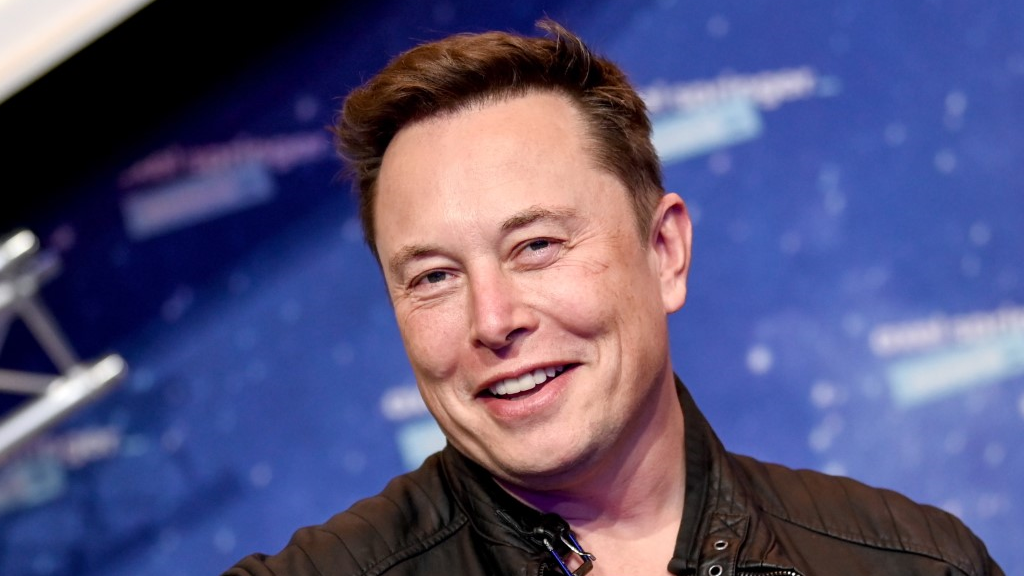
In 2012, Tesla introduced the Model S sedan, which received widespread critical acclaim and numerous awards for its performance, safety, and design. The luxury sedan established Tesla as a serious automaker and demonstrated that electric vehicles could compete with—and surpass—traditional luxury cars from established manufacturers.
The Model X SUV launched in 2015, followed by the more affordable Model 3 in 2017. The Model 3 became the best-selling electric car of all time, making electric vehicles accessible to middle-class consumers. This mass-market success validated Musk’s strategy of starting with expensive vehicles to fund the development of affordable ones.
By 2020, Tesla’s market capitalization exceeded that of all other major automakers combined, making it the world’s most valuable car company.
This valuation reflected investor confidence in Tesla’s technology leadership, manufacturing capabilities, and potential to dominate the future automotive market as the industry transitions to electric vehicles.
Tesla in 2026
In 2026, Tesla continues leading the electric vehicle revolution with expanded product lines, global manufacturing facilities (including Gigafactories in the US, China, Germany, and other locations), and advancing autonomous driving technology. The company sells millions of vehicles annually across multiple market segments from affordable sedans to premium SUVs and the futuristic Cybertruck.
Beyond vehicles, Tesla’s energy division produces solar panels, solar roof tiles, and Powerwall/Powerpack battery storage systems, advancing Musk’s vision of sustainable energy generation and consumption.
These products complement the electric vehicle business by creating an integrated sustainable energy ecosystem.
Tesla’s Full Self-Driving technology continues improving, though it remains a driver-assistance system requiring active supervision rather than true autonomous driving. The company’s vast fleet provides real-world data that feeds machine learning algorithms, creating a competitive advantage in autonomous vehicle development that traditional automakers struggle to match.
Twitter Acquisition and Transformation to X
In April 2022, Musk made headlines by acquiring Twitter for $44 billion in a controversial deal that initially saw him trying to back out before being legally forced to complete the purchase. He financed the acquisition by selling billions in Tesla stock, taking on debt, and securing equity partners, making it one of the largest leveraged buyouts in history.
After taking ownership in October 2022, Musk immediately implemented dramatic changes.
He fired numerous executives including CEO Parag Agrawal, laid off approximately 50-80% of Twitter’s workforce, and restructured the company’s operations. These aggressive cost-cutting measures aimed to make the unprofitable company financially sustainable.
Musk introduced controversial policy changes including reducing content moderation, reinstating previously banned accounts, and implementing Twitter Blue (later X Premium), a paid subscription service offering verification badges and additional features. These changes sparked intense debate about free speech, online safety, and the role of social media platforms in public discourse.
X Corp and Future Vision
In July 2023, Twitter officially rebranded as X Corp, part of Musk’s vision to transform the platform into an “everything app” similar to China’s WeChat. The rebrand involved changing the iconic blue bird logo to a stylized “X,” representing Musk’s ambition to expand beyond social media into payments, banking, shopping, and other services.
The transformation has been turbulent, with advertising revenue dropping significantly as major brands paused spending due to concerns about content moderation and brand safety.
However, Musk has focused on diversifying revenue through subscriptions, creator monetization, and preparing for expanded financial services that could eventually generate substantial revenue.
In early 2025, X merged with xAI, Musk’s artificial intelligence company, creating a combined entity focused on developing advanced AI systems while maintaining the social media platform. This merger values the combined company at potentially $230 billion, more than doubling the Twitter purchase price and vindic ating Musk’s controversial acquisition in the eyes of some analysts.
xAI and Artificial Intelligence Ventures
Musk founded xAI in March 2023 as his response to what he perceives as dangerous approaches to artificial intelligence development by other companies. He had previously co-founded OpenAI in 2015 but left the organization’s board in 2018 due to conflicts over direction, and has since become increasingly critical of OpenAI’s for-profit pivot and partnership with Microsoft.
xAI’s flagship product, Grok, is an AI chatbot designed to be more truthful and less politically correct than competitors like ChatGPT.
The name “Grok” comes from Robert Heinlein’s science fiction novel “Stranger in a Strange Land” and means to understand something deeply and intuitively, reflecting Musk’s ambitions for the AI system.
The company has raised billions in funding and is building massive data centers powered by tens of thousands of NVIDIA GPUs to train increasingly sophisticated AI models.
Musk believes artificial intelligence represents humanity’s greatest opportunity and greatest risk, and xAI aims to develop “maximally truth-seeking” AI that benefits humanity rather than potentially harming it.
Neuralink: Brain-Computer Interfaces
In 2016, Musk co-founded Neuralink, a neurotechnology company developing implantable brain-computer interfaces. The company’s initial goal is to help people with paralysis regain communication and mobility, but Musk envisions eventual applications including cognitive enhancement, memory backup, and direct brain-to-computer communication.
Neuralink has conducted successful trials in animals, demonstrating that monkeys can play video games using only their thoughts transmitted through the brain implant.
In January 2024, the company received FDA approval for human trials, and by 2026, multiple human patients have received Neuralink implants, marking a significant milestone in brain-computer interface technology.
The long-term vision for Neuralink is extraordinarily ambitious. Musk believes brain-computer interfaces will be necessary for humans to remain competitive with artificial intelligence, enabling what he calls a “symbiosis” between human and artificial intelligence. Critics question both the technical feasibility and ethical implications of such technology.
The Boring Company and Infrastructure Innovation
Musk founded The Boring Company in December 2016, initially as a side project to address Los Angeles traffic congestion through underground tunnel systems. The company aims to revolutionize urban transportation by creating networks of tunnels where vehicles can travel at high speeds without surface traffic congestion.
The company has completed several projects including a tunnel system beneath Las Vegas connecting the Convention Center to various Strip locations, transporting passengers in Tesla vehicles through underground loops. This system has transported millions of passengers since opening, demonstrating the concept’s viability for convention and campus applications.
Beyond transportation, The Boring Company also develops tunnel-boring machines designed to dramatically reduce tunneling costs and increase boring speed.
Traditional tunnel construction is extremely expensive and slow; Musk’s goal is to reduce costs by 10x while increasing speed by 10x, making underground infrastructure economically feasible for more applications.
Elon Musk’s Relationship History
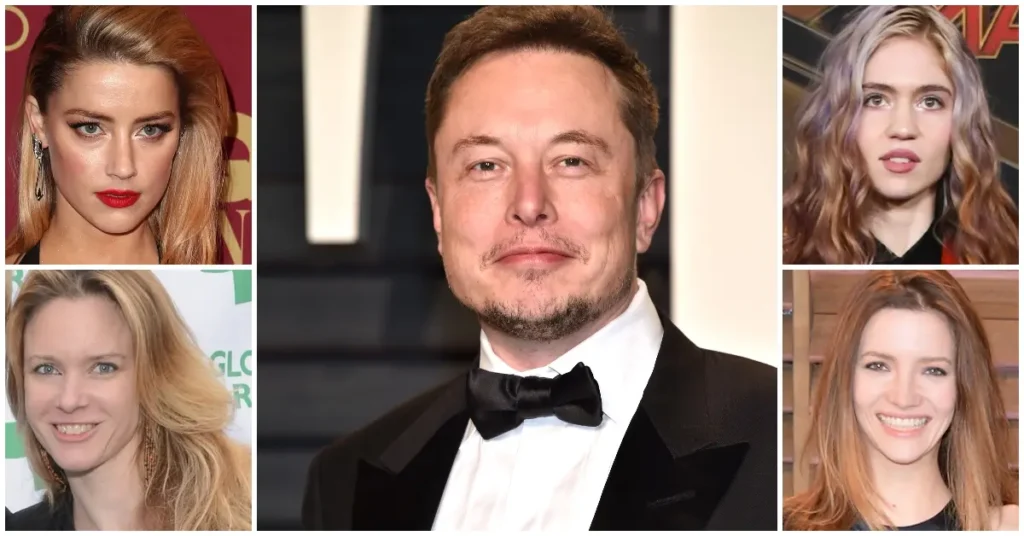
Elon Musk relationship history has been as complex and high-profile as his business ventures. Throughout his life, he has been married three times to two different women and has fathered 14 children with four different women.
His personal life frequently makes headlines and provides insight into the man behind the technology companies.
Musk’s first relationship that gained public attention was with Jennifer Gwynne, a fellow student at the University of Pennsylvania in the mid-1990s.
Gwynne later described their college romance fondly, noting Musk’s “quiet intensity” and goofy side. Their relationship ended when Gwynne moved abroad, partly due to Musk’s difficulty with long-distance relationships.
However, Musk had already met his first wife before dating Gwynne. While at Queen’s University in Ontario, he encountered Justine Wilson, a Canadian author-to-be.
They dated through his transfer to the University of Pennsylvania, broke up briefly, then reconnected when she followed him to California where he was working on Zip2.
First Marriage: Justine Musk
Elon and Justine married in January 2000, just as his career was taking off following the Zip2 sale. Their relationship faced extraordinary challenges from the start. In 2002, they welcomed their first child, a son named Nevada Alexander, who tragically died from Sudden Infant Death Syndrome (SIDS) at just 10 weeks old.
This devastating loss deeply affected both parents. Rather than allowing themselves time to grieve naturally, they underwent IVF treatment and welcomed twin sons, Griffin and Vivian (formerly Xavier, who later transitioned), in April 2004. Two years later, they had triplets—Kai, Saxon, and Damian—in January 2006, bringing their total to five living children.
Despite the growing family, their marriage faced increasing strain. In a candid 2010 Marie Claire essay, Justine described feeling marginalized in the relationship, with Elon’s demanding career and strong personality dominating their partnership.
She wrote about being told during their wedding dance that she was “the starter wife,” a comment that proved prophetic when they divorced in 2008.
Second Marriage: Talulah Riley (Twice)
Shortly after his divorce from Justine, Musk met English actress Talulah Riley at a London nightclub called Whisky Mist in 2008. Riley initially didn’t recognize the newly minted Tesla CEO, but they quickly became inseparable.
Remarkably, they were engaged just two weeks after meeting, when Riley was only 22 years old.
They married in 2010 at Dornoch Cathedral in Scotland. However, their first marriage lasted only two years before Musk filed for divorce in January 2012. The divorce was finalized in 2012, with Musk reportedly paying Riley $16 million in the settlement. Many assumed their relationship was over permanently.
Surprisingly, Musk and Riley remarried in July 2013, demonstrating that despite their differences, they had a unique connection. Riley later explained they remarried because being together unmarried “felt silly” after having been married. However, their second attempt also failed.
Musk filed for divorce again in December 2014, withdrew the petition, then Riley filed in March 2016, finalizing their second divorce.
Relationship with Amber Heard
While separated from Riley, Musk began dating actress Amber Heard in 2016 following her high-profile divorce from actor Johnny Depp.
The two had met years earlier on the set of the film “Machete Kills” in 2013, where Musk had a cameo appearance, but didn’t begin dating until after Heard’s marriage ended.
Their relationship became public in 2017, with paparazzi photographs showing them together and sources reporting that Heard spent significant time at Musk’s home and had developed relationships with his children.
However, their romance was relatively short-lived, lasting less than a year before they broke up in August 2017.
In a Rolling Stone interview shortly after the breakup, Musk opened up about the relationship’s end: “I just broke up with my girlfriend. I was really in love, and it hurt bad.” He added that Heard had initiated the breakup more than he had, revealing vulnerability rarely seen in his public persona
. The Wall Street Journal later reported allegations of an affair with Nicole Shanahan, wife of Google co-founder Sergey Brin, though Musk denied these claims.
Relationship with Grimes
Musk’s most publicly visible relationship began in May 2018 when he appeared at the Met Gala with Canadian musician Claire Boucher, professionally known as Grimes. The couple reportedly connected over Twitter after bonding over a joke about artificial intelligence and Rococo Basilisk, demonstrating Musk’s tendency to form connections around intellectual interests.
Their relationship quickly became one of the most talked-about celebrity pairings, combining tech and alternative music cultures. In May 2020, they welcomed their first child together, a son they named X Æ A-12 (later changed to X Æ A-Xii due to California naming laws).
The unusual name sparked global conversation and reflected the couple’s unconventional approach to parenting.
In December 2021, Grimes revealed via Vanity Fair interview that they had welcomed a second child, a daughter named Exa Dark Sideræl (nicknamed “Y”), born via surrogacy in December 2021. Despite this addition to their family, Musk confirmed to Time magazine that month that he was single, describing their relationship status as “fluid.”
Children with Grimes and Custody Battles
The couple’s on-again, off-again relationship continued until they officially separated in March 2022. However, in September 2023, Grimes’ biography revealed they had a third child together, a son named Techno Mechanicus (nicknamed “Tau”), though the exact birth date was not disclosed publicly. This brought their total to three children.
In October 2023, Grimes sued Musk over parental rights and custody of their children, particularly X Æ A-Xii. The legal battle highlighted the complexities of their co-parenting arrangement and different views on raising their children.
Musk has been photographed bringing X Æ A-Xii to various official events, including multiple appearances at the White House during the Trump administration.
Despite their romantic relationship ending, both Musk and Grimes have expressed mutual respect and a desire to co-parent effectively. They’ve been spotted house-hunting together in Bel Air, demonstrating an unusual but modern approach to post-relationship family dynamics.
Children with Shivon Zilis
In a surprising revelation in July 2022, court documents showed that Musk had fathered twins with Shivon Zilis, an executive at Neuralink and director of operations and special projects.
The twins, Strider and Azure, were born in November 2021 via IVF, around the same time Grimes was pregnant with their second child.
Zilis, a Yale University graduate who previously worked at OpenAI and Bloomberg Beta, had known Musk professionally for years before their children were born.
Both Musk and Zilis have maintained that their relationship has never been romantic, characterizing it as a friendship that led to a co-parenting arrangement focused on addressing underpopulation concerns.
In June 2024, they welcomed a third child together (name undisclosed), bringing their total to three children. Zilis accompanied Musk to President Trump’s 2025 inauguration dinner, sparking speculation about their relationship status, though both have continued to maintain they are not romantically involved.
This unconventional arrangement reflects Musk’s unique views on relationships and parenting.
Recent Relationship Status and Ashley St. Clair
In February 2025, conservative author and political commentator Ashley St. Clair announced on X (formerly Twitter) that she had given birth to Musk’s 14th child, a son named Romulus. St.
Clair stated she and Musk had been privately working on an agreement regarding the child’s upbringing, though Musk has not publicly acknowledged this child.
St. Clair subsequently filed a petition seeking full custody of Romulus, sharing text messages showing her attempts to contact Musk about their child, which were reportedly rebuffed. In February 2025, Musk was ordered to appear in a New York City court on May 29 for a custody trial, adding another complex layer to his already complicated parental arrangements.
A recent paternity test confirmed Romulus is Musk’s biological child, bringing his confirmed total to 14 children across four different mothers.
This situation highlights Musk’s controversial approach to procreation and his publicly stated mission to combat what he calls the “underpopulation crisis.”
Views on Population and Parenting Philosophy
Musk has been increasingly vocal about his concerns regarding declining birth rates, particularly in developed countries.
He frequently posts on X about what he terms the “underpopulation crisis,” arguing that falling birth rates pose civilization’s greatest existential risk. In July 2022, he posted: “Doing my best to help the underpopulation crisis. A collapsing birth rate is the biggest danger civilization faces by far.”
This belief has clearly influenced his personal choices. With 14 children by age 54, Musk practices what he preaches regarding reproduction.
He has stated that having many children is important for humanity’s future and sees his large family as part of his contribution to addressing population decline in developed nations.
His approach to fatherhood appears unconventional by traditional standards. With children across multiple households and co-parenting arrangements with four different mothers, Musk has created what some call a “modern family” structure. He has reportedly said he tries to see his children regularly and be involved in their lives despite his demanding work schedule.
Current Relationship Status in 2026
As of 2026, Elon Musk relationship status remains officially single with no confirmed romantic partner. Following his complicated history of marriages, high-profile relationships, and multiple co-parenting arrangements, Musk appears to be focusing primarily on his business ventures and his role in the Trump administration (though he left DOGE in May 2025).
His most recent public statements about relationships suggest he struggles with the traditional marriage model, having been divorced three times.
He has mentioned in interviews that the demands of running multiple revolutionary companies make maintaining romantic relationships exceptionally challenging, requiring partners who can accept the intense demands on his time and energy.
However, the nature of his relationships with the mothers of his children, particularly Shivon Zilis, continues to spark speculation. Their close professional and personal relationship, combined with three children together, leads some observers to question whether a more traditional romantic relationship might eventually develop, though both continue to deny any romantic involvement.
Political Activities and Trump Administration
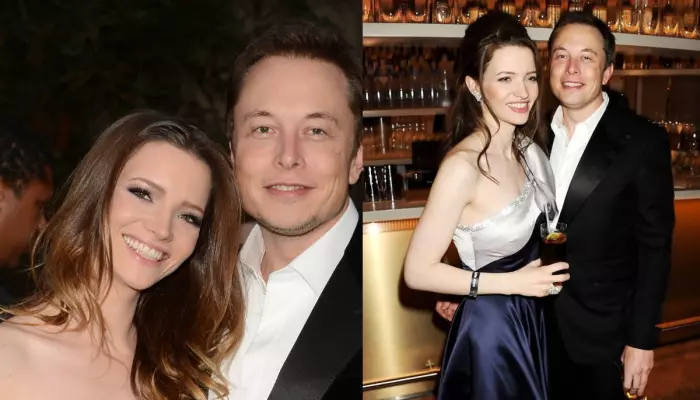
In 2024, Musk became the largest financial backer of Donald Trump’s presidential campaign, spending at least $277 million to support Trump’s election bid.
This represented a dramatic shift in Musk’s public political alignment, as he had previously described himself as politically moderate and had supported both Democratic and Republican candidates.
Following Trump’s election victory in November 2024, Musk was appointed to lead the Department of Government Efficiency (DOGE), a newly created organization aimed at reducing government waste and improving federal operations.
This role gave Musk unprecedented influence over government policy and sparked intense debate about the appropriate role of private sector billionaires in public administration.
However, Musk’s tenure at DOGE was brief and controversial. On May 28, 2025, he announced his planned departure as his 130-day special government employee deadline expired. He officially left DOGE during a joint Oval Office press conference with President Trump on May 30, 2025, citing completion of his initial mission.
Post-DOGE Activities and Political Evolution
After leaving the Trump administration, Musk criticized the administration’s “Big Beautiful Bill,” calling it a “disgusting abomination.” This public disagreement marked a dramatic falling out between the two previously close allies. In July 2025, Musk announced he was forming a third political party, threatening to make good on warnings he’d made if the president’s domestic policy bill became law.
This political evolution demonstrates Musk’s independence and willingness to break with former allies when he disagrees with their policies.
His immense wealth, massive social media following on X (over 180 million followers), and public platform give him extraordinary political influence that extends beyond traditional political channels.
His political activities remain controversial, with supporters praising his willingness to challenge government inefficiency and critics concerned about the concentration of wealth and power in one individual’s hands. Musk’s political future remains uncertain, but his ability to influence public discourse and policy appears likely to continue regardless of formal government roles.
Controversies and Criticism
Throughout his career, Musk has been a polarizing figure attracting both intense admiration and sharp criticism. His supporters view him as a visionary entrepreneur pushing humanity forward through innovation in electric vehicles, space exploration, and renewable energy.
They praise his willingness to tackle seemingly impossible challenges and his track record of achieving goals others considered unrealistic.
Critics, however, point to various controversies including his volatile behavior on social media, conflicts with regulators, labor practices at his companies, and what some perceive as reckless statements about markets and cryptocurrencies.
His acquisition and transformation of Twitter/X has been particularly controversial, with advertisers pulling billions in spending and former users criticizing content moderation changes.
His management style has also drawn scrutiny. Reports of extremely demanding work cultures at Tesla and SpaceX, including requirements for employees to work long hours, have led to concerns about worker welfare.
Former employees have described intense pressure and fear of sudden termination, though others credit this demanding culture with enabling the companies’ remarkable achievements.
Health and Lifestyle
At 54 years old, Elon Musk age requires careful attention to health despite his demanding schedule. Musk has been candid about his struggles with sleep deprivation, often working 80-100 hour weeks and sleeping at factories during production crunches.
He has acknowledged this lifestyle isn’t sustainable long-term but considers it necessary for achieving his ambitious goals.
In 2023, Musk discussed using prescription drugs including Wegovy (semaglutide) for weight management, posting on X that the medication helped him lose weight and improve his overall health.
He has also mentioned using ketamine therapeutically for depression, sparking debates about executive drug use and mental health treatment.
His diet has varied throughout his life, from reportedly eating only hot dogs during his early entrepreneurial days to embracing periodic fasting. In recent years, he has mentioned trying to eat healthier and exercise more regularly, though his work schedule continues to challenge consistent health routines.
Physical Appearance and Public Image
Standing 6’2″ tall, Musk has undergone notable physical changes throughout his career. Early photographs show him with significant hair loss, but he underwent hair transplant procedures that restored his hairline.
This transformation has been the subject of public discussion and speculation about cosmetic procedures.
His fashion sense has evolved from the stereotypical Silicon Valley casual style to occasionally wearing more formal attire for public appearances and meetings with government officials.
However, he typically maintains a practical, understated wardrobe focusing on function over fashion, often seen in simple t-shirts, jeans, and his signature leather jacket.
His public image has shifted dramatically over the years. Initially viewed primarily as a tech entrepreneur, he has become a cultural and political figure whose opinions on various topics receive massive attention. His transformation from a relatively unknown executive to one of the world’s most recognizable people has been extraordinary.
Leadership Style and Philosophy
Elon Musk’s leadership approach is characterized by first-principles thinking, meaning he breaks down complex problems to their fundamental truths and builds solutions from there.
This methodology has enabled breakthroughs in rocket reusability, electric vehicle battery technology, and tunnel boring efficiency, challenging industry assumptions about what’s possible.
He is known for setting extremely ambitious deadlines that most observers consider impossible, then pushing teams to achieve them.
While projects often miss initial timelines, this approach has resulted in accomplishments far exceeding what conventional planning would have attempted. His famous “Musk time” acknowledges that his predictions are optimistic but directionally correct.
His hands-on involvement in technical details distinguishes him from typical executives.
Engineers at both SpaceX and Tesla have noted his deep understanding of engineering principles and his active participation in design decisions. He reportedly sleeps at factories during production challenges, demonstrating commitment that inspires teams despite the demanding expectations.
Innovation Philosophy and Risk-Taking
Musk’s approach to innovation involves pursuing solutions to what he considers humanity’s most critical challenges rather than incrementally improving existing technologies.
He identifies fundamental problems—climate change, single-planet dependency, traffic congestion, brain-computer communication—then creates companies to solve them regardless of conventional wisdom about feasibility or profitability.
His willingness to risk personal bankruptcy has been crucial to his success. During the 2008 financial crisis, he invested his last remaining money into Tesla and SpaceX when both companies faced potential failure.
This all-in approach, while financially reckless by conservative standards, enabled both companies to survive when more cautious investors were pulling out.
He frequently emphasizes the importance of feedback loops and rapid iteration. SpaceX’s ability to test, fail, learn, and improve quickly has given it advantages over traditional aerospace contractors bound by slower bureaucratic processes. This approach extends across all his companies, prioritizing speed of learning over avoiding failures.
Communication Style and Social Media Presence
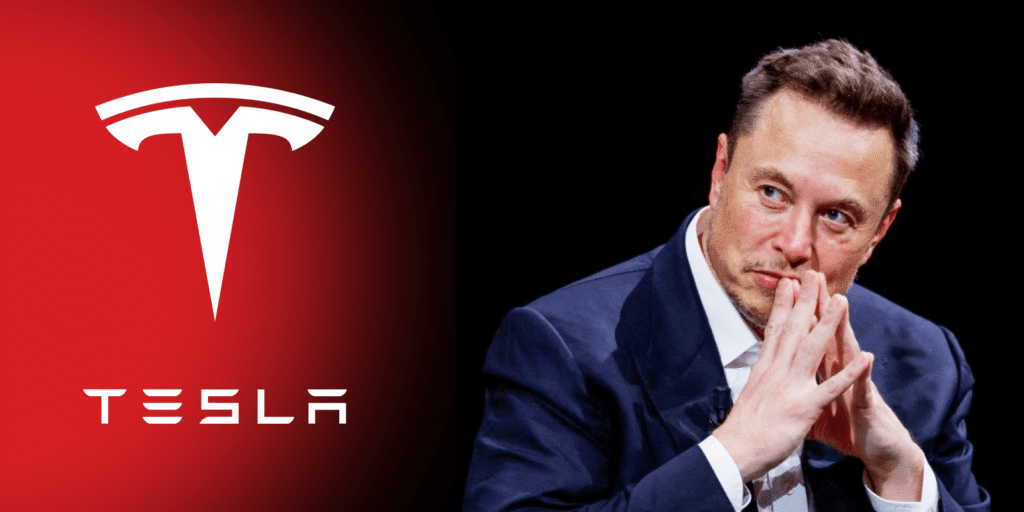
Musk’s use of X (formerly Twitter) has become legendary and controversial. With over 180 million followers, his posts can move markets, influence public opinion, and generate intense media coverage.
He frequently shares memes, engages in technical discussions, responds to critics, and makes company announcements directly through the platform.
His communication style is direct, often blunt, and sometimes provocative. He has been criticized for posts that seemed to mock transgender people, spread conspiracy theories, or make claims that regulators deemed misleading about company plans or capabilities.
His 2018 “funding secured” tweet about taking Tesla private led to SEC sanctions and requirements for company oversight of his social media posts.
Despite controversies, his authentic, unfiltered approach resonates with millions who appreciate his willingness to speak candidly rather than through corporate communications departments.
His humor, often nerdy and meme-based, has created a devoted online following that defends him against critics and amplifies his messages across social media.
Frequently Asked Questions About Elon Musk
1. What is Elon Musk’s age in 2026?
Elon Musk is 54 years old in 2026, born on June 28, 1971, in Pretoria, South Africa. He celebrates his birthday under the Cancer zodiac sign and holds South African, Canadian, and American citizenship.
2. How much is Elon Musk worth in 2026?
Elon Musk’s net worth exceeds $700 billion as of 2026, making him the richest person in history. His wealth primarily comes from his stakes in SpaceX (42%), Tesla (12%), xAI (53%), and other ventures.
3. Is Elon Musk married or in a relationship?
As of 2026, Elon Musk is single and not in a confirmed romantic relationship. He has been married three times (twice to actress Talulah Riley) and divorced three times, most recently in 2016.
4. How many children does Elon Musk have?
Elon Musk has 14 confirmed children with four different women: 6 children with ex-wife Justine Wilson, 3 with musician Grimes, 3 with Neuralink executive Shivon Zilis, and 1 with Ashley St. Clair (the latter still subject to ongoing custody proceedings).
5. What companies does Elon Musk own or run?
Musk is CEO of Tesla and SpaceX, owns X (formerly Twitter), founded xAI, Neuralink, and The Boring Company. He previously co-founded PayPal (sold to eBay) and Zip2 (sold to Compaq).
6. Where was Elon Musk born and raised?
Elon Musk was born in Pretoria, South Africa, at a Naval Base in the Panama Canal Zone. He was raised in Castroville, Texas, before moving to Canada at 17 and eventually settling in the United States.
7. What is Elon Musk’s educational background?
Musk holds a bachelor’s degree in physics from the University of Pennsylvania’s College of Arts and Sciences and a bachelor’s degree in economics from Wharton School of Business, both earned in 1997.
8. Has Elon Musk been involved in politics?
Yes, Musk became Donald Trump’s largest campaign donor in 2024 ($277+ million) and briefly led the Department of Government Efficiency (DOGE) from November 2024 to May 2025 before leaving amid policy disagreements and later forming a third political party.
9. What is Elon Musk’s goal with SpaceX?
Musk’s ultimate goal with SpaceX is to make humanity a multi-planetary species by establishing a self-sustaining city on Mars. He views this as essential for long-term human survival and considers it his most important mission.
10. Why is Elon Musk so controversial?
Musk generates controversy through his provocative social media posts, management style, political statements, business decisions, and unconventional personal life including 14 children with four women. His immense wealth and influence also attract scrutiny about power concentration and social responsibility.
Conclusion
Elon Musk age of 54 years in 2026 represents over five decades of extraordinary achievements that have fundamentally transformed multiple industries.
From his birth in South Africa to becoming the world’s first $700+ billion individual, his journey embodies both the promise and challenges of visionary entrepreneurship in the modern era.
His business empire spanning Tesla, SpaceX, X, xAI, Neuralink, and The Boring Company addresses humanity’s most pressing challenges from climate change to space colonization to brain-computer interfaces.
His net worth, primarily derived from his stakes in these revolutionary companies, has reached unprecedented levels that some analysts predict could hit $1 trillion by 2027-2028.
Elon Musk’s relationship history reveals a complex personal life with three marriages, multiple high-profile romances, and 14 children with four different women.
His unconventional approach to family life reflects his broader philosophy of challenging traditional norms and his public advocacy for higher birth rates to address what he views as an underpopulation crisis.