
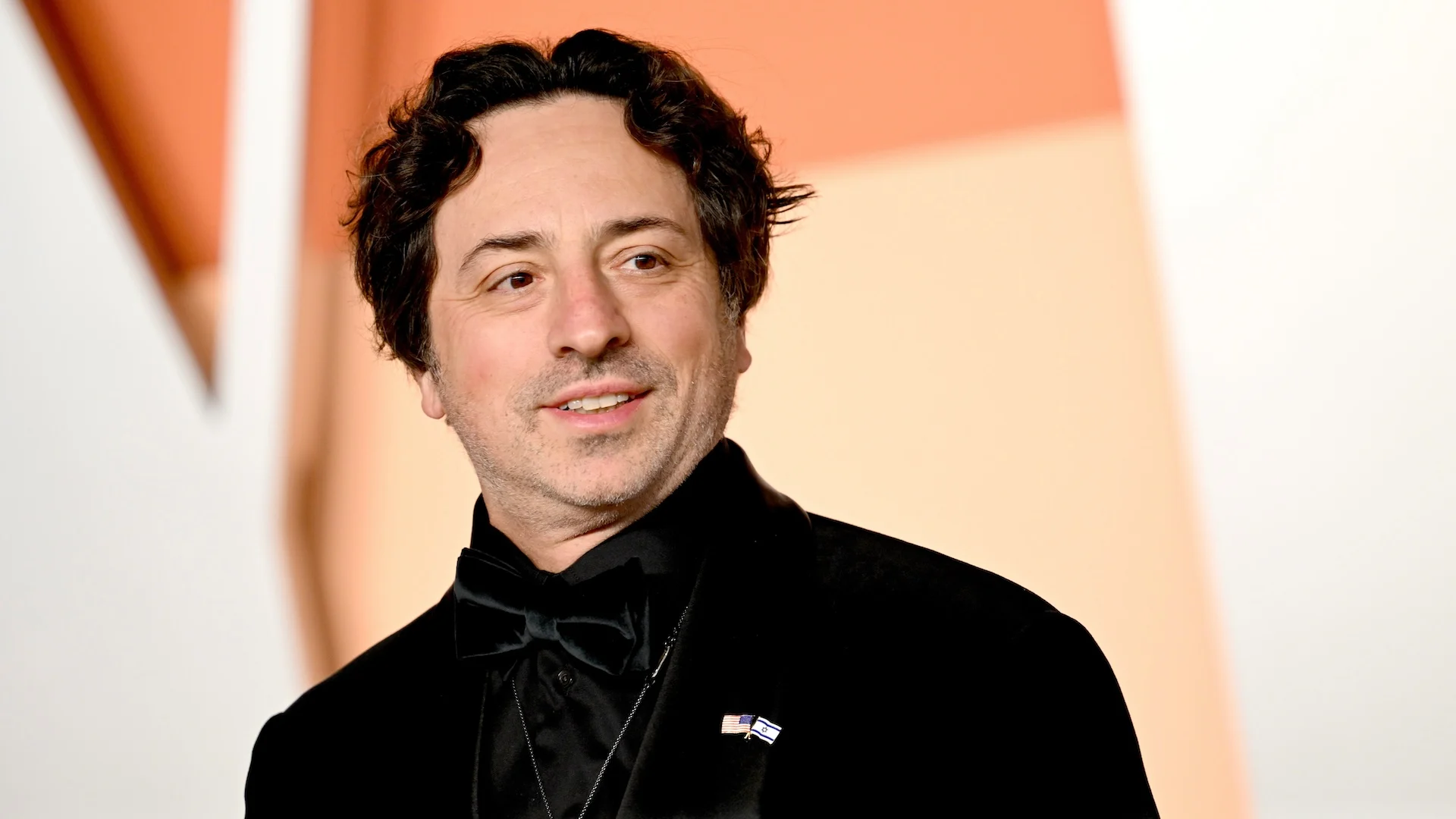
Sergey Brin age of 52 years represents more than five decades of extraordinary achievement, from his escape from Soviet Russia as a child to co-founding Google and becoming one of the wealthiest individuals on the planet.
Born on August 21, 1973, in Moscow, Brin has transformed from a young immigrant who barely spoke English into a technology visionary whose innovations have fundamentally changed how billions of people access and interact with information online.
Table of Contents
Quick Facts About Sergey Brin
| Attribute | Details |
|---|---|
| Full Name | Sergey Mikhailovich Brin |
| Date of Birth | August 21, 1973 |
| Age | 52 years old (as of 2026) |
| Birthplace | Moscow, Soviet Union (now Russia) |
| Nationality | American (Naturalized) |
| Ethnicity | Russian-Jewish |
| Height | 5 feet 8 inches (173 cm) |
| Education | BS University of Maryland, MS Stanford University |
| Profession | Computer Scientist, Entrepreneur, Businessman |
| Net Worth | Approximately $240 billion (2026) |
| Current Role | Co-founder, Board Member at Alphabet Inc. |
| Marital Status | Divorced (twice) |
| Children | 3 (son, two daughters) |
| Famous For | Co-founding Google with Larry Page |
Sergey Brin Age, Early Life and Immigration Journey
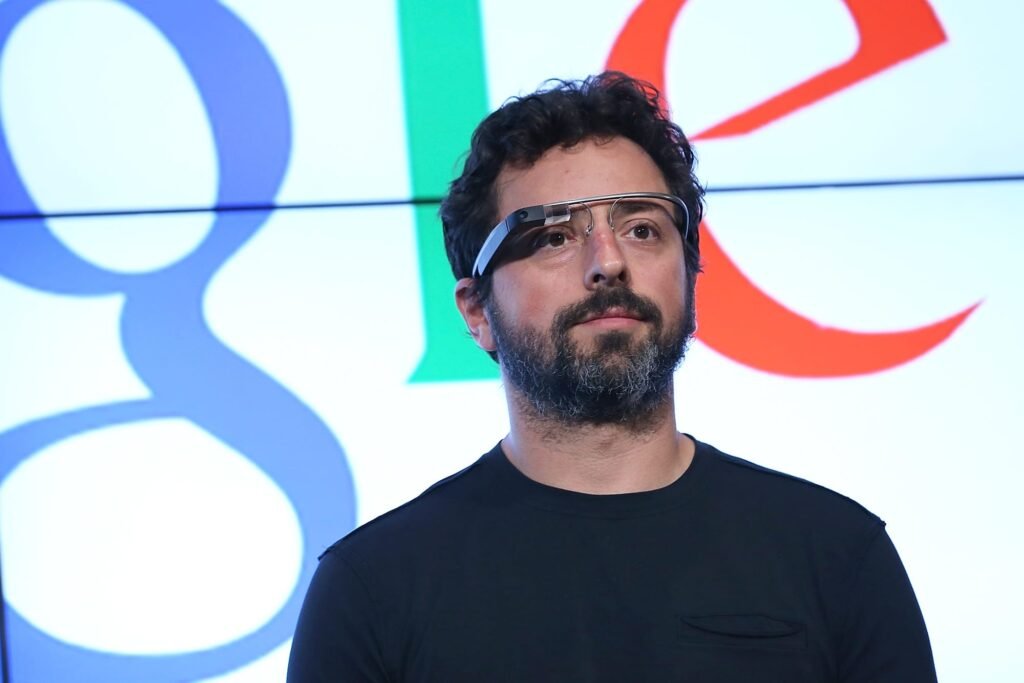
Sergey Mikhailovich Brin was born into a Jewish family in Moscow during the height of the Soviet Union era.
His parents, Mikhail Brin and Eugenia Brin, were both accomplished academics who had graduated from Moscow State University.
His father was a mathematics professor, while his mother worked as a researcher at NASA’s Goddard Space Flight Center after emigrating to the United States.
The Brin family lived in a modest three-room apartment in central Moscow, which they shared with Sergey’s paternal grandmother.
Life in the Soviet Union was challenging for Jewish families, who faced systemic discrimination and limited opportunities.
In 1977, after attending a mathematics conference in Warsaw, Poland, Mikhail Brin witnessed the freedoms that existed outside the Soviet Union and made the difficult decision that his family needed to leave.
The family formally applied for their exit visa in September 1978, a decision that came with immediate consequences. Mikhail was promptly fired from his job, and Eugenia was forced to leave her position as well.
The family became “refuseniks,” facing harassment from the KGB and social ostracism while awaiting permission to emigrate.
After eight months of uncertainty and persecution, the Brin family finally received permission to leave in May 1979.
When Sergey was just six years old, the family departed Moscow with minimal possessions, reflecting the punitive measures the Soviet regime imposed on those who chose to leave.
They spent brief periods in Vienna and Paris before settling in the United States with assistance from the Hebrew Immigrant Aid Society, an organization that helped Soviet Jewish refugees resettle in America.
The family eventually settled in Adelphi, Maryland, where Mikhail secured a faculty position in mathematics at the University of Maryland.
This move provided the stability and opportunities that had been denied to them in the Soviet Union. Young Sergey adapted to American life, learning English and attending Eleanor Roosevelt High School in Greenbelt, Maryland.
His immigrant experience profoundly shaped his worldview, instilling in him both resilience and an appreciation for freedom that would later influence his business philosophy, particularly regarding internet censorship and access to information.
Education and Academic Excellence
Sergey’s aptitude for mathematics and computer science became evident at an early age, nurtured by his father’s tutoring at home.
His father instilled in him an analytical mindset and a passion for problem-solving that would serve as the foundation for his future innovations.
Growing up in a household that valued education above all else, Sergey excelled academically and demonstrated the same intellectual curiosity that had characterized his parents’ careers.
In September 1990, following in his father’s footsteps, Brin enrolled at the University of Maryland, where he pursued a dual focus on computer science and mathematics.
He completed his Bachelor of Science degree in 1993 with high honors in both disciplines at the remarkably young age of 19.
During his undergraduate years, he also interned at Wolfram Research, the company that develops the computational software Mathematica, gaining valuable experience in advanced mathematical computing.
Recognizing his exceptional potential, Brin received a prestigious graduate fellowship from the National Science Foundation to pursue doctoral studies at Stanford University.
He began his graduate program in computer science at Stanford in 1993, earning his Master of Science degree in computer science in 1995.
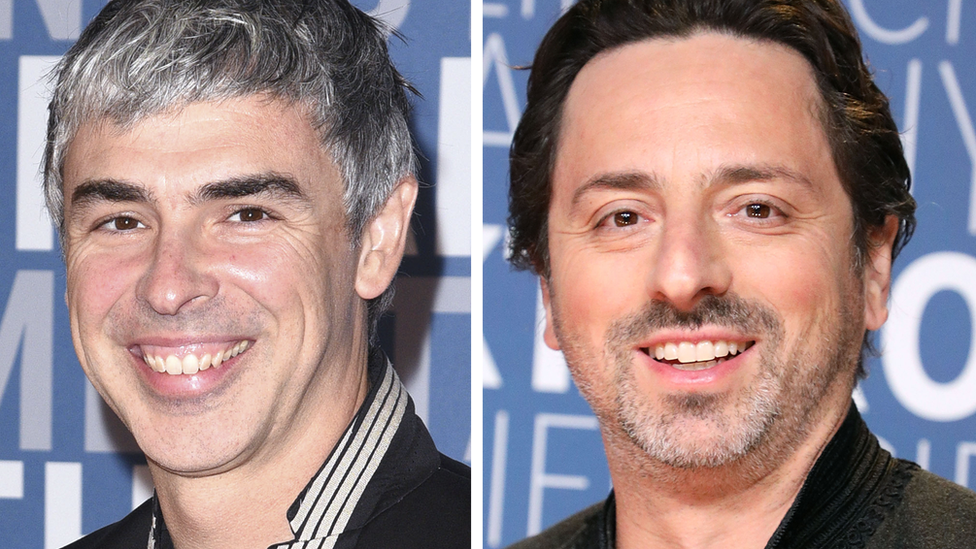
It was during an orientation for new students at Stanford that Brin met Larry Page, a fellow graduate student who would become his intellectual partner and lifelong friend.
The relationship between Brin and Page began somewhat contentiously, as the two seemed to disagree on almost every subject during their initial interactions.
However, this intellectual friction soon evolved into a productive partnership as they discovered their complementary interests and shared vision for organizing the world’s information.
Brin’s focus was on developing data mining systems, while Page was interested in extending concepts from academic citation analysis to the web. This convergence of interests would ultimately lead to the creation of Google.
The Birth of Google
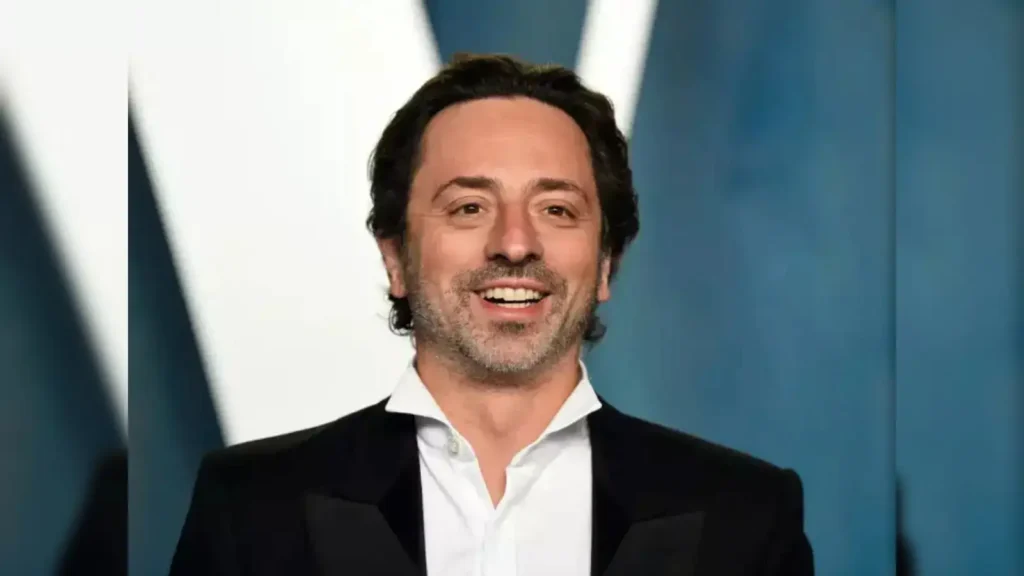
In 1996, while still PhD students at Stanford, Brin and Page began collaborating on a research project called BackRub, which analyzed the relationships between websites using backlinks.
Their revolutionary insight was that the importance of a web page could be determined by analyzing the number and quality of links pointing to it, similar to how academic papers are evaluated based on citations.
This concept formed the basis of the PageRank algorithm, which Brin helped develop and which would become the foundation of Google’s search technology.
The BackRub project initially operated on Stanford’s network infrastructure, using assembled computer parts that the duo scavenged from wherever they could find them.
By early 1997, their search engine had demonstrated superior accuracy compared to existing search engines like AltaVista, indexing over 24 million web pages.
The technology was revolutionary because it provided objectively better search results by analyzing the web’s link structure rather than simply counting keyword occurrences.
In September 1998, Brin and Page officially incorporated Google Inc., taking the company’s name from a misspelling of “googol,” the mathematical term for the number one followed by one hundred zeros.
The name reflected their mission to organize the vast amount of information available on the internet.
They initially operated out of a garage in Menlo Park, California, after securing their first major investment of $100,000 from Andy Bechtolsheim, a co-founder of Sun Microsystems, who wrote them a check before Google was even officially incorporated.
By mid-1999, Google had received $25 million in venture capital funding and was processing 500,000 queries per day.
Sergey Brin served as Google’s President of Technology, overseeing the engineering and technical infrastructure that allowed the search engine to scale rapidly.
His technical expertise was crucial in developing the distributed computing systems that enabled Google to handle billions of searches efficiently while maintaining fast response times and relevant results.
Google’s Explosive Growth and Evolution
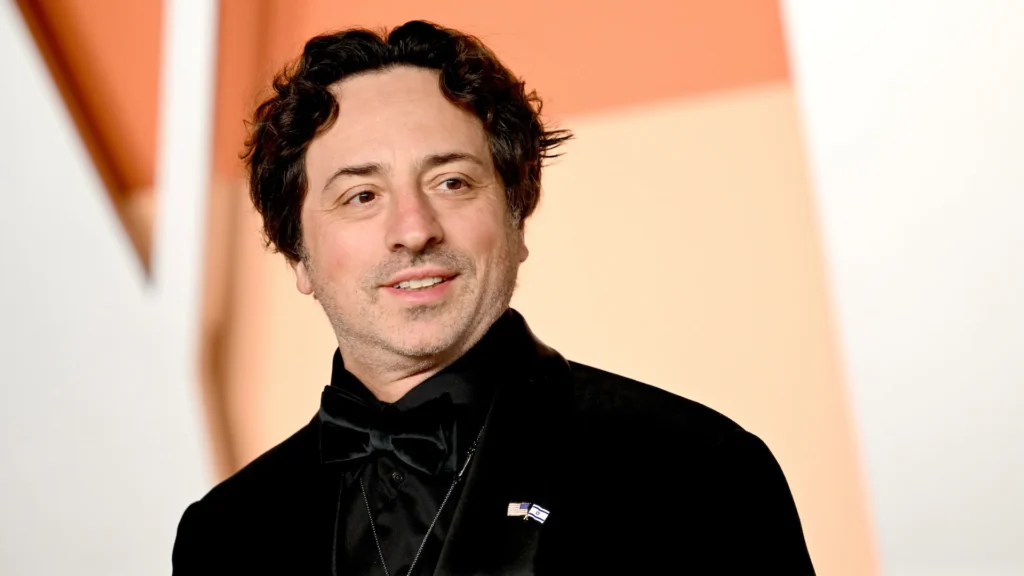
Under Brin’s technical leadership, Google grew from a Stanford research project into one of the most powerful and influential companies in the world.
By 2004, when Google held its initial public offering, the company was processing over 200 million searches per day.
The IPO raised $1.67 billion and gave Google a market capitalization of $23 billion, instantly making both Brin and Page multibillionaires at age 31.
The stock offering employed an unusual Dutch auction system designed to democratize share distribution and reduce the influence of large institutional investors.
As President of Technology, Brin oversaw the development and launch of numerous products that expanded Google’s reach beyond search.
These innovations included Gmail, which revolutionized email with unprecedented storage capacity and powerful search functionality; Google Maps, which transformed digital navigation; and the acquisition of Android in 2005, which positioned Google to dominate the mobile operating system market.
Each of these products reflected Brin’s philosophy of using technology to solve real-world problems and make information universally accessible.
Brin also championed more ambitious and unconventional projects through Google X, the company’s semi-secret research and development facility.
These “moonshot” projects included self-driving cars through Waymo, internet-delivering balloons through Project Loon, and Google Glass, an early attempt at augmented reality eyewear.
While not all of these projects achieved commercial success, they demonstrated Brin’s willingness to invest in transformative technologies that could have profound societal impacts.
In August 2015, Google underwent a major corporate restructuring, creating Alphabet Inc. as a holding company with Google as its largest subsidiary.
This reorganization allowed the company to separate its core internet services business from its more experimental ventures.
Sergey Brin was named President of Alphabet, working alongside Larry Page as CEO, while Sundar Pichai took over as CEO of Google itself. This structure gave Brin more freedom to focus on emerging technologies and long-term research projects.
Stepping Back and Returning to AI Leadership
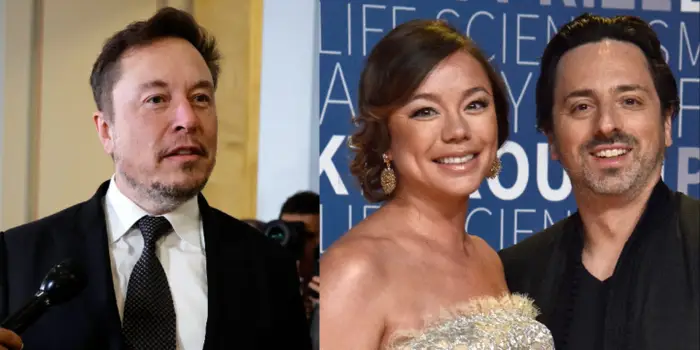
On December 3, 2019, both Sergey Brin and Larry Page announced they were stepping down from their active leadership roles at Alphabet, with Sundar Pichai assuming the CEO position for both Alphabet and Google.
Brin and Page remained on Alphabet’s board of directors and continued as controlling shareholders, maintaining significant influence over the company’s direction.
Their decision to step back was framed as passing the torch to a new generation of leadership while they focused on other interests and ventures.
However, Sergey Brin’s semi-retirement proved to be short-lived. In late 2023 and early 2024, as artificial intelligence emerged as the technology sector’s most transformative and competitive arena, Brin returned to an active role at Alphabet.
The release of ChatGPT by OpenAI in November 2022 had sent shockwaves through the tech industry, and Brin recognized both the opportunity and the threat that advanced AI systems represented for Google’s future.
At Google I/O in May 2025, Brin publicly advocated for the company to return to a “startup mode” mindset, emphasizing the need for aggressive resource allocation and rapid innovation to compete in the AI race.
In internal communications, he pushed for what he called “turbocharging” efforts, including encouraging 60-hour workweeks and leveraging AI tools to enhance engineer productivity toward achieving artificial general intelligence milestones.
His hands-on involvement in Google’s Gemini AI project marked a significant return to the technical work that had always been his passion.
Brin has acknowledged that Google was caught off-guard by the sudden success of large language models and the consumer excitement around conversational AI.
His return to active development work reflects both his personal commitment to ensuring Google remains at the forefront of technological innovation and his concern that the company had become too comfortable and slow-moving.
By early 2025, he was spending significant time coding and working directly with research teams, bringing an intensity and urgency that some employees hadn’t seen since Google’s early days.
Sergey Brin Net Worth in 2026
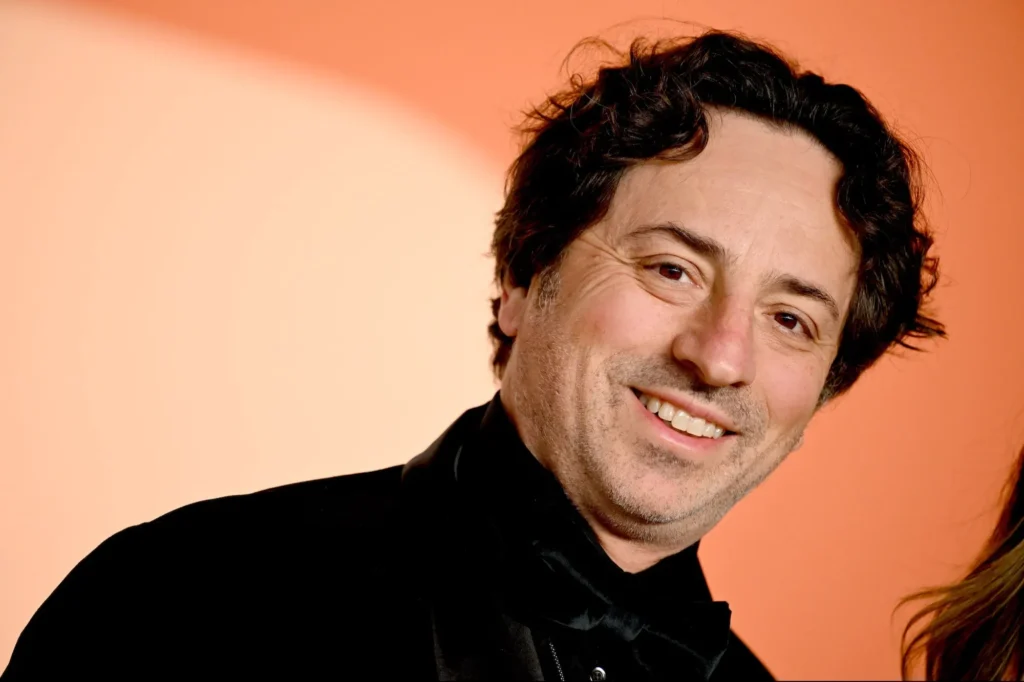
As of 2026, Sergey Brin’s net worth is estimated at approximately $240 billion, making him one of the five wealthiest individuals on the planet.
This extraordinary fortune places him just behind Elon Musk and close to his co-founder Larry Page in global wealth rankings.
Brin recently surpassed Amazon founder Jeff Bezos on the billionaires list, highlighting how the surge in Alphabet’s stock price, driven largely by excitement around AI technologies, has substantially increased his wealth.
The vast majority of Brin’s fortune derives from his ownership stake in Alphabet Inc.
He owns approximately six percent of the company through a combination of Class B and Class C shares, giving him an aggregate stake valued at over $200 billion based on current market prices.
The Class B shares, which don’t trade publicly, grant him super-voting rights that ensure he and Larry Page maintain control over the company’s strategic direction despite owning a relatively small percentage of total shares.
Since Alphabet’s 2004 initial public offering, Brin has sold shares worth more than $11 billion, using the proceeds for personal investments, philanthropic endeavors, and funding various side projects.
Despite these sales, his remaining stake has appreciated so dramatically that his net worth has continued to grow substantially.
The company’s revenue reached $350 billion in 2024, and its dominant position in digital advertising, cloud computing, and emerging AI technologies suggests continued growth potential.
Beyond his Alphabet holdings, Brin has diversified his investments into various technology ventures.
He holds equity stakes in Tesla, having participated in a $40 million investment round alongside Larry Page in 2006, making him one of the electric vehicle company’s early investors.
He was the fourth person to receive a Tesla Model X Crossover SUV. He also invested in 23andMe, the personal genomics company founded by his first wife, Anne Wojcicki, though the status of this investment following their divorce is unclear.
Brin’s wealth fluctuates significantly based on Alphabet’s stock performance, which can change his net worth by billions of dollars in a single day.
The 58 percent increase in his wealth during 2025 alone, adding approximately $92 billion to his fortune, demonstrates the volatility and magnitude of changes at this level of wealth.
Financial analysts expect his net worth to continue growing as AI technologies mature and Alphabet monetizes its significant investments in this sector.
Personal Life, Marriages, and Controversies
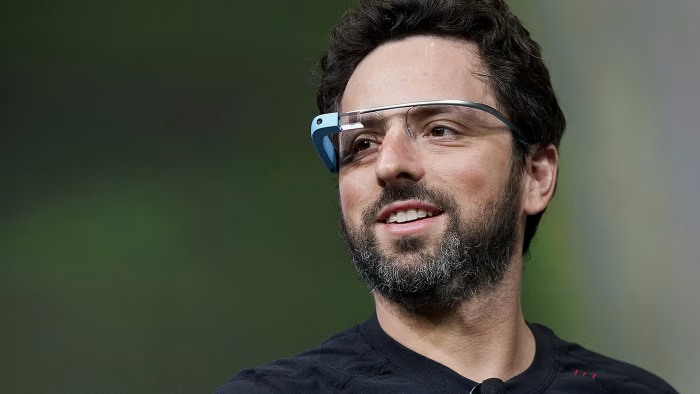
Sergey Brin’s personal life has been considerably more tumultuous than his professional achievements.
In May 2007, he married Anne Wojcicki, a biotechnology entrepreneur and the founder of 23andMe, a personal genomics and biotechnology company.
The couple had a son named Benji in 2008 and a daughter in 2011. They were considered one of Silicon Valley’s power couples, combining technological innovation with groundbreaking work in personalized medicine.
However, the marriage encountered difficulties, and the couple separated in 2013 before finalizing their divorce in 2015.
Reports at the time suggested that Brin had been involved in a relationship with Amanda Rosenberg, a Google Glass marketing manager, which contributed to the marital breakdown.
Despite the divorce, Brin and Wojcicki maintained a business relationship, as Brin had invested significantly in 23andMe.
They also co-ran the Brin Wojcicki Foundation until 2014, after which Brin established his own Sergey Brin Family Foundation for his philanthropic activities.
In November 2018, Brin married Nicole Shanahan, a California-based attorney and entrepreneur who founded ClearAccessIP, a legal technology company.
The couple met at a yoga festival at Lake Tahoe in 2014 and made their first public appearance together at the Met Gala in 2016.
They welcomed a daughter in late 2018, shortly before officially marrying. The relationship appeared stable initially, with Shanahan becoming actively involved in philanthropic work through the Bia-Echo Foundation, which received substantial funding from Brin.
However, the marriage deteriorated rapidly. The couple separated in December 2021, and Brin filed for divorce in January 2022, citing irreconcilable differences.
The divorce proceedings became complicated and contentious, lasting 18 months before being finalized in summer 2023 through confidential arbitration.
Despite having signed a prenuptial agreement, Shanahan initially sought more than $1 billion from Brin’s fortune, arguing she had signed the prenup under duress.
The divorce attracted significant media attention following reports in The Wall Street Journal and The New York Times alleging that Shanahan had engaged in a brief affair with Elon Musk, a longtime friend of Brin’s, at a party in Miami in late 2021.
According to these reports, the incident occurred after both Shanahan and Musk consumed ketamine, a party drug that is legal with a prescription.
Multiple sources claimed that Shanahan later admitted the encounter to Brin, friends, and family members. Both Shanahan and Musk have publicly denied having an affair, with Musk stating the allegations were “total bs.”
The divorce was eventually finalized with Shanahan reportedly receiving a settlement exceeding $1 billion, including approximately 2.6 million Alphabet Class B shares worth around $390 million, and possibly an equivalent amount in additional assets.
This settlement, while substantial, represented just over one percent of Brin’s total net worth at the time.
The couple maintained privacy throughout much of the proceedings by working with a private temporary judge, a common practice among wealthy California couples seeking to avoid public disclosure of financial details.
Philanthropy and Other Ventures
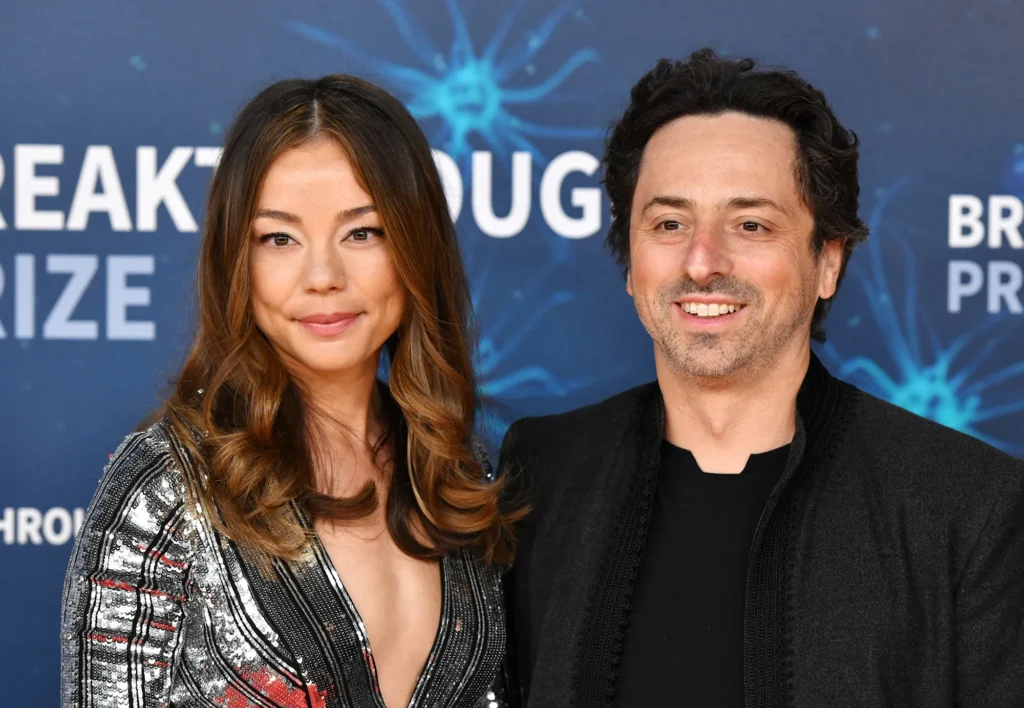
Beyond his work at Alphabet, Sergey Brin has been actively involved in various philanthropic and entrepreneurial ventures that reflect his diverse interests and concerns.
Through the Sergey Brin Family Foundation, he has donated extensively to causes related to Parkinson’s disease research, a personal concern as his mother Eugenia was diagnosed with the condition.
His genetic testing revealed he carries a mutation in the LRRK2 gene that significantly increases Parkinson’s risk, motivating his substantial investments in research aimed at preventing and treating the disease.
Brin has donated generously to the Michael J. Fox Foundation for Parkinson’s Research and has funded various initiatives at medical research institutions.
In 2009, he gave $1 million to support the Hebrew Immigrant Aid Society, the organization that helped his family resettle in the United States, demonstrating his commitment to helping refugees and immigrants.
His philanthropy also extends to disaster relief, scientific research, and educational initiatives, though he generally maintains a lower profile than some other billionaire philanthropists.
In the political sphere, Brin has been a consistent donor to Democratic Party candidates and organizations. He donated $5,000 to Barack Obama’s 2012 reelection campaign and $30,800 to the Democratic National Committee.
However, in a surprising move that raised eyebrows in Silicon Valley, Brin attended Donald Trump’s second inauguration in January 2025, sitting alongside other tech moguls and Trump supporters.
This appearance sparked speculation about his political evolution and the tech industry’s complex relationship with political power.
Brin owns several impressive assets that reflect his wealth and interests. He is the owner of Dragonfly, a luxury superyacht that serves as both a personal retreat and a floating laboratory for ocean research.
Along with Larry Page, he owns a special Boeing 767-200 airplane equipped with scientific instrumentation from NASA, which they use for both personal travel and atmospheric data collection.
They also own a Dassault/Dornier Alpha Jet and pay substantial fees to keep these aircraft at Moffett Federal Airfield.
One of Brin’s more unusual ventures is his support for LTA Research & Exploration LLC, a company he founded that develops modern airships.
In October 2023, their large airship, Pathfinder 1, received approval for flight testing. At approximately 400 feet long, it is the largest airship built since the Hindenburg and represents Brin’s interest in developing sustainable aviation technologies.
The project reflects his willingness to invest personal wealth in ambitious, long-term technological visions that may not have immediate commercial applications.
Also Read:
Elon Musk Age, Net Worth, Career & Relationship Status 2026
Warren Buffett Age, Life Story, Net Worth & Partner Info 2026
Jeff Bezos Age, Net Worth, Career, Wife & Family 2026
Mark Zuckerberg Age, Net Worth, Wife & Family 2026
Frequently Asked Questions (FAQs)
1. How old is Sergey Brin in 2026?
Sergey Brin is 52 years old in 2026, having been born on August 21, 1973, in Moscow, Soviet Union. He celebrates his birthday every year as a Leo, and has spent the majority of his life in the United States after immigrating at age six with his family to escape antisemitism in the Soviet Union.
2. What is Sergey Brin’s current net worth?
As of early 2026, Sergey Brin’s net worth is estimated at approximately $240 billion, making him one of the five wealthiest people in the world. His fortune primarily derives from his roughly six percent ownership stake in Alphabet Inc., the parent company of Google, which he co-founded with Larry Page in 1998.
3. Is Sergey Brin still married?
No, Sergey Brin is currently divorced. He was previously married twice, first to Anne Wojcicki from 2007 to 2015, and then to Nicole Shanahan from 2018 to 2023. Both marriages ended in divorce, with his second divorce being finalized in summer 2023 after a contentious 18-month legal process that reportedly resulted in a settlement exceeding $1 billion for Shanahan.
4. Does Sergey Brin still work at Google?
While Brin officially stepped down from his role as President of Alphabet in December 2019, he returned to an active technical role in late 2023 to help lead Google’s artificial intelligence efforts. He remains on Alphabet’s board of directors and is a controlling shareholder, and as of 2025, he has been actively involved in coding and developing Google’s Gemini AI system alongside research teams.
5. How many children does Sergey Brin have?
Sergey Brin has three children from his two marriages. He has a son named Benji, born in 2008, and a daughter born in 2011 from his first marriage to Anne Wojcicki. He also has a daughter born in late 2018 from his second marriage to Nicole Shanahan. Brin maintains joint custody arrangements and keeps his children’s lives private from media attention.
6. What is Sergey Brin’s relationship with Larry Page?
Sergey Brin and Larry Page have been close friends and business partners since meeting at Stanford University in 1993. They co-founded Google together in 1998 and have maintained their partnership through Google’s evolution into Alphabet. Despite stepping back from day-to-day operations in 2019, they continue to serve together on Alphabet’s board and control the company through super-voting shares, maintaining their decades-long collaborative relationship.
7. Where did Sergey Brin go to college?
Sergey Brin earned his Bachelor of Science degree in computer science and mathematics from the University of Maryland, College Park in 1993, graduating with high honors at age 19. He then pursued graduate studies at Stanford University, where he received his Master of Science in computer science in 1995. He was working toward a PhD at Stanford when he and Larry Page founded Google, though he never completed the doctorate.
8. What languages does Sergey Brin speak?
Sergey Brin is fluent in both English and Russian. He grew up speaking Russian as his first language during his early childhood in Moscow, and learned English after immigrating to the United States at age six. His bilingual abilities reflect his diverse cultural background and his family’s immigrant experience, though he primarily conducts business in English.
9. What is Sergey Brin’s role in AI development?
After stepping back from Alphabet leadership in 2019, Brin returned to an active technical role in 2023 specifically to help lead the company’s artificial intelligence efforts in response to competitive threats from OpenAI and other AI companies. He has been directly involved in coding and developing Google’s Gemini AI system, advocating for a return to Google’s startup culture and pushing teams to work intensively on achieving breakthroughs in artificial general intelligence.
10. What awards and honors has Sergey Brin received?
Sergey Brin has received numerous prestigious honors throughout his career. In 2002, he and Larry Page were named to the MIT Technology Review TR100 as two of the top 100 innovators under age 35. In 2003, they received an honorary MBA from IE Business School for embodying entrepreneurial spirit. In 2004, Brin and Page were awarded the Marconi Prize and elected Fellows of the Marconi Foundation at Columbia University, recognizing their revolutionary contributions to internet technology and information access.
Conclusion
Sergey Brin age of 52 years encompasses a remarkable journey from Soviet refugee to technology titan whose innovations have transformed how humanity accesses and processes information.
Born in Moscow in 1973 during the height of the Cold War, Brin’s family’s courageous decision to flee antisemitism in the Soviet Union set the stage for one of the most consequential entrepreneurial stories in modern history.
His immigrant experience instilled values of freedom, meritocracy, and the transformative power of education that have guided both his business philosophy and his approach to organizing the world’s information.
The creation of Google with Larry Page stands as one of the defining technological achievements of the internet age, fundamentally changing how billions of people find information, communicate, and navigate the digital world.
From a Stanford research project analyzing web links, Brin and Page built a company that now generates $350 billion in annual revenue and whose products touch nearly every aspect of modern digital life, from search and email to mobile operating systems and cloud computing.