
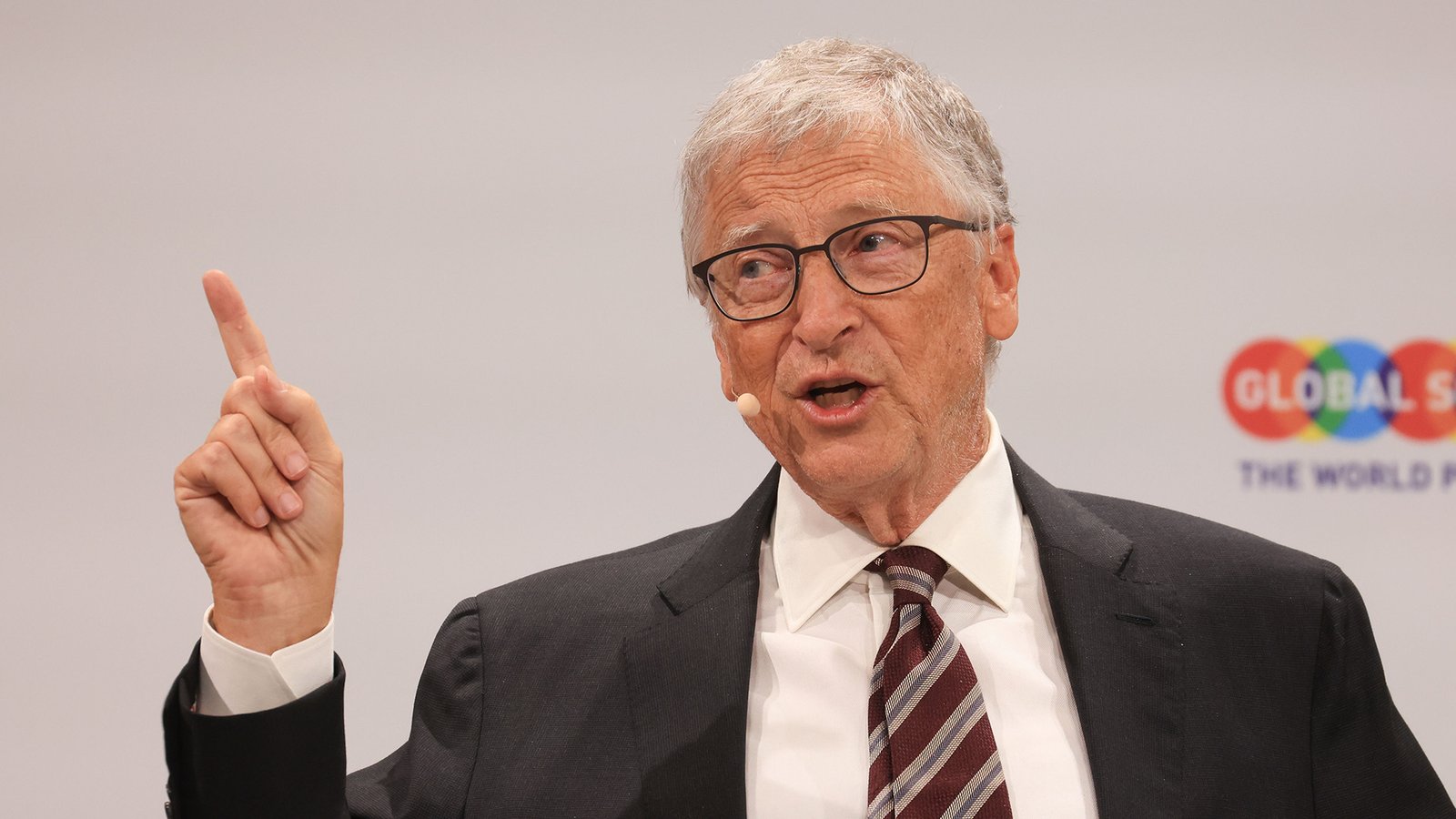
Bill Gates age has been a topic of fascination as the Microsoft co-founder continues to reshape global philanthropy and technology at 70 years old.
Born William Henry Gates III on October 28, 1955, in Seattle, Washington, this tech pioneer transformed from a Harvard dropout who co-founded Microsoft in a garage to becoming one of the wealthiest and most influential people in history.
From his groundbreaking work revolutionizing personal computing to his massive philanthropic efforts through the Bill & Melinda Gates Foundation, Gates’ journey spans nearly five decades of innovation, business dominance, personal challenges, and charitable giving that will impact generations to come.
Table of Contents
Quick Facts Table
| Category | Details |
|---|---|
| Full Name | William Henry Gates III |
| Nickname | Bill Gates, Trey (childhood) |
| Date of Birth | October 28, 1955 |
| Age | 70 years old (as of 2026) |
| Birthplace | Seattle, Washington, United States |
| Zodiac Sign | Scorpio ♏ |
| Height | 5’9″ (175 cm) |
| Nationality | American |
| Occupation | Business Magnate, Software Developer, Investor, Author, Philanthropist |
| Known For | Co-founding Microsoft Corporation |
| Education | Harvard University (dropped out), Lakeside School |
| Net Worth (2026) | $116 billion (estimated) |
| Current Position | Founder and Technology Advisor at Microsoft |
| Marital Status | Divorced (formerly married to Melinda French Gates 1994-2021) |
| Current Relationship | Dating Paula Hurd (serious girlfriend) |
| Children | 3 (Jennifer Gates Nassar, Rory John Gates, Phoebe Adele Gates) |
| Grandchildren | 2 (through Jennifer) |
| Parents | William H. Gates Sr. (lawyer) and Mary Maxwell Gates (businesswoman) |
| Siblings | Kristianne Gates, Libby Gates |
| Foundation | Bill & Melinda Gates Foundation (world’s largest private charitable foundation) |
| Books | The Road Ahead, Business @ the Speed of Thought, How to Avoid a Climate Disaster, Source Code: My Beginnings |
| Awards | Presidential Medal of Freedom (2016), Commander of the Order of the Federal Republic (Nigeria, 2025) |
| SAT Score | 1590 out of 1600 |
Who Is Bill Gates?
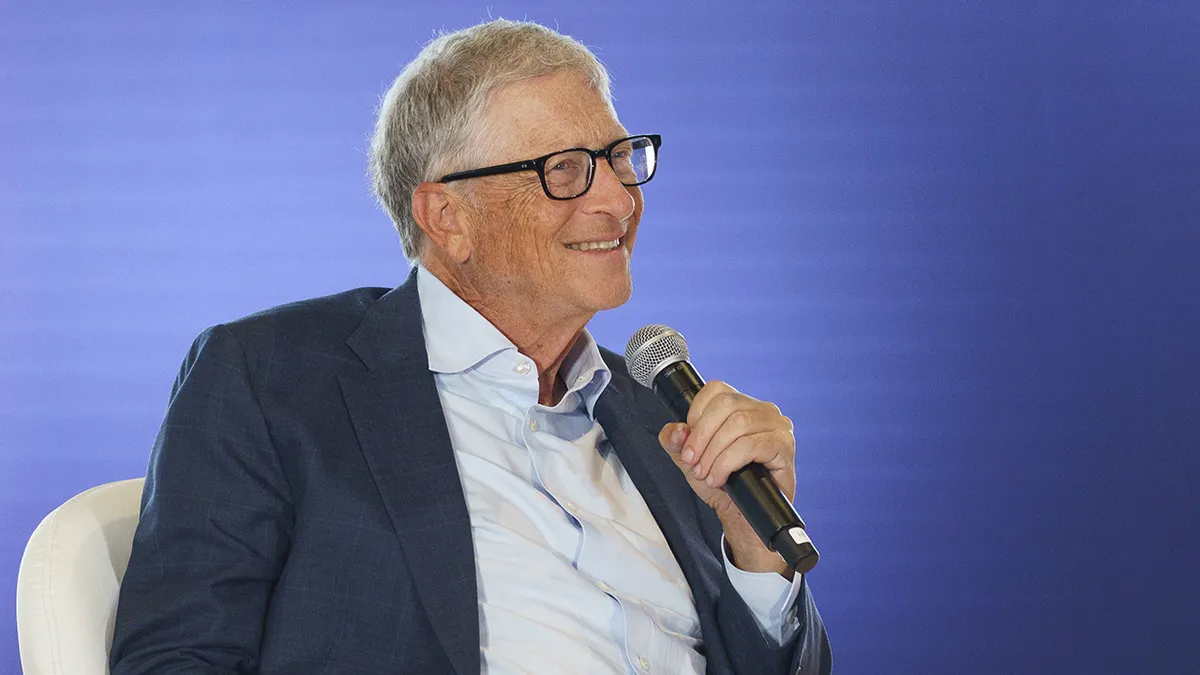
Tech Pioneer and Microsoft Co-Founder
Bill Gates is one of the most recognizable names in technology and business history. As the co-founder of Microsoft Corporation alongside his childhood friend Paul Allen in 1975, Gates played an instrumental role in bringing personal computers into homes and offices worldwide.
His vision of “a computer on every desk and in every home” seemed audacious in the 1970s but became reality largely through Microsoft’s innovative software.
Gates’ programming prowess emerged early. At age 13, he wrote his first computer program—a tic-tac-toe game that allowed users to play against the computer. This early fascination with how machines could perfectly execute code would shape his entire career trajectory.
Unlike many tech executives who focused primarily on business strategy, Gates remained deeply involved in technical development, often reviewing code himself and participating in lengthy programming sessions during Microsoft’s formative years.
The creation of MS-DOS (Microsoft Disk Operating System) in 1981 and its adoption by IBM for their personal computers marked a turning point. This partnership gave Microsoft a foothold in the rapidly expanding PC market.
The subsequent development and release of Microsoft Windows in 1985 revolutionized computer interfaces, making technology accessible to non-technical users through graphical user interfaces and mouse controls.
Under Gates’ leadership as CEO from 1975 to 2000, Microsoft grew from a two-person operation into the world’s largest personal computer software company.
The company’s initial public offering in 1986 transformed Gates into a multi-millionaire at age 31. By 1987, he became the world’s youngest self-made billionaire.
His business acumen, technical knowledge, and competitive drive made Microsoft a dominant force that shaped the entire technology industry for decades.
Gates’ reputation as a demanding and intense boss became legendary in Silicon Valley. Stories of his marathon meetings, detailed code reviews, and exacting standards became part of Microsoft’s culture.
Former employees recall how he would challenge ideas, push for excellence, and maintain extraordinarily high standards. His famous expletive count during meetings became an internal metric—the lower the count, the better the meeting went.
Philanthropist and Global Leader
Today, Bill Gates is perhaps better known for his philanthropic work than his business achievements.
Since stepping down from his day-to-day role at Microsoft in 2008, he has dedicated himself almost entirely to charitable causes through the Bill & Melinda Gates Foundation, which he co-founded with his then-wife Melinda in 2000.
The foundation has become the world’s largest private charitable organization, with an endowment exceeding $70 billion. Its work spans global health initiatives, disease eradication, agricultural development, education reform, and climate change mitigation.
The foundation has been instrumental in funding vaccine programs, fighting malaria and HIV/AIDS, improving sanitation in developing countries, and supporting education initiatives worldwide.
Gates has pledged to donate virtually all of his wealth to philanthropy, stating publicly that he is “determined that ‘he died rich’ will not be one of” the things people say about him.
As part of this commitment, he co-founded The Giving Pledge in 2010 with Warren Buffett, encouraging billionaires worldwide to commit at least half their wealth to charitable causes.
His transformation from aggressive businessman to dedicated philanthropist represents one of the most significant personal evolutions in modern history.
Gates now spends his time studying global health data, meeting with scientists and policymakers, writing books on climate change and pandemic prevention, and using his platform to advocate for causes he believes in.
Bill Gates Age and Birthday
Bill Gates is currently 70 years old, having been born on October 28, 1955. He celebrated his 70th birthday in October 2025, marking seven decades of life that have witnessed and shaped the digital revolution.
As a Scorpio, Gates exhibits many traits associated with that zodiac sign—intensity, determination, strategic thinking, and a desire to transform and control his environment.
At 70, Gates remains remarkably active and engaged. Unlike many people his age who have fully retired, he maintains a busy schedule filled with foundation work, travel to developing countries, meetings with world leaders, and writing. In recent interviews, Gates has reflected on aging with optimism, noting that he feels “more cheerful” at 69-70 than at many earlier points in his life.
His recent memoir, Source Code: My Beginnings, released in February 2025, provides intimate details about his childhood, early programming experiences, and the formation of Microsoft. In the book, Gates hints that he might be neurodivergent, stating he “would probably be diagnosed with autism” if he were a child today—an observation that has sparked discussions about neurodiversity in tech leadership.
The passage of time has brought Gates perspective on what truly matters. While he spent his 30s and 40s obsessively focused on Microsoft’s competitive position, often working 80-hour weeks and sleeping in the office, he now prioritizes relationships, meaningful work, and leisure time.
He enjoys traveling to sporting events with his girlfriend Paula Hurd, attending the Olympics, watching his grandchildren grow, and reading extensively.
Physically, Gates appears healthy and active for his age, though he benefits from access to world-class healthcare and resources.
He’s spoken about the importance of staying mentally engaged, continuing to learn, and maintaining social connections—all factors research shows contribute to healthy aging.
Bill Gates Early Life and Education
Childhood in Seattle
William Henry Gates III was born into an upper-middle-class family in Seattle, Washington, on October 28, 1955. His father, William H. Gates Sr., was a prominent attorney, while his mother, Mary Maxwell Gates, was a schoolteacher who became a successful businesswoman and served on numerous corporate and nonprofit boards, including becoming the first woman on the board of First Interstate Bank of Washington and the first female chair of United Way International.
Young Bill—nicknamed “Trey” (meaning III) by his family—grew up with two sisters, older sister Kristianne and younger sister Libby. The Gates household encouraged competition, excellence, and intellectual curiosity.
Family gatherings often featured board games, with Bill showing particular aptitude for strategy games like Risk and Monopoly. His parents rewarded winning and penalized losing, fostering a competitive streak that would later define his business approach.
As a child, Gates was small for his age and faced bullying. His parents noticed he seemed withdrawn at times and worried he might become isolated. Despite these challenges, Gates was intellectually precocious, reading encyclopedias for hours and demonstrating an exceptional memory.
Around age 11 or 12, his behavior became concerning enough that his parents sought counseling, though Gates would later describe these sessions as unhelpful.
The Gates family home was financially comfortable, though not extravagantly wealthy. This environment provided stability and opportunity while his mother’s civic involvement exposed young Bill to community service and philanthropy—experiences that would influence his later charitable work.
Lakeside School Years
At age 13, Gates’ parents enrolled him at Lakeside School, an exclusive private preparatory academy in Seattle. This decision would prove transformative. While Gates’ parents were strong believers in public education, they felt the move would benefit their son’s development, and they were right—Lakeside opened doors that changed computing history.
Gates excelled at Lakeside, particularly in mathematics and science, though he also performed well in drama and English.
His intellectual curiosity found full expression in the school’s rigorous academic environment. More importantly, Lakeside School had something few educational institutions possessed in 1968: access to a computer.
The school’s Mothers Club had used proceeds from a rummage sale to purchase a Teletype Model 33 ASR terminal and computer time on a General Electric computer.
When Gates first encountered this machine in eighth grade, he was immediately fascinated. He became obsessed with understanding how it worked, how to program it, and how to make it execute code perfectly.
Gates and fellow student Paul Allen quickly became inseparable friends, bonded by their shared passion for computing. They spent countless hours at the computer terminal, teaching themselves programming languages including BASIC, FORTRAN, and LISP.
They even hacked into the company providing computer time to gain extra usage, though they were caught and temporarily banned.
At age 17, Gates and Allen formed their first business venture, Traf-O-Data, which created traffic counters based on the Intel 8008 processor. While not financially successful, the venture provided invaluable experience in turning technical ideas into commercial products.
Tragedy struck when Kent Evans, Gates’ close friend and programming partner, died in a mountain climbing accident during their junior year.
Gates described it as “one of the saddest days of” his life. Paul Allen stepped in to help Gates complete a class-scheduling system they had been developing for Lakeside, further cementing their partnership.
Harvard University
In 1973, Gates enrolled at Harvard University, where he initially planned to pursue a career in law like his father. However, his heart wasn’t in legal studies. He spent more time in Harvard’s computer lab than in classes, often staying awake for 36 hours straight working on programming projects.
At Harvard, Gates met Steve Ballmer, who would later become Microsoft’s CEO and one of Gates’ lifelong friends. Despite Ballmer’s attempts to get Gates more involved in traditional college activities, Gates remained laser-focused on computers and software development.
The pivotal moment came in December 1974 when Paul Allen, who was working in Boston, showed Gates the January 1975 cover of Popular Electronics magazine featuring the Altair 8800—the first commercially successful personal computer.
Gates immediately realized this was the opportunity they had been waiting for. The personal computer revolution was beginning, and software would be critical.
Gates and Allen contacted MITS (Micro Instrumentation and Telemetry Systems), the Altair’s manufacturer, claiming they had developed a BASIC interpreter for the machine—though they hadn’t actually written it yet. When MITS expressed interest, Gates and Allen frantically worked to create the software, successfully demonstrating it within weeks.
In June 1975, during what should have been his junior year, Gates made the fateful decision to leave Harvard and focus full-time on Microsoft (initially called “Micro-Soft”). While his parents were disappointed, they eventually supported his decision.
Gates would later joke that leaving Harvard was “the best decision” he ever made, though he received an honorary doctorate from Harvard in 2007, technically making him a Harvard graduate after all.
Bill Gates Career Journey
Founding Microsoft with Paul Allen
Microsoft was officially founded on April 4, 1975, in Albuquerque, New Mexico, where MITS was located. Gates was just 19 years old, and Allen was 22. The name “Microsoft” combined “microcomputer” and “software,” reflecting their vision of providing software for the emerging personal computer market.
Their first product, the Altair BASIC interpreter, demonstrated that quality software could be commercially viable. However, Gates quickly discovered a problem that would shape his business philosophy: software piracy was rampant.
His famous “Open Letter to Hobbyists” in 1976 argued that software development required significant time and expertise and should be paid for—a controversial position in the hobbyist community that believed software should be free.
During Microsoft’s early years, Gates wore multiple hats—programmer, business manager, and salesperson. He and Allen worked grueling hours, often sleeping in the office and subsisting on pizza.
The company’s early revenues came from licensing BASIC to various computer manufacturers, and by focusing on software rather than hardware, Microsoft could serve multiple hardware platforms.
In 1979, Microsoft moved to Bellevue, Washington, bringing Gates back to his home state. This relocation proved strategic, positioning the company near Seattle’s emerging tech scene while maintaining access to talented University of Washington graduates.
The IBM Partnership That Changed Everything
The deal that transformed Microsoft from a small software company into a technology giant came in 1980. IBM, the dominant force in corporate computing, was developing a personal computer and needed an operating system. Through a combination of Gates’ mother’s connections (she served on a nonprofit board with IBM’s CEO John Opel), technical capability, and fortunate timing, IBM approached Microsoft.
IBM initially wanted Microsoft to provide a BASIC interpreter, but they also mentioned needing an operating system. Gates referred them to Digital Research, which made CP/M, the leading operating system at the time. When negotiations with Digital Research stalled, IBM returned to Microsoft asking if they could provide an operating system.
Gates and Allen moved quickly. They acquired 86-DOS (also called QDOS—Quick and Dirty Operating System) from Seattle Computer Products for $50,000, modified it to work with IBM’s hardware, and renamed it MS-DOS (Microsoft Disk Operating System).
Crucially, Microsoft retained the rights to license MS-DOS to other computer manufacturers—a decision that would prove extraordinarily lucrative.
The IBM PC launched in August 1981 with MS-DOS as its operating system. As IBM-compatible “clone” computers flooded the market, Microsoft licensed MS-DOS to these manufacturers, creating a massive revenue stream. By 1991, Microsoft was earning $200 million annually just from MS-DOS licensing.
Windows and World Domination
While MS-DOS was profitable, Gates recognized that graphical user interfaces represented the future of computing. Apple had demonstrated this with the Macintosh in 1984, and Gates was determined that Microsoft wouldn’t be left behind.
Microsoft Windows 1.0 launched in November 1985 as a graphical operating environment running on top of MS-DOS. Early versions were slow and clunky, receiving mixed reviews.
However, Gates persisted, pouring resources into development. Windows 2.0 (1987) and Windows 3.0 (1990) showed improvement, with Windows 3.0 achieving significant commercial success.
The breakthrough came with Windows 95, released on August 24, 1995. With its revolutionary Start button, taskbar, and plug-and-play hardware support, Windows 95 became a cultural phenomenon. Microsoft sold 7 million copies in the first five weeks, and the operating system became the default standard for personal computers worldwide.
During this period, Microsoft also developed Microsoft Office, which bundled Word, Excel, and PowerPoint into an integrated productivity suite.
Office became the standard in businesses worldwide, creating another massive revenue stream. By the late 1990s, Microsoft was valued at over $250 billion, making it the world’s most valuable company.
Gates’ business strategy was aggressive and effective. He famously embraced “embrace, extend, extinguish”—adopting emerging standards, extending them with proprietary features, and ultimately dominating the market. This approach made Microsoft incredibly successful but also earned it many enemies in the tech industry.
Antitrust Battles
Microsoft’s dominance attracted regulatory scrutiny. In 1990, the Federal Trade Commission launched an investigation into possible collusion between IBM and Microsoft. This marked the beginning of years of antitrust scrutiny that would define Gates’ relationship with government regulators.
The major antitrust case began in 1998 when the U.S. Department of Justice, joined by 20 states, filed suit against Microsoft, alleging the company had abused its monopoly position to stifle competition, particularly regarding the Netscape Navigator web browser.
The government argued that Microsoft had illegally bundled Internet Explorer with Windows to destroy Netscape.
The trial was bruising for Gates personally. His videotaped deposition, played during the proceedings, showed him being evasive and combative, damaging Microsoft’s public image. In 2000, Judge Thomas Penfield Jackson ruled that Microsoft had violated antitrust laws and initially ordered the company be broken into two separate entities.
However, on appeal, the breakup order was overturned, and Microsoft eventually settled with the government in 2001, agreeing to various restrictions on its business practices. While Microsoft avoided breakup, the years-long legal battle distracted the company, damaged its reputation, and arguably contributed to it missing early opportunities in internet search and mobile computing.
Gates later acknowledged the antitrust battles as a painful period, though he maintained Microsoft hadn’t done anything wrong.
The experience did, however, make him more aware of how business success required managing not just technical and competitive challenges but also regulatory and public perception issues.
Stepping Down and Transition
In January 2000, Gates stepped down as Microsoft CEO, handing the role to his longtime deputy Steve Ballmer, though Gates remained chairman and chief software architect. This transition reflected Gates’ growing interest in philanthropy and desire to reduce his day-to-day operational responsibilities.
He continued working part-time at Microsoft while devoting increasing time to the Bill & Melinda Gates Foundation. In 2006, he announced a two-year transition plan to step away from daily involvement with Microsoft to focus full-time on the foundation. By July 2008, Gates had transitioned out of his full-time role at Microsoft, though he remained chairman.
In March 2020, Gates resigned from Microsoft’s board of directors entirely to focus on philanthropy. His departure marked the end of an era—Microsoft without Bill Gates as chairman or board member was hard to imagine for longtime observers.
Today, Gates maintains the title of “Founder and Technology Advisor” at Microsoft. He occasionally consults with CEO Satya Nadella and other executives but has no operational role.
His Microsoft stock holdings have declined significantly over the years as he’s sold shares and donated them to charity, though he still owns approximately 1% of the company—worth around $28.6 billion as of 2026.
Bill Gates Net Worth 2026
Current Net Worth Breakdown
As of January 2026, Bill Gates’ net worth is estimated at $116 billion, making him approximately the 13th-16th richest person in the world, depending on daily stock market fluctuations. This figure represents a complex portfolio of investments, stock holdings, and assets managed through various entities.
Gates’ wealth ranking has fluctuated significantly in recent years, primarily due to his accelerated philanthropic giving. In July 2025, his net worth notably dropped by $51 billion in a single week when Bloomberg recalculated to better reflect his charitable donations.
This wasn’t an actual loss but rather an accounting adjustment to show that he’s giving away wealth faster than previously estimated.
The billionaire has explicitly stated his goal to donate “virtually all” of his wealth during his lifetime or shortly thereafter. In a May 2025 blog post, Gates wrote: “People will say a lot of things about me when I die, but I am determined that ‘he died rich’ will not be one of them.”
To put Gates’ wealth in historical perspective:
- He became a billionaire in 1987 at age 31 (then the world’s youngest self-made billionaire)
- He became the first centibillionaire (net worth exceeding $100 billion) in 1999
- He ranked as the world’s wealthiest person for 18 out of 24 years between 1995 and 2017
- His peak net worth reached approximately $175 billion in mid-2025 before the accounting adjustment
Despite giving away over $59 billion to charity since 1994, Gates’ net worth has continued growing due to the performance of his diversified investment portfolio, though it’s now declining as donations accelerate.
Microsoft Stock Holdings
Bill Gates currently owns approximately 1.3-1.4% of Microsoft, worth around $28.6 billion based on Microsoft’s market capitalization of approximately $3 trillion. This represents a dramatic decline from his peak ownership—he held 45% of Microsoft shares after the company’s 1986 IPO.
Over the decades, Gates has systematically reduced his Microsoft holdings through sales and charitable donations. He’s donated billions of dollars worth of Microsoft stock to the Gates Foundation and sold shares to diversify his investments.
At the current rate of reduction, some analysts estimate Gates could have zero Microsoft shares within a decade if he continues his giving pace.
Microsoft shares held by the Bill & Melinda Gates Foundation (as opposed to Gates personally) are not included in his personal net worth calculations. The foundation has received tens of billions in Microsoft stock donations over the years, which it gradually sells to fund its charitable programs.
If Gates had retained his original 45% stake in Microsoft through all the stock splits and growth, he would theoretically be worth over $1 trillion today.
However, such concentrated holdings would have been impractical and risky, and his diversification strategy has actually served him well while enabling massive charitable giving.
Microsoft’s stock performance remains crucial to Gates’ wealth. The company has thrived under CEO Satya Nadella’s leadership, with successful pivots to cloud computing (Azure), artificial intelligence integration, and a renewed focus on innovation.
Microsoft’s success in AI, particularly through its partnership with OpenAI, has driven strong stock performance that benefits Gates’ remaining holdings.
Cascade Investment Portfolio
The majority of Bill Gates’ wealth is now managed through Cascade Investment LLC, a private investment firm he created in 1995 with Michael Larson, who still manages it today. Cascade manages Gates’ non-Microsoft investments and has grown into one of the world’s most successful investment firms, though it operates with extreme discretion.
Cascade’s investment strategy is diverse and sophisticated, including:
Public Equities: Cascade holds significant positions in dozens of publicly traded companies across various sectors. Major holdings include:
- Canadian National Railway (major stake in North America’s premier rail company)
- Deere & Company (agricultural and construction equipment)
- Ecolab (water treatment and hygiene services)
- Republic Services (waste management)
- FedEx (logistics)
- AutoNation (automotive retail)
- Walmart (retail)
Private Companies: Cascade invests in numerous private companies across technology, energy, healthcare, and other sectors. These include:
- Impossible Foods (plant-based meat alternatives)
- Pivot Bio (agricultural biotechnology)
- Commonwealth Fusion Systems (nuclear fusion energy)
- TerraPower (advanced nuclear reactor design—Gates is chairman)
- Breakthrough Energy Ventures (clean energy fund)
Real Estate: Cascade is one of the largest private farmland owners in America, holding approximately 270,000 acres across 18 states. The firm also owns various commercial real estate properties, though specific details are private.
Private Equity and Venture Capital: The firm invests in funds and directly in growth-stage companies, particularly in sectors aligned with Gates’ interests in technology, agriculture, and energy.
Other Assets: Cascade holds diverse alternative investments including art, collectibles, and other assets.
Cascade’s investment approach is long-term and value-oriented, focusing on quality companies with strong fundamentals rather than speculative trades. The firm benefits from its ability to hold investments for decades without pressure to show quarterly returns, giving it strategic advantages over traditional fund managers.
How He Makes Money Daily
Based on analysis of Gates’ net worth changes over the past decade, he effectively earns approximately $7.6 million per day, which breaks down to:
- $53.7 million per week
- $319,635 per hour
- $5,327 per minute
- $88.79 per second
These figures are calculated by examining the average annual increase in his net worth (approximately $2.8 billion per year) and dividing by time periods. However, it’s important to note these aren’t “earnings” in the traditional sense—they represent investment appreciation, dividends, and capital gains.
The actual sources of daily wealth increase include:
- Investment Appreciation: Stock market gains on his diverse portfolio
- Dividends: Regular dividend payments from stocks held by Cascade
- Capital Gains: Profits from selling appreciated investments
- Interest Income: Returns from fixed-income securities and cash holdings
- Business Income: Proceeds from various business ventures and investments
Of course, these “earnings” are theoretical and highly variable. On days when the stock market rises, Gates’ net worth increases significantly. During market downturns, it can decline by hundreds of millions in a single day. The $7.6 million daily figure is simply an average based on long-term trends.
It’s also crucial to understand that Gates’ giving significantly impacts these calculations. While his investments generate billions annually, he’s simultaneously donating billions to charity. His net worth is essentially frozen or slowly declining as donations exceed investment returns—exactly as he intends.
| Income/Growth Source | Estimated Daily Amount |
|---|---|
| Stock Appreciation (Microsoft + Portfolio) | ~$4.5 million |
| Dividends | ~$1.8 million |
| Interest & Fixed Income | ~$600,000 |
| Business Ventures & Other | ~$700,000 |
| Total Daily | ~$7.6 million |
| Less: Charitable Giving | ~$5.5 million |
| Net Daily Change | ~$2.1 million |
Bill Gates Wife and Marriage Facts
Meeting Melinda French at Microsoft
Bill Gates first met Melinda French in 1987 at a Microsoft company event in New York City. She was 22 years old and had just joined Microsoft as a product manager after earning her MBA from Duke University and undergraduate degree in computer science and economics from Duke’s Fuqua School of Business. Gates was 31, already a billionaire, and firmly established as Microsoft’s driving force.
Their first encounter occurred at a Microsoft press dinner. Gates was seated at the speakers’ table while Melinda was in the general audience. Later that evening at the after-party, Gates approached her.
According to Melinda’s later accounts, he was witty and charming despite his reputation for being intense and socially awkward. They talked for hours, discussing computers, software, and their backgrounds.
Gates asked Melinda out for a date two weeks later, and she agreed. Their relationship developed gradually as both were focused on their demanding careers at Microsoft.
Melinda has described how she appreciated Bill’s intelligence, curiosity, and unexpected sense of humor, though she was also aware of the intensity and single-mindedness that made him successful.
The relationship faced challenges common to workplace romances, particularly given the power dynamic—Gates was the CEO while Melinda was a relatively junior employee.
However, Melinda proved herself as a talented product manager, working on successful products including Microsoft Encarta, Publisher, and Expedia. Her professional competence was never in question.
27-Year Marriage (1994-2021)
After seven years of dating, Bill and Melinda married on January 1, 1994, in Hawaii in an elaborate ceremony reportedly costing $1 million. The wedding was so secretive that Gates booked every room at the resort and every helicopter on the island to ensure privacy. Paul Allen served as best man.
The marriage united two extraordinarily ambitious and intelligent people who shared a passion for technology and, increasingly, for using their wealth to improve the world.
Melinda described their partnership as one of equals despite the wealth disparity and public attention focused primarily on Bill.
The couple welcomed their first child, daughter Jennifer Katharine Gates, on April 26, 1996. Son Rory John Gates was born May 23, 1999, and youngest daughter Phoebe Adele Gates arrived September 14, 2002.
Throughout their children’s upbringing, Bill and Melinda emphasized the importance of education, hard work, and giving back rather than relying on their family wealth.
Their parenting approach was famously grounded. The children attended public school initially before transferring to Lakeside School (Bill’s alma mater).
Technology use was restricted—no cell phones until age 14, limited screen time, and no phones at the dinner table. Bill and Melinda wanted their children to develop normally despite their extraordinary family circumstances.
In 2000, Bill and Melinda formally established the Bill & Melinda Gates Foundation, combining several previous charitable entities.
Melinda became increasingly involved in foundation strategy and operations, bringing her organizational skills and passion for gender equity and maternal health. The foundation became a true partnership, with both contributing their unique perspectives and expertise.
Throughout their marriage, they presented a unified front publicly, appearing at foundation events, giving joint interviews, and working together on philanthropic strategy. Melinda’s influence helped broaden Bill’s perspective on social issues, particularly regarding gender inequality and women’s empowerment in developing countries.
However, challenges existed beneath the surface. Bill’s intense work schedule, frequent travel, and single-minded focus on Microsoft and later the foundation created strain.
Melinda has spoken about feeling overwhelmed as the primary parent while Bill traveled constantly. There were also personal issues that would later emerge as factors in their divorce.
The Divorce That Shocked the World
On May 3, 2021, Bill and Melinda Gates stunned the world by announcing their divorce after 27 years of marriage. Their joint statement, posted on Twitter, read: “After a great deal of thought and a lot of work on our relationship, we have made the decision to end our marriage.
Over the last 27 years, we have raised three incredible children and built a foundation that works all over the world to enable all people to lead healthy, productive lives.”
The announcement sent shockwaves through both the tech and philanthropic worlds. The Gates were not just a wealthy couple but a partnership that had shaped global health and development for two decades.
Questions immediately arose about the future of their foundation, how their wealth would be divided, and what had led to the split.
Details emerged quickly. Court documents revealed Melinda had filed for divorce citing “irretrievable breakdown” of the marriage. Significantly, she did not request spousal support, indicating a negotiated settlement was already in place.
The couple reportedly did not have a prenuptial agreement, making this potentially one of the most expensive divorces in history.
The divorce was finalized on August 2, 2021, moving with remarkable speed given the complexity of dividing billions in assets.
Terms of the settlement remain mostly confidential, though reports indicated Melinda received approximately $25 billion in cash and stock transfers. In 2024, she also received an additional $12.5 billion when she stepped down as co-chair of the Gates Foundation.
Their divorce settlement stands as one of the largest in history, with Melinda reportedly receiving assets totaling around $37.5 billion, making her one of the wealthiest women in the world. For comparison, the previous record holder was MacKenzie Scott’s divorce from Jeff Bezos, which resulted in a $38 billion settlement.
Reasons for the Split
The reasons behind the Gates divorce proved more complex than the initial statement suggested. Multiple factors contributed to the end of their 27-year marriage:
Bill’s Past Infidelity: Shortly after the divorce announcement, reports surfaced about Bill’s workplace affair with a Microsoft employee approximately 20 years earlier. While the relationship itself had occurred decades ago, Melinda reportedly learned more details about it and other concerning behavior over time. In her 2024 memoir, Melinda confirmed this affair was a factor, though not the sole reason for divorce.
Jeffrey Epstein Connection: Bill Gates’ relationship with convicted sex offender Jeffrey Epstein became public knowledge and was reportedly a significant source of tension. Gates had multiple meetings with Epstein between 2011 and 2014, allegedly to discuss philanthropy and fundraising, though these meetings occurred years after Epstein’s 2008 conviction. Melinda disapproved of these meetings and felt Bill showed poor judgment in maintaining the association.
Imbalanced Partnership: Melinda has spoken about how the marriage became increasingly unequal. While both were accomplished and intelligent, the public focus remained almost entirely on Bill. She felt her contributions were undervalued and that she had sacrificed significant aspects of her identity and career to support Bill’s work and raise their children.
Different Life Stages: By 2021, their youngest child had graduated high school, removing a major reason to maintain an unhappy marriage. Sources close to the couple indicated they had delayed divorce until Phoebe finished school to avoid disrupting their children’s upbringing.
Growing Apart: After 27 years together, Bill and Melinda had evolved into different people with different priorities. What worked in their 30s and 40s no longer worked in their 60s. Melinda wanted more independence, her own platform, and to pursue her interests separate from Bill.
In interviews after the divorce, both have been diplomatic. Bill called the divorce “the mistake I most regret” in a January 2025 interview, adding that “the divorce thing was miserable for me and Melinda for at least two years.” He clarified he wouldn’t have married anyone else and that their time together was valuable despite the painful ending.
Melinda, meanwhile, has said the marriage “just wasn’t healthy” by the end and that divorce was “necessary.” She’s expressed relief at having her own identity and foundation work separate from Bill, while acknowledging the good they accomplished together.
Current Relationship Status (Paula Hurd)
Following his divorce, Bill Gates remained single for approximately one year before beginning a relationship with Paula Hurd, a 63-year-old businesswoman and philanthropist. The couple was first spotted together publicly at the Laver Cup tennis tournament in London in September 2022, sparking immediate speculation about their relationship status.
<parameter name=”command”>update</parameter> <parameter name=”id”>bill_gates_complete_guide</parameter> <parameter name=”old_str”>Paula Hurd is the widow of Mark Hur</parameter> <parameter name=”new_str”>Paula Hurd is the widow of Mark Hurd, who served as CEO of Oracle Corporation and previously as CEO and chairman of Hewlett-Packard. Mark Hurd passed away in October 2019 at age 62 after a battle with cancer, leaving Paula a substantial inheritance estimated at hundreds of millions of dollars.
Paula herself is accomplished in her own right. She has an extensive background in event planning and fundraising, having founded special events company Event Entertainment. She serves on various charitable boards and is known in Silicon Valley social circles as a connector who brings together influential people for both business and philanthropic causes.
By all public accounts, Bill and Paula’s relationship appears serious and committed. They’ve been spotted together at numerous high-profile events including:
- The 2024 Paris Olympics
- Multiple tennis tournaments (both are avid tennis fans)
- The Australian Open 2023 and 2024
- Various charity galas and fundraising events
- Private vacations to exclusive resorts
Those close to Gates describe Paula as bringing joy and lightness to his life. Friends note he seems happier and more relaxed in this relationship than he appeared in the final years of his marriage. Paula reportedly understands the demands of Bill’s philanthropic work and shares his commitment to using wealth for positive impact.
The relationship has remained relatively private, with neither Bill nor Paula making extensive public statements about their partnership.
However, their frequent appearances together at sporting events and their willingness to be photographed suggest they’re comfortable with their relationship being publicly acknowledged.
As of 2026, there has been no announcement of engagement or marriage plans, though speculation persists. At their ages (Bill is 70, Paula is 63), there’s less societal pressure to formalize the relationship through marriage.
Both have substantial assets to manage and children to consider, which may make marriage less appealing from a legal and financial perspective.
Gates’ children have reportedly met Paula and are supportive of their father’s happiness. The relationship appears stable, serious, and mutually supportive—a marked contrast to the strained final years of his marriage to Melinda.
Co-Parenting and Family Today
Despite their divorce, Bill and Melinda Gates have maintained a successful co-parenting relationship and continue collaborating on the foundation, though Melinda stepped down as co-chair in 2024. Their primary shared focus remains their three adult children and two grandchildren.
Both parents have spoken positively about their co-parenting arrangement. They coordinate on family gatherings, holidays, and significant events.
Both attended their daughter Jennifer’s wedding in October 2021, just months after their divorce was finalized, demonstrating their commitment to maintaining family unity despite their personal separation.
The Gates family remains close despite the parental divorce. All three children have successful careers and maintain relationships with both parents independently and together during family events. The existence of two young grandchildren has also provided common ground and shared joy for Bill and Melinda.
Professionally, the transition has been more complex. The Bill & Melinda Gates Foundation navigated an unprecedented situation—how to maintain the world’s largest private foundation when its namesake co-founders divorced. Initially, both remained co-chairs and trustees.
However, in May 2024, Melinda officially stepped down as co-chair and received $12.5 billion to pursue her own philanthropic initiatives through Pivotal Ventures, her personal investment and incubation company.
The foundation established a safeguard: if Bill and Melinda decide they cannot work together after a two-year period, Melinda would resign and receive additional resources for her charitable work.
This arrangement protects the foundation’s mission while acknowledging the reality that divorced partners may not be able to maintain a working relationship indefinitely.
Bill and Melinda have both stated that their shared commitment to the foundation’s mission supersedes personal feelings. They continue to coordinate on major decisions, though their day-to-day involvement has become more separate. This pragmatic approach has allowed the foundation to continue its critical work without major disruption.
Bill Gates Children and Family
Jennifer Gates Nassar
Jennifer Katharine Gates, born April 26, 1996, is Bill and Melinda’s eldest child. Now 29 years old in 2026, Jennifer has carved out her own identity separate from her famous parents, though she acknowledges the privileges her upbringing provided.
Jennifer graduated from Stanford University in 2018 with a degree in human biology. During her time at Stanford, she was an accomplished equestrian, competing in show jumping at the highest amateur levels.
Her passion for horses led to significant family investment in the sport—Bill reportedly spent over $16 million purchasing multiple properties to support Jennifer’s equestrian pursuits.
After Stanford, Jennifer pursued medicine, enrolling at the Icahn School of Medicine at Mount Sinai in New York City. She graduated in 2024 and is currently completing her pediatric residency. Her choice to become a pediatrician reflects the Gates family values of service and improving children’s lives, though through direct medical care rather than philanthropy.
In October 2021, just five months after her parents’ divorce announcement, Jennifer married Nayel Nassar, an Egyptian-American professional equestrian whom she met through their shared passion for show jumping.
The wedding was held at the Gates’ $130 million estate in Westchester, New York, with both parents in attendance. The event featured elaborate decorations, multiple celebrated chefs, and performances by Coldplay (Bill is a fan) and other musicians.
Nayel Nassar, born in 1991, comes from a wealthy Egyptian family and represented Egypt in equestrian at the 2020 Tokyo Olympics. He graduated from Stanford’s School of Economics in 2013. The couple shares a passion for horses and maintain several properties with extensive equestrian facilities.
Jennifer and Nayel welcomed their first child, Leah Gates Nassar, in March 2023, making Bill and Melinda first-time grandparents.
Their second daughter, whose name has not been publicly disclosed, was born in late 2024. Jennifer has shared glimpses of motherhood on social media while maintaining relative privacy regarding her children’s faces and details.
Jennifer is active on social media, where she advocates for women’s health, medical education, and responsible social media use. She’s also involved in family philanthropic efforts, though she’s stated she wants to build her own career rather than simply joining the family foundation.
Rory John Gates
Rory John Gates, born May 23, 1999, is the middle child and only son of Bill and Melinda Gates. At 26 years old in 2026, Rory is arguably the most private of the three Gates children, maintaining almost no public social media presence and rarely giving interviews.
Rory graduated from the University of Chicago in 2021 with a degree in software engineering and economics, a combination that seemingly blends both parents’ interests—Bill’s computer science background and Melinda’s economics training.
Unlike his father who dropped out of Harvard to pursue Microsoft, Rory completed his degree, though this reflects different times and circumstances.
Those who know Rory describe him as brilliant, thoughtful, and deeply committed to social causes.
He wrote a poem titled “Physics of Light” when he was younger that went viral, demonstrating creative writing ability alongside his technical skills. The poem showed surprising depth and maturity for his age.
Rory has been involved in feminist causes, describing himself as a feminist in interviews and social media posts. This commitment likely stems from his mother Melinda’s strong advocacy for women’s rights and gender equality, as well as growing up with two sisters and witnessing gender dynamics in tech and philanthropy.
Unlike Jennifer who has embraced some public attention, Rory actively avoids the spotlight. He doesn’t maintain public social media accounts (or they’re under pseudonyms), rarely attends high-profile events, and gives almost no interviews. This privacy preference has been respected by his family and media outlets.
Professionally, Rory’s current work remains mostly unknown to the public. Some reports suggest he’s involved in technology ventures, possibly in the artificial intelligence or sustainability sectors, while others indicate he may be working on philanthropic initiatives.
His parents have indicated all three children will eventually inherit some level of involvement with the family foundation, though details remain unclear.
Relationship-wise, Rory has kept his personal life completely private. There have been no public relationships or dating rumors, suggesting he successfully maintains boundaries between his private and public life—a challenging feat for someone from such a famous family.
Phoebe Adele Gates
Phoebe Adele Gates, born September 14, 2002, is the youngest Gates child. At 23 years old in 2026, Phoebe represents the most socially engaged and publicly visible of the three children, actively using her platform to advocate for causes she believes in.
Phoebe graduated from Stanford University in 2024 with a degree in human biology and comparative studies in race and ethnicity. Her academic focus reflects interests in public health, social justice, and inequality—themes that align with her parents’ philanthropic work while showing her own perspective and priorities.
During her Stanford years, Phoebe became increasingly vocal on social media, particularly on Instagram and TikTok, where she has hundreds of thousands of followers.
She uses these platforms to discuss reproductive rights, climate change, racial justice, and other progressive causes. Her social media presence is sophisticated, blending personal content with advocacy in ways that resonate with her generation.
In November 2021, Phoebe published an essay in Nylon magazine discussing the challenges of growing up as Bill Gates’ daughter, addressing criticism about her privilege while advocating for social change.
The essay showed self-awareness about her advantages while defending her right to speak on important issues.
She wrote: “I was born into a huge situation of privilege… and I think it’s about using those opportunities and learning from them to find things that I’m passionate about and hopefully make the world a little bit of a better place.”
Phoebe has inherited her family’s love of learning and reading. She’s frequently shared book recommendations on social media, often highlighting works by diverse authors addressing social justice themes. Her intellectual curiosity mirrors both parents’ voracious reading habits.
Regarding her future inheritance, Phoebe (like her siblings) won’t receive the bulk of her parents’ wealth. Bill and Melinda have publicly stated each child will inherit approximately $10 million—a substantial amount but a tiny fraction of their parents’ net worth.
The Gates believe leaving children massive fortunes does them a disservice and prefer they build their own lives and careers.
Phoebe is currently dating Robert Ross, though she keeps relationship details relatively private despite her otherwise public social media presence. Photos and occasional posts indicate a serious relationship, but she doesn’t discuss it extensively in interviews or posts.
As the youngest, Phoebe witnessed her parents’ divorce during a formative time (she was 18, in her first year at Stanford).
She’s spoken about the challenge of navigating that experience while away at college and managing public scrutiny. However, she’s also expressed gratitude that her parents maintained civility and continued co-parenting effectively.
Looking ahead, Phoebe seems likely to pursue work in public health, reproductive rights, or social justice advocacy. Whether through the family foundation, her own nonprofit, or other avenues, she appears committed to using her platform and privileges to drive positive change.
Bill Gates Philanthropy
Bill & Melinda Gates Foundation
The Bill & Melinda Gates Foundation, established in its current form in 2000, stands as the world’s largest private philanthropic foundation with an endowment exceeding $70 billion. The foundation represents the primary vehicle through which Gates channels his wealth toward solving global challenges.
The foundation’s formation resulted from merging several entities: the William H. Gates Foundation (focused on health) and the Gates Learning Foundation (focused on education). Bill and Melinda combined these with additional resources to create a powerhouse organization that could tackle problems at scale.
The foundation’s stated mission is to “help all people lead healthy, productive lives.” This deliberately broad mission allows the foundation to work across multiple domains:
Global Health: The foundation has invested over $45 billion in global health initiatives, making it one of the largest funders of health programs worldwide. Major focus areas include:
- Vaccine development and distribution (the foundation contributed billions to COVAX during the pandemic)
- Malaria eradication efforts
- HIV/AIDS treatment and prevention
- Tuberculosis control programs
- Maternal and child health initiatives
- Neglected tropical disease treatment
Global Development: The foundation works to alleviate extreme poverty and improve economic opportunities in developing countries through:
- Agricultural development programs helping smallholder farmers
- Financial services for the poor (mobile banking, microfinance)
- Water, sanitation, and hygiene (WASH) programs
- Emergency response and disaster relief
U.S. Education: Within the United States, the foundation focuses on:
- K-12 education reform
- College readiness and success programs
- Teacher development initiatives
- Education technology innovation
Gender Equality: Increasingly under Melinda’s influence, the foundation has expanded work in:
- Women’s economic empowerment
- Family planning and reproductive health
- Girls’ education
- Addressing gender-based violence
The foundation operates with a relatively small staff (approximately 1,800 employees) but leverages this team to make strategic grants and investments totaling billions annually. In 2023, the foundation distributed over $8.5 billion in grants to organizations worldwide.
A unique aspect of the Gates Foundation is the “sunset clause” established by Warren Buffett when he began donating his Berkshire Hathaway shares to the foundation in 2006. The foundation must spend all its assets within 20 years of Bill and Melinda’s deaths, preventing it from becoming a permanent institution that might lose focus or effectiveness over time.
Following the divorce, the foundation’s structure evolved. Melinda stepped down as co-chair in 2024, receiving $12.5 billion to pursue independent philanthropic work through her Pivotal Ventures organization. Bill continues as foundation chair, with additional trustees including Warren Buffett and others providing governance oversight.
Global Health Initiatives
Bill Gates’ passion for global health has defined much of his post-Microsoft legacy. His focus on diseases affecting the world’s poorest populations—malaria, tuberculosis, HIV/AIDS, and neglected tropical diseases—has channeled billions toward research, treatment, and prevention.
Malaria Eradication: Gates has called malaria eradication his “top priority.” The foundation has invested over $2 billion in malaria research and control programs. These efforts have contributed to a 60% reduction in malaria deaths since 2000, though complete eradication remains elusive. The foundation funds mosquito net distribution, drug development, and innovative approaches like genetic modification of mosquitoes.
Vaccine Development: Even before COVID-19, the Gates Foundation was the world’s largest private funder of vaccine research and distribution. Gates recognized that vaccines offer extraordinary return on investment—a few dollars per dose can prevent devastating diseases. The foundation has supported:
- GAVI (Global Alliance for Vaccines and Immunization), contributing billions
- Rotavirus vaccine distribution preventing childhood diarrhea deaths
- Pneumococcal vaccine introduction in developing countries
- Research into HIV, malaria, and tuberculosis vaccines
Polio Eradication: Gates has been instrumental in the final push to eradicate polio, joining Rotary International’s effort. When the Gates Foundation became involved in 1988, polio paralyzed over 350,000 children annually in 125 countries. By 2023, polio remained endemic in only two countries (Afghanistan and Pakistan) with just dozens of cases globally. The foundation has contributed over $4 billion to this effort.
Sanitation Innovation: Gates has championed the “Reinvent the Toilet Challenge,” investing hundreds of millions in developing waterless toilets and sanitation systems for areas without sewage infrastructure. This work addresses the reality that 2 billion people lack access to adequate sanitation, contributing to disease and death.
The Giving Pledge
In 2010, Bill Gates and Warren Buffett launched The Giving Pledge, an initiative encouraging the world’s wealthiest individuals and families to commit at least half their wealth to charitable causes. This campaign has been remarkably successful, recruiting over 240 billionaires from 30 countries as signatories.
The Giving Pledge isn’t legally binding—it’s a moral commitment. Signatories publicly pledge to give away the majority of their wealth during their lifetimes or in their wills. The initiative has sparked a broader conversation about billionaire philanthropy, wealth inequality, and the responsibilities that come with extreme wealth.
Notable signatories include:
- Warren Buffett (pledged 99% of his wealth)
- Mark Zuckerberg and Priscilla Chan
- MacKenzie Scott (Jeff Bezos’ ex-wife, who has given away over $17 billion)
- Elon Musk
- Richard Branson
- Michael Bloomberg
Critics argue The Giving Pledge allows billionaires to maintain control over how wealth is redistributed rather than paying higher taxes. Proponents counter that private philanthropy can be more innovative and efficient than government programs.
Gates himself has argued for both higher taxes on the wealthy AND increased charitable giving, seeing the two as complementary rather than contradictory.
Gates has called The Giving Pledge one of his most satisfying accomplishments because it normalized the idea that extreme wealth carries obligations to society. The initiative has influenced philanthropic culture, making substantial giving more socially expected among the ultra-wealthy.
Bill Gates Facts and Trivia
- IQ Score: Gates scored 160 on an IQ test, placing him in the “genius” category, though he’s stated IQ tests have limited value
- SAT Score: He scored 1590 out of 1600 on his SAT, nearly perfect
- First Computer Program: At age 13, he programmed tic-tac-toe that let users play against the computer
- Arrested in New Mexico: In 1977, Gates was arrested for a traffic violation (driving without a license and running a red light)—his mug shot later became famous
- Bridge Enthusiast: He’s an avid bridge player and has partnered with Warren Buffett in tournaments
- Speed Reading: Gates can read approximately 150 pages per hour and reads about 50 books per year
- Hamburger Chain Investor: He owns shares in Four Seasons Hotels, where he stays frequently, and previously owned a significant stake in McDonald’s
- Farmland Owner: Through Cascade Investment, he’s become America’s largest private farmland owner with ~270,000 acres
- Porsche 959 Saga: In 1988, he purchased a Porsche 959 that sat in customs for 13 years because it didn’t meet U.S. safety standards—his case helped change the law
- Fear of Flying: Despite traveling globally, Gates reportedly dislikes flying
- First Email Address: His early Microsoft email address was “billg@microsoft.com“—he still uses a variant today
- Memorized License Plates: During Microsoft’s early days, he memorized employees’ license plates to track who arrived early and stayed late
- Wealthy Since 31: He became a billionaire at age 31 in 1987 after Microsoft’s successful IPO
- Library Design: His personal library holds over 5,000 books, with a special focus on biographies and science
- Da Vinci Manuscript Owner: In 1994, he purchased Leonardo da Vinci’s Codex Leicester for $30.8 million, one of the most expensive books ever sold
- No Smartphone Until 2017: Despite founding Microsoft, Gates didn’t own a smartphone until 2017, preferring flip phones
- Annual Think Weeks: Gates takes two “Think Weeks” annually, secluding himself in a cabin to read papers, books, and think about the future
- Dollar Picking Philosophy: When asked if he’d pick up a $100 bill on the ground, analysis showed that given his wealth accumulation rate, it would only make sense if he could do it in under 4 seconds
- Charitable Bill: If he had to spend $1 million per day, it would take him approximately 317 years to exhaust his current wealth
Frequently Asked Questions
How old is Bill Gates?
Bill Gates is 70 years old as of January 2026. He was born on October 28, 1955, in Seattle, Washington, making him a Scorpio. Despite being 70, Gates remains highly active in philanthropic work and continues advising on technology trends.
What is Bill Gates’ current net worth in 2026?
Bill Gates’ net worth is approximately $116 billion as of January 2026, making him one of the world’s richest people. However, his net worth has declined from higher levels due to accelerated charitable giving—he’s donated over $59 billion to charity and pledged to give away virtually all his wealth.
Melinda Gates divorce?
Bill and Melinda Gates divorced in 2021 after 27 years of marriage, citing an “irretrievable breakdown.” Multiple factors contributed including Bill’s past workplace affair, his association with Jeffrey Epstein, an imbalanced partnership where Melinda felt undervalued, and simply growing apart after their children left home. The divorce was finalized in August 2021.
How many children does Bill Gates have?
Bill Gates has three children with ex-wife Melinda French Gates: Jennifer Gates Nassar (born 1996, now a pediatrician), Rory John Gates (born 1999, works in technology/philanthropy), and Phoebe Adele Gates (born 2002, recent Stanford graduate and social activist). He also has two grandchildren through Jennifer.
How much will Bill Gates’ children inherit?
Each of Bill Gates’ three children will inherit approximately $10 million—a substantial sum but only a tiny fraction of his wealth. Gates believes leaving children massive fortunes does them a disservice and prefers they build their own careers. The vast majority of his wealth will go to charity.
When did Bill Gates leave Microsoft?
Bill Gates stepped down as Microsoft CEO in January 2000, though he remained chairman and chief software architect. He transitioned away from day-to-day operations in July 2008 to focus on philanthropy. He resigned from Microsoft’s board entirely in March 2020, ending his formal role though he retains the title “Founder and Technology Advisor.”
What is the Bill & Melinda Gates Foundation?
The Bill & Melinda Gates Foundation is the world’s largest private philanthropic foundation with an endowment exceeding $70 billion. Founded in 2000, it focuses on global health, development, education, and gender equality.The foundation has distributed tens of billions in grants worldwide, funding vaccine programs, disease eradication, agricultural development, and education initiatives.
Does Bill Gates still own Microsoft stock?
Yes, Bill Gates still owns approximately 1.3-1.4% of Microsoft, worth around $28.6 billion as of 2026. He once owned 45% after Microsoft’s 1986 IPO but has systematically reduced his holdings through sales and charitable donations over the decades. Microsoft remains his largest single stock holding.
How did Bill Gates become so wealthy?
Bill Gates became wealthy by co-founding Microsoft in 1975 and growing it into the world’s largest personal computer software company. Microsoft’s dominance in operating systems (MS-DOS, Windows) and productivity software (Office) generated enormous profits. The company’s 1986 IPO made Gates a multi-millionaire at 31, and by 1987 he was a billionaire. Smart diversification of his wealth through Cascade Investment has also contributed to sustained wealth growth.
Conclusion
At 70 years old, Bill Gates stands as one of the most consequential figures of the modern era. His journey from a curious teenager programming at Lakeside School to co-founding Microsoft and revolutionizing personal computing represents an entrepreneurial success story that defined a generation.
With a current net worth of $116 billion, he remains among the world’s wealthiest individuals, though his focus has shifted dramatically from wealth accumulation to wealth distribution.
Gates’ transition from Microsoft CEO to global philanthropist represents a remarkable second act. Through the Bill & Melinda Gates Foundation, he’s tackled challenges from malaria and polio to sanitation and education, committing over $59 billion to charitable causes.
His work has saved millions of lives and improved conditions for hundreds of millions more, cementing a legacy that extends far beyond software.
His personal life has seen dramatic changes, particularly the 2021 divorce from Melinda French Gates after 27 years of marriage.